How to Conduct a Home Safety Inspection: A Complete Room-by-Room Guide
Updated: 14-Sep-2026
38
A home safety inspection helps identify hazards before they cause injuries, fires, property damage, or other emergencies. A proper inspection does not require a homeowner to be a professional inspector. It requires a systematic process for checking rooms, safety equipment, electrical components, fire protection, storage areas, entry points, and outdoor spaces.
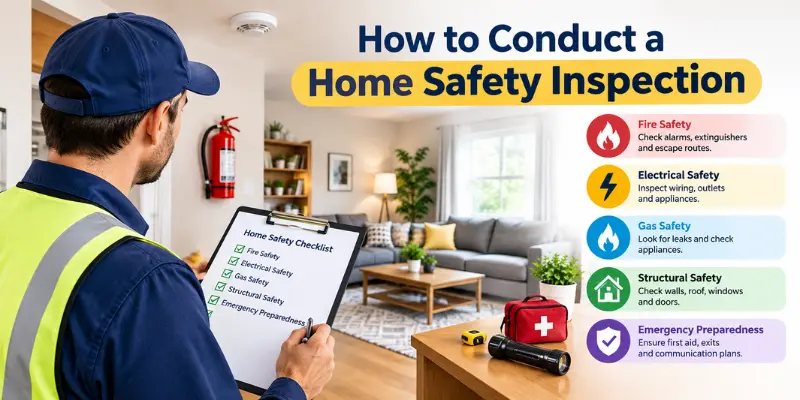
Knowing how to conduct a home safety inspection gives homeowners a practical way to identify problems that may be overlooked during everyday routines. A loose stair railing, blocked exit, overloaded outlet, unsecured cabinet, expired smoke alarm, or poorly stored chemical can become a serious safety concern.
The U.S. Consumer Product Safety Commission provides home-safety resources covering areas such as carbon monoxide, fire safety, poison prevention, window safety, and other indoor hazards. Homeowners can also review broader guidance through the CPSC Safety Education resources.
What Is a Home Safety Inspection?
A home safety inspection is a systematic review of a property’s interior and exterior to identify conditions that could harm people or damage property.
A complete inspection can include:
- Fire and smoke protection
- Carbon monoxide protection
- Electrical safety
- Slips, trips, and falls
- Kitchen hazards
- Bathroom hazards
- Child safety
- Older-adult safety
- Chemical and medicine storage
- Windows and doors
- Stairs and railings
- Garage and utility areas
- Outdoor hazards
- Emergency exits
- Security weaknesses
- Home safety equipment
A home inspection for safety purposes is different from a real-estate inspection. The goal here is not to assess property value or structural condition for a sale. The goal is to identify everyday hazards and improve household safety.
Homeowners who want a broader preventive framework can also review these home safety precautions as part of their overall safety planning.
Why Conduct a Home Safety Inspection?
Many home hazards develop gradually. A cord becomes damaged, a handrail loosens, a smoke alarm reaches the end of its service life, or cleaning products accumulate in an unsecured cabinet.
A regular inspection creates an opportunity to identify these conditions before they become emergencies.
The main benefits include:
- Identifying hazards early
- Reducing preventable injuries
- Improving fire preparedness
- Detecting electrical warning signs
- Protecting children and older adults
- Improving emergency access and escape routes
- Checking safety equipment
- Improving chemical and medicine storage
- Creating a record of repairs
- Establishing a regular household safety routine
The inspection should focus on actual conditions rather than simply assuming that a room is safe because nothing has happened there before.
How to Prepare for a Home Safety Inspection
Preparation makes the inspection more consistent.
Take a notebook, phone, flashlight, measuring tape, and basic checklist. Do not remove electrical panels, dismantle appliances, climb onto unsafe surfaces, or perform repairs during the inspection.
Create three categories for your findings:
Urgent: A condition that could cause immediate injury, fire, poisoning, or another serious emergency.
Needs attention: A hazard that should be corrected soon but does not represent an immediate emergency.
Monitor: A minor condition that should be watched or addressed during routine maintenance.
You can also review existing home safety rules before starting. This provides a useful baseline for the inspection.
How to Conduct a Home Safety Inspection Room by Room
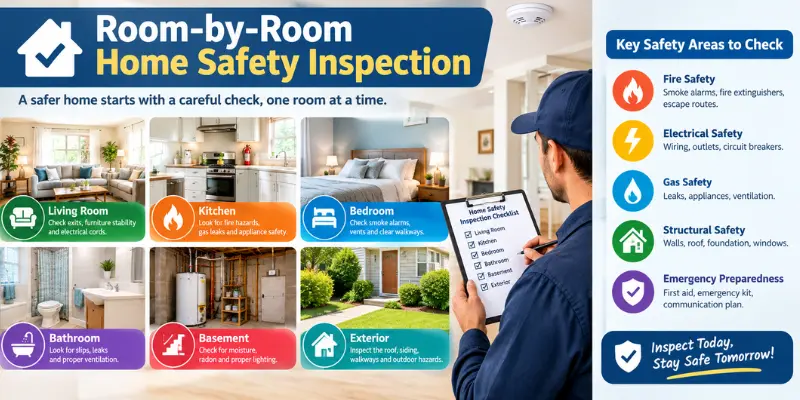
The most effective approach is to move through the home systematically rather than checking random items.
Start at the main entrance and move through every room. Check the same categories in each area: access, lighting, falls, fire, electrical equipment, storage, emergency access, and hazards specific to that room.
Entryways, Hallways, and Living Areas
Begin with the areas people use to enter and move through the home.
Check that:
- Entry doors open and close properly.
- Door locks operate correctly.
- Hallways are free of clutter.
- Walkways are adequately illuminated.
- Rugs do not create tripping hazards.
- Extension cords do not cross walking paths.
- Furniture does not obstruct exits.
- Stairs and emergency routes remain accessible.
- Heavy furniture is stable.
- Shelving is secure.
Pay attention to small obstacles. A shoe, loose mat, toy, charging cable, or decorative item can create a fall hazard in a frequently used walkway.
If the home includes older adults or people with mobility limitations, inspect walking paths more carefully. Accessibility improvements may be needed in addition to ordinary household safety measures.
Check Windows and Window Coverings
Windows require attention because they can create fall, strangulation, impact, and emergency-escape hazards.
Inspect:
- Window locks
- Window opening mechanisms
- Screens
- Glass condition
- Window-covering cords
- Furniture placed near windows
- Child access to elevated windows
- Emergency escape windows
Furniture that allows a young child to climb directly to a window deserves particular attention.
The CPSC recommends safety devices and proper installation practices for reducing child-related home hazards. It also emphasizes that safety devices are not completely childproof and require correct installation and continued supervision.
Kitchen Safety Inspection
The kitchen contains multiple hazard categories in one area: heat, sharp objects, electricity, gas, chemicals, and water.
Inspect the cooking area for:
- Damaged appliance cords
- Overloaded outlets
- Grease buildup
- Unattended combustible materials near cooking equipment
- Loose cabinet handles
- Sharp objects within children’s reach
- Cleaning products stored near food
- Slippery floors
- Blocked ventilation
- Unstable appliances
- Accessible matches or lighters
Check whether pot handles extend over the edge of the stove where they could be grabbed or knocked.
Keep knives and other sharp tools stored securely. Cleaning products should not be stored where children can easily access them.
Look underneath the sink for leaking pipes, moisture, mold growth, or improperly stored chemicals.
The CPSC’s safety resources include specific information for household fire, poison, electrical, and kitchen hazards.
Bathroom Safety Inspection
Bathrooms combine water, electricity, hard surfaces, and limited floor space.
Check:
- Shower and bathtub surfaces
- Grab bars
- Bath mats
- Floor condition
- Water leaks
- Electrical outlets
- Ground-fault protection where applicable
- Medicine cabinets
- Cleaning-product storage
- Water temperature
- Bathroom lighting
- Door accessibility
Look for slippery areas around the bathtub, shower, toilet, and sink.
Medicine should not be left on open counters where children or visitors can access it. EPA guidance recommends storing medicines in a locked cabinet, closet, safe, or another robust compartment that limits unwanted access.
For households with young children, review how to ensure child safety at home for additional child-specific precautions.
Bedroom Safety Inspection
Bedrooms should support safe movement and provide reliable access to emergency exits.
Inspect:
- Bedside electrical equipment
- Charging cables
- Portable heaters
- Lamps
- Extension cords
- Windows
- Furniture stability
- Emergency exits
- Smoke alarms
- Carbon monoxide protection where applicable
- Clutter around the bed
Do not place heaters close to curtains, bedding, clothing, or other combustible materials.
Check whether household members can hear smoke alarms from their bedrooms.
Stairways and Fall Hazards
Falls are one of the most common household safety concerns.
Inspect every staircase for:
- Secure handrails
- Adequate lighting
- Loose steps
- Damaged flooring
- Clutter
- Slippery surfaces
- Uneven transitions
- Unsecured runners
- Objects stored on steps
A handrail that moves when pulled should not be ignored.
For older adults, inspect the route from the bedroom to the bathroom, kitchen, and main entrance. Night lighting and clear pathways can make a significant difference.
Homeowners interested in accessibility-focused improvements can also review Leaf Home Safety Solutions for ideas related to safer household movement and accessibility.
Electrical Safety Inspection
Electrical safety deserves a dedicated part of every home inspection.
Look for:
- Frayed or damaged cords
- Warm or discolored outlets
- Sparks
- Buzzing or crackling sounds
- Frequently tripped breakers
- Loose plugs
- Overloaded power strips
- Extension cords used as permanent wiring
- Damaged switches
- Water near electrical equipment
Do not open electrical panels or attempt repairs if you are not qualified.
For a more focused electrical review, homeowners can use this electrical home safety inspection guide.
A separate electrical home safety inspection checklist can also be useful when documenting visible electrical warning signs.
CPSC safety materials also address household wiring hazards and electrical products.
If the inspection reveals recurring breaker trips, burning smells, exposed wiring, sparking, or other serious warning signs, stop investigating and contact a qualified electrician.

Fire and Smoke Safety Inspection
Fire protection should be checked during every home safety inspection.
Inspect:
- Smoke alarms
- Carbon monoxide alarms
- Fire extinguishers
- Cooking areas
- Heating equipment
- Electrical equipment
- Emergency exits
- Escape routes
- Combustible storage
The U.S. Fire Administration recommends smoke alarms inside bedrooms, outside separate sleeping areas, and on every level of the home, including the basement. It also recommends monthly testing and replacement of smoke alarms after 10 years.
Use the manufacturer’s instructions for installation, testing, maintenance, and replacement.
Do not remove smoke-alarm batteries simply because an alarm activates during cooking. USFA advises using the alarm’s hush feature and addressing the source of nuisance alarms rather than disabling the alarm.
Check the condition and accessibility of fire extinguishers. They should be appropriate for the potential hazards and maintained according to manufacturer instructions.
You can also review fire extinguisher maintenance practices when inspecting household fire equipment.
Chemical and Medicine Safety Inspection
Households often contain cleaning products, pesticides, fuels, solvents, medicines, and other potentially hazardous substances.
Inspect storage areas for:
- Unlabeled containers
- Damaged containers
- Leaking products
- Chemicals stored near food
- Accessible medicines
- Pesticides within children’s reach
- Flammable liquids near ignition sources
- Products transferred into food or drink containers
- Expired or unnecessary products
EPA recommends keeping pesticides out of the reach of children and pets, preferably in locked storage, and keeping them away from food, animal feed, and medical supplies. Pesticides should remain in their original labeled containers.
Use the label instructions when determining how products should be stored or disposed of. Do not mix household chemicals unless the product instructions specifically permit it.
For additional guidance, see the EPA pesticide safety resources.
Garage, Basement, and Utility Areas
Less frequently used areas can contain some of the most significant household hazards.
Inspect:
- Water heaters
- Furnaces
- Boilers
- Electrical equipment
- Fuel containers
- Power tools
- Ladders
- Chemicals
- Storage shelves
- Exposed pipes
- Moisture
- Drainage
- Emergency access
Keep heavy items on lower shelves when practical. Store chemicals according to their labels and away from incompatible products.
Do not block utility shutoffs, electrical equipment, emergency exits, or access routes with stored items.
Check the garage for fuel, paint, solvents, pesticides, batteries, and other products that could create fire or chemical hazards.
Outdoor Home Safety Inspection
The inspection should continue outside.
Check:
- Walkways
- Steps
- Handrails
- Driveways
- Outdoor lighting
- Decks
- Balconies
- Gates
- Fences
- Pools
- Garden tools
- Outdoor electrical equipment
- Gas cylinders
- Grills
- Drainage
Look for cracked surfaces, loose boards, unstable railings, standing water, and poorly illuminated paths.
Outdoor chemicals should be stored according to product instructions. EPA guidance also recommends keeping pesticides away from children and pets and away from ignition sources and areas where flooding could cause spills.
Check Home Safety Equipment
Create a separate inventory of household safety equipment.
Your inspection can include:
- Smoke alarms
- Carbon monoxide alarms
- Fire extinguishers
- First-aid kits
- Flashlights
- Emergency lighting
- Fire blankets where appropriate
- Door and window locks
- Child-safety devices
- Non-slip equipment
- Emergency contact information
Record the condition and location of each item.
For smoke alarms, record the installation date or manufacture date when available. USFA states that smoke alarms should be replaced after 10 years.
Create a Home Safety Inspection Checklist
A written checklist prevents important areas from being forgotten.
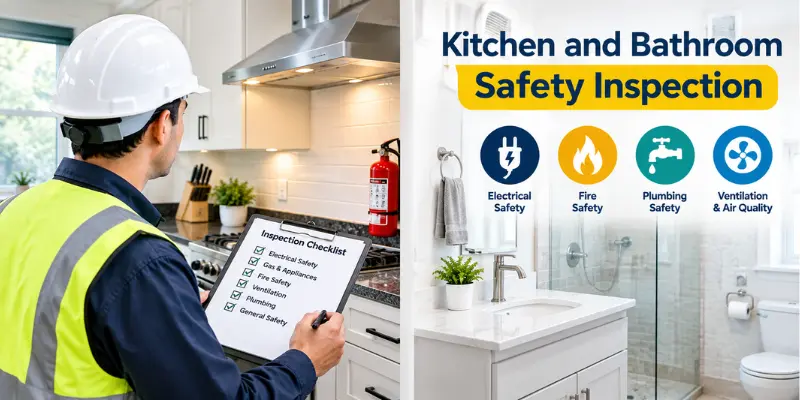
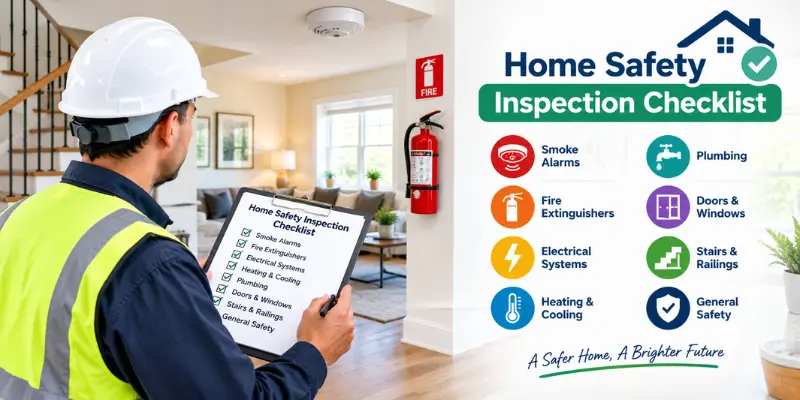
Basic Home Safety Inspection Checklist
Entry and living areas
- Walkways clear
- Rugs secure
- Lighting adequate
- Furniture stable
- Emergency exits accessible
Kitchen
- Appliances and cords inspected
- Cooking area clear
- Sharp objects secured
- Chemicals separated from food
- Floors free of slip hazards
Bathroom
- Floors and tub surfaces checked
- Grab bars secure
- Medicines secured
- Electrical equipment checked
- Water leaks inspected
Bedrooms
- Smoke alarms working
- Charging cables safe
- Heating equipment clear
- Windows and exits accessible
- Walkways clear
Electrical
- No damaged cords
- No overloaded outlets
- No burning smell
- No unusual buzzing
- No repeated unexplained breaker trips
Fire safety
- Smoke alarms tested
- Carbon monoxide alarms checked
- Fire extinguishers accessible
- Escape routes clear
- Family escape plan reviewed
Chemicals
- Medicines secured
- Pesticides secured
- Containers labeled
- Chemicals kept away from food
- Flammable products stored correctly
Outdoor
- Walkways safe
- Railings secure
- Lighting functional
- Outdoor equipment stored safely
- Pool or water hazards secured
How to Document Home Safety Inspection Findings
Do not rely on memory.
For every significant hazard, record:
Location: Where is the problem?
Hazard: What is unsafe?
Risk: Who could be affected?
Priority: Urgent, needs attention, or monitor?
Action: What needs to happen?
Responsible person: Who will correct it?
Date: When was it identified and when was it corrected?
Photos can also help document conditions before and after repairs.
A simple inspection record makes it easier to track recurring problems and confirm that important repairs were completed.
How to Prioritize Home Safety Hazards
Not every finding requires the same response.
A practical priority system is:
Priority 1: Immediate Danger
Examples include exposed electrical conductors, active gas concerns, blocked emergency exits, serious fire hazards, or conditions that create an immediate risk of injury.
Leave the hazardous area when necessary and contact the appropriate emergency or qualified professional service.
Priority 2: High-Risk Hazard
Examples include damaged electrical equipment, unstable railings, unsecured heavy furniture, or serious chemical-storage problems.
Arrange correction as soon as practical.
Priority 3: Routine Improvement
Examples include improving lighting, replacing worn mats, organizing storage, or adding labels.
These issues still matter but can normally be addressed through planned maintenance.
When Should You Call a Professional?
A home safety inspection can identify warning signs. It should not replace qualified professional assessment when a hazard requires specialized knowledge.
Contact an appropriate professional for concerns involving:
- Electrical panels or wiring
- Gas leaks or suspected gas problems
- Structural damage
- Major roof problems
- Serious water intrusion
- Heating-system faults
- Damaged chimneys
- Significant mold or contamination concerns
- Major fire-system installation
- Unsafe structural stairs or balconies
Do not attempt repairs simply because a problem was discovered during an inspection.
The purpose of a homeowner inspection is to identify and prioritize hazards, not to perform work beyond your training.
How Often Should You Conduct a Home Safety Inspection?
There is no single schedule that fits every household.
A practical approach is:
- Perform a detailed inspection at least once or twice a year.
- Check smoke alarms monthly.
- Inspect safety equipment according to manufacturer instructions.
- Perform additional checks after renovations.
- Inspect after moving into a new home.
- Recheck areas after major weather events.
- Perform targeted checks when children begin crawling or walking.
- Reassess the home when an older family member develops new mobility needs.
A household with young children, older adults, pets, or special accessibility needs may benefit from more frequent inspections.
Home Safety Inspection for Children and Older Adults
Household risks change as family needs change.
For children, inspect:
- Cabinet locks
- Window access
- Furniture stability
- Electrical outlets
- Blind or curtain cords
- Medicines
- Cleaning products
- Sharp objects
- Hot surfaces
- Stairs
CPSC recommends safety devices such as cabinet and drawer locks to reduce children’s access to medicines, cleaners, matches, sharp objects, and other hazards. It also notes that child-resistant products should not be treated as completely childproof.
For older adults, inspect:
- Stairways
- Bathroom floors
- Shower access
- Lighting
- Bed-to-bathroom pathways
- Loose rugs
- Handrails
- Outdoor steps
- Emergency communication access
The objective is to identify hazards based on the people actually living in the home.
Smart Home Safety Devices During an Inspection
Smart technology can support a home safety plan, but it should not replace physical inspection.
Depending on the household, useful devices may include:
- Smart smoke alarms
- Carbon monoxide detectors
- Water-leak sensors
- Smart locks
- Motion sensors
- Security cameras
- Smart lighting
- Temperature sensors
Check whether devices are working, connected, powered, and positioned correctly.
A smart sensor that has lost power or connectivity should not be treated as reliable protection.
Common Mistakes During a Home Safety Inspection
Avoid these common mistakes:
Inspecting Only Visible Areas
A hazard may exist inside cabinets, behind appliances, under sinks, or in storage areas.
Ignoring Small Problems
Small problems can become larger maintenance or safety issues.
Checking Only Electrical Hazards
Electrical safety is important, but a complete inspection also covers falls, fire, chemicals, windows, children, older adults, and emergency access.
Forgetting Outdoor Areas
Garages, balconies, decks, driveways, and walkways are part of the home’s safety environment.
Failing to Document Findings
Without documentation, it is easy to forget what needs repair.
Attempting Repairs Beyond Your Skills
Finding a hazard does not mean you should repair it yourself.
Treating Safety Devices as Permanent Solutions
A safety gate, cabinet lock, alarm, or sensor requires correct installation, maintenance, and appropriate use.
How to Improve Home Safety After an Inspection
Once the inspection is complete, create a correction plan.
Start with the highest-risk hazards.
For example:
- Correct immediate fire or electrical dangers.
- Clear emergency exits.
- Secure unstable furniture.
- Correct serious fall hazards.
- Secure medicines and chemicals.
- Test or replace safety equipment.
- Improve lighting.
- Repair damaged flooring or railings.
- Organize garage and utility storage.
- Schedule professional inspections where required.
For electrical concerns, homeowners can also review practical electrical safety tips for homeowners before addressing routine electrical-safety improvements.
For households dealing with recurring electrical concerns, how to prevent electrical hazards at home provides a more focused resource.
A Simple Room-by-Room Inspection Routine
A repeatable routine makes future inspections easier.
Start at the front entrance.
Move through:
Entryway → Living room → Kitchen → Bathroom → Bedrooms → Hallways → Stairs → Garage → Basement/utility areas → Outdoor areas
At every location, ask:
- Is there a trip hazard?
- Is there a fire hazard?
- Is there an electrical concern?
- Is anything unstable?
- Can a child access something dangerous?
- Could an older adult fall here?
- Is emergency access blocked?
- Is safety equipment working?
- Is anything leaking, damaged, or improperly stored?
Record the findings immediately.
This approach creates a consistent home safety inspection process rather than a quick visual walk-through.
Frequently Asked Questions
How long does a home safety inspection take?
The time depends on the size and condition of the home. A basic inspection may take less than an hour, while a detailed room-by-room assessment can take considerably longer.
What should I inspect first in my home?
Start with immediate safety concerns such as fire protection, emergency exits, electrical warning signs, fall hazards, and accessible chemicals or medicines.
Can I conduct a home safety inspection myself?
Yes. Homeowners can conduct a basic visual safety inspection. Specialized systems such as electrical wiring, gas equipment, structural components, and other technical installations should be assessed by qualified professionals when necessary.
How often should smoke alarms be checked?
USFA recommends testing smoke alarms every month and replacing smoke alarms after 10 years.
What are the most common home safety hazards?
Common hazards include falls, electrical problems, fire risks, unsafe chemical storage, unsecured furniture, unsafe windows, blocked exits, and improperly maintained safety equipment.
You can review this guide to common safety hazards at home for a broader overview.
How can I make my home safer for children?
Secure medicines, cleaning products, pesticides, sharp objects, windows, furniture, and other accessible hazards. Use appropriate safety devices and install them according to manufacturer instructions. CPSC guidance emphasizes that child-safety devices reduce risk but are not completely childproof.
How should medicines be stored at home?
Store medicines in a location that limits unwanted access. EPA recommends a locked cabinet, closet, safe, or another robust locking compartment.
Conclusion
Learning how to conduct a home safety inspection gives homeowners a practical method for identifying hazards before they become emergencies.
A complete inspection should cover the entire property rather than focusing on one category. Check entryways, living spaces, kitchens, bathrooms, bedrooms, stairs, electrical systems, fire protection, chemical storage, garages, utility areas, and outdoor spaces.
Document every significant finding, prioritize hazards according to risk, and correct urgent problems promptly. Use qualified professionals for electrical, gas, structural, or other specialized work.
A home safety inspection is most effective when it becomes a routine. Regular checks help households identify changing risks, maintain safety equipment, protect vulnerable family members, and create a safer living environment.
Please Write Your Comments