Firefighting Hoods: Types, Materials, Standards & Best Manufacturers
Updated: 3-Sep-2026
1563
Firefighting hoods are an important part of a firefighter’s protective ensemble. They cover the head, neck, and areas around the face that can remain exposed between a helmet, coat, and respiratory equipment. A properly selected hood helps reduce exposure to flame, high thermal loads, and particulate hazards while supporting the overall protection provided by a complete firefighting PPE system.

A firefighting hood is not a substitute for a firefighter helmet, protective coat, or self-contained breathing apparatus (SCBA). Instead, it works as an interface between these components to reduce gaps in protection. Modern hood designs also focus on fit, breathability, particulate resistance, and compatibility with contemporary SCBA facepieces.
For departments selecting or replacing protective hoods, the most important considerations include the intended application, applicable standards, hood construction, material performance, fit, compatibility, cleaning requirements, and manufacturer instructions.
What Is a Firefighting Hood?
A firefighting hood is a protective garment designed to cover portions of a firefighter’s head and neck during fireground operations. Structural firefighting hoods are commonly worn underneath a firefighter helmet and around the facepiece of an SCBA.
The hood is designed to provide an additional protective layer in areas where other parts of the protective ensemble may not provide continuous coverage. Depending on its design and certification, a hood may help protect against flame, heat, and particulate exposure.
The exact protection offered depends on the hood’s construction, materials, certification, condition, and intended use. Firefighters should always follow the manufacturer’s instructions and the requirements adopted by their department.
What Does a Firefighting Hood Protect Against?
Firefighting hoods are primarily intended to protect the head and neck area against hazards associated with firefighting. These may include:
- Flame exposure
- High thermal loads
- Radiant and convective heat
- Hot gases and heated air
- Particulate contamination
- Contact with contaminated gear or surfaces
ISO 11999-9:2025 specifies minimum design and performance requirements for fire hoods used by firefighters who may be exposed to high levels of heat or flame during structural fire incidents. The standard addresses protection against flame, high thermal loads, and particulate exposure.
Where Is a Firefighting Hood Worn?
A structural firefighting hood is normally worn as part of a complete protective ensemble. Its opening must work with the SCBA facepiece, while its lower portion must overlap appropriately with the protective coat and other components.
Correct positioning matters because an improperly worn hood can create gaps or interfere with the fit and performance of other PPE.
Why Do Firefighters Wear Protective Hoods?
Firefighters wear protective hoods because the head and neck can remain vulnerable even when a helmet and turnout coat are being used. A hood helps close the interface between these pieces of equipment and provides another layer of protection in a high-heat environment.
Protection From Heat and Flame
The principal purpose of a structural firefighting hood is thermal and flame protection. The hood’s materials and construction are selected to help limit heat transfer and resist ignition when used within the conditions for which the hood was designed and certified.
This does not mean a hood makes the wearer immune to burns. Protection is limited by exposure conditions, duration, garment condition, and the performance characteristics of the specific product.
Protection Around the Head, Neck, and Ears
The hood extends protective coverage over areas that can otherwise be difficult to cover continuously, particularly the neck and portions of the head around the helmet and SCBA facepiece.
A good interface is especially important during movement. Bending, crawling, climbing, or working in confined spaces can shift equipment, so the hood must remain properly positioned with the rest of the PPE.
For broader information about protective equipment used by firefighters, see our guide to fire-resistant suits.
Particulate and Contamination Protection
Some firefighting hoods are designed with particulate-blocking features that can reduce transfer of certain contaminants toward the skin and neck.
This issue has received increasing attention because fire ground smoke can contain hazardous substances. NIOSH explains that contaminants can transfer from firefighters’ gear to skin, equipment, and station areas, and recommends appropriate cleaning, removal, bagging, and storage practices to reduce exposure. See the NIOSH guidance on contaminated firefighter gear.
A particulate-blocking hood should therefore be understood as one part of a contamination-control strategy rather than a complete solution to smoke exposure.
Types of Firefighting Hoods
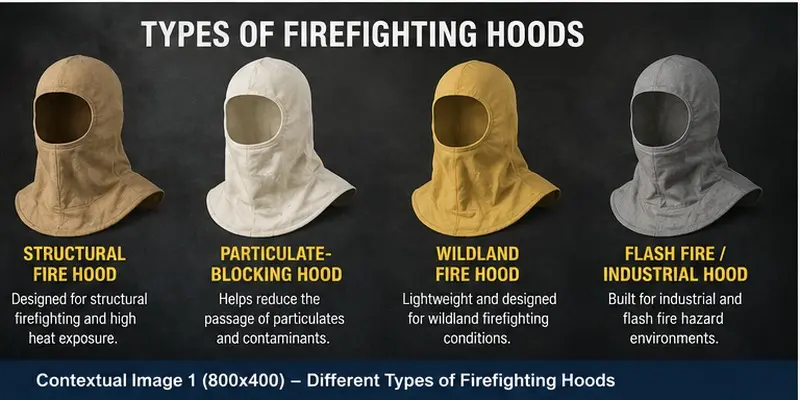
Not every protective hood is designed for the same environment. Departments should select hood types according to the hazards they face and the requirements of their protective ensemble.
Structural Firefighting Hoods
Structural firefighting hoods are designed for interior and exterior structural fireground applications where firefighters may encounter significant heat and flame.
These hoods are generally worn with structural turnout gear and are designed to interface with firefighter helmets and SCBA facepieces.
Particulate-Blocking Firefighting Hoods
Particulate-blocking hoods incorporate materials or construction features intended to reduce the transfer of particulates through the hood.
These products may be particularly useful where departments are placing greater emphasis on reducing firefighter exposure to contaminants from modern fire environments.
However, particulate resistance should never be confused with respiratory protection. An SCBA remains the appropriate respiratory protection for environments requiring supplied breathing air.
Wildland Firefighting Hoods
Wildland firefighting involves different operating conditions from structural firefighting. Heat, flame behavior, mobility requirements, and environmental exposure can differ significantly.
A hood intended for wildland operations should therefore be selected according to the appropriate standard and manufacturer specifications rather than assuming that a structural firefighting hood is suitable for every application.
Flash-Fire and Industrial Fire Hoods
Industrial and flash-fire environments may require protective hoods designed around hazards that differ from those encountered in structural firefighting.
Products used in industrial applications should be selected according to the hazard assessment, applicable standards, and the complete PPE system with which they will be worn.
Materials Used in Firefighting Hoods
The material used in a firefighting hood has a direct effect on its thermal performance, durability, comfort, and overall construction.
Common high-performance fibers and blends include meta-aramid, para-aramid, PBI-based constructions, and other flame-resistant materials. Related protective apparel information is available in our guide to fire-resistant clothing.
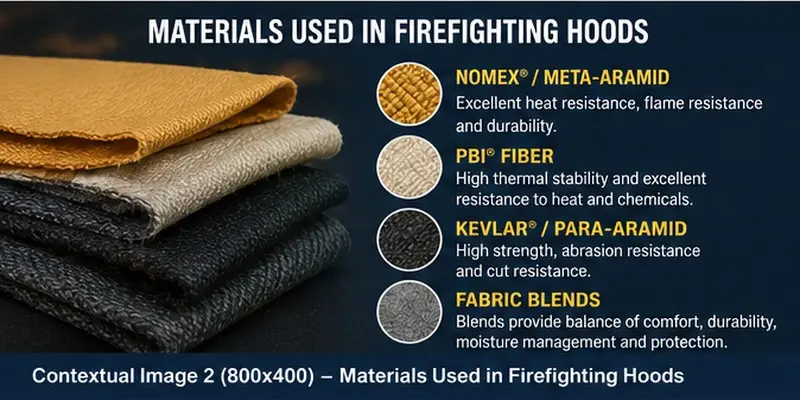
Nomex and Other Meta-Aramid Fibers
Meta-aramid fibers such as Nomex are widely associated with heat- and flame-resistant protective clothing. They are valued for their resistance to ignition and their suitability for demanding thermal environments.
Different hood products may combine aramid fibers with other materials to achieve a balance between thermal protection, stretch, moisture management, and comfort.
PBI and High-Performance Fiber Blends
PBI is another high-performance fiber used in protective applications where thermal resistance is important.
Manufacturers may combine high-performance fibers with other textile technologies to develop different levels of durability, flexibility, thermal protection, and particulate resistance.
Kevlar and Para-Aramid Fibers
Para-aramid fibers such as Kevlar are known for high strength and resistance to abrasion and heat. In protective textiles, they may be used as part of blends or specialized constructions.
The presence of a particular fiber does not by itself prove that a hood meets a particular safety standard. Certification and product specifications remain more important than simply choosing a material name.
Fire-Resistant Fabric Blends
Some firefighting hoods are constructed from blended fabrics designed to provide a balance of flame resistance, thermal performance, moisture management, durability, and wearer comfort.
When evaluating a product, firefighters should look beyond the fabric name and examine the entire certified product construction.
How Do Firefighting Hoods Work?
A firefighting hood forms a protective interface around the head and neck while allowing the firefighter to use other essential PPE.
Thermal Protection
The hood material helps slow heat transfer from the external environment toward the skin. Its effectiveness depends on material properties, construction, exposure duration, and environmental conditions.
Thermal protection is not unlimited. Excessive heat exposure can eventually overwhelm protective materials, so firefighters must rely on training, thermal hazard awareness, and the full protective ensemble.
Flame Resistance
Protective hood materials are selected to resist ignition and flame exposure within their intended performance range.
A hood should never be considered permanently fireproof. Damage, contamination, wear, improper cleaning, and excessive exposure can affect performance.
Moisture and Particulate Barriers
Some hood designs incorporate moisture barriers or particulate-blocking layers. These features can improve protection against selected contaminants while also influencing breathability and comfort.
A more protective construction may not always be the most comfortable, so departments should evaluate performance and wearability together.
Interface With the Helmet and Coat
The hood must work as part of the complete PPE ensemble.
The face opening should be compatible with the SCBA facepiece, while the hood body and bib should overlap appropriately with the helmet and turnout coat.
For information about firefighter head protection, see our article on firefighters helmets.
Firefighting Hood Standards and Certification
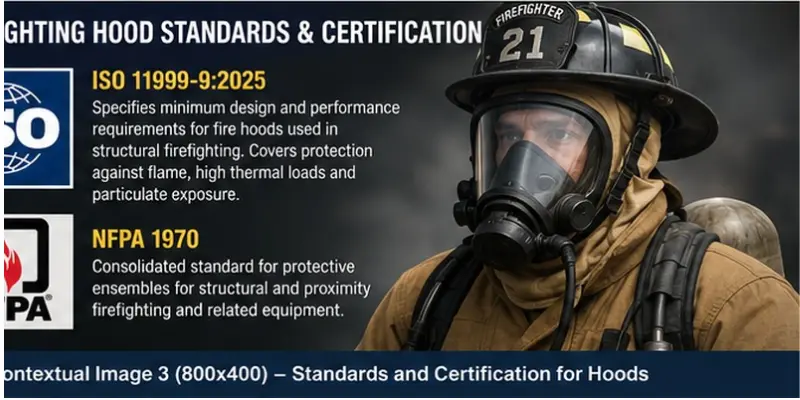
Standards are among the most important factors when selecting firefighting hoods. A product should be evaluated according to the standard applicable to its intended use and the certification information supplied by the manufacturer.
NFPA 1970 and Firefighting Hoods
NFPA 1970 is the consolidated NFPA standard covering protective ensembles for structural and proximity firefighting, work apparel, open-circuit SCBA for emergency services, and personal alert safety systems.
Departments should verify the current certification and edition applicable to the specific product rather than relying on an old article, product listing, or marketplace description.
ISO 11999-9:2025
ISO 11999-9:2025 is especially important when discussing fire hoods internationally.
The standard specifies minimum design and performance requirements for fire hoods used by firefighters who may be exposed to high levels of heat or flame while fighting structural fires. It addresses protection against flame, high thermal loads, and particulate exposure.
ISO published the second edition in April 2025, replacing the earlier 2016 edition.
What to Check on a Hood’s Certification Label
Before purchasing a firefighting hood, check:
- Applicable safety standard
- Certification information
- Product model and identification
- Manufacturer instructions
- Size or fit information
- Intended use
- Cleaning and care requirements
- Any restrictions on repairs or modifications
A reputable supplier should be able to provide current technical documentation rather than relying only on marketing descriptions.
How to Choose the Right Firefighting Hood
Choosing a firefighting hood should begin with the hazards and PPE system rather than simply looking for the cheapest product.
Check the Required Standard
First identify the standard required by your department, jurisdiction, or application.
A hood designed for one type of firefighting operation may not be appropriate for another. Certification should be checked against current manufacturer documentation.
Choose the Right Material and Protection Level
Compare the hood construction, thermal performance, flame resistance, particulate features, and intended environment.
A lightweight hood may provide excellent comfort, but the department should verify that its protective performance meets operational requirements.
Consider Fit and Comfort
A hood should fit securely without creating excessive pressure or restricting normal movement.
Comfort matters because firefighters may wear their PPE for extended periods. Excessive bunching or pressure around the face and neck can also interfere with other equipment.
Check Compatibility With Other PPE
Compatibility should be evaluated with the complete protective ensemble.
Check the interaction between:
- Firefighter helmet
- SCBA facepiece
- Turnout coat
- Hood bib
- Communication equipment, where applicable
Honeywell’s current hood product information, for example, discusses hood-to-facepiece interface and compatibility with contemporary air-mask configurations.
Consider Cleaning and Maintenance Requirements
Read the manufacturer’s care instructions before purchasing.
A hood that requires specialized cleaning or has particular restrictions may need additional department procedures. Proper cleaning is important because contaminants can remain on protective gear after fire ground exposure. NIOSH provides current guidance on laundering firefighter gear.
Firefighting Hood Fit and PPE Compatibility
Proper fit is one of the most overlooked aspects of protective hood selection.
Compatibility With Firefighter Helmets
The hood should sit correctly under the helmet without excessive bunching. The helmet and hood should work together so that protective coverage remains continuous during movement.
Compatibility With Coats and SCBA
The hood should overlap appropriately with the turnout coat and fit around the SCBA facepiece.
The purpose is to minimize exposed areas around the neck and face while preserving normal equipment function.
For respiratory protection, see our guide to self-contained breathing apparatus (SCBA).
Avoiding Gaps Around the Face and Neck
Gaps can reduce the protective value of the ensemble. Firefighters should follow the manufacturer’s donning instructions and confirm correct fit during training.
A hood should not be altered simply to make it more comfortable unless the manufacturer specifically permits the alteration.
How to Clean and Maintain a Firefighting Hood
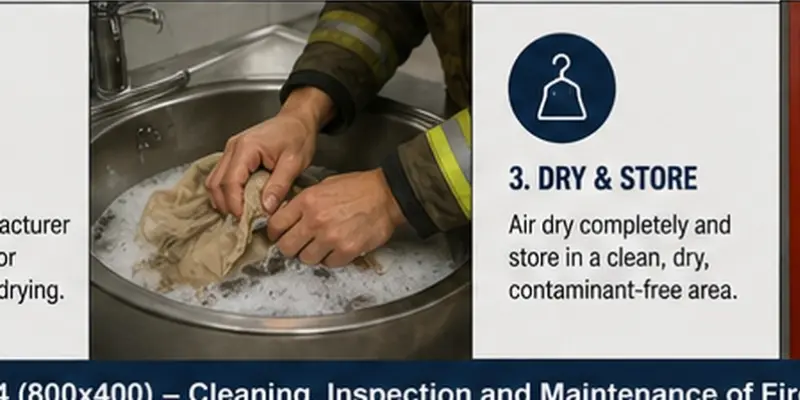
Cleaning and maintenance are essential to preserve the protective performance of firefighting hoods.
Cleaning After Use
Follow the manufacturer’s cleaning instructions after use or whenever the hood becomes soiled.
Do not automatically apply household laundry practices to specialized protective equipment. Manufacturer instructions may specify the washing method, detergent, temperature, drying procedure, and equipment that may be used.
NIOSH emphasizes that proper laundering of contaminated firefighter gear is an important part of reducing exposure and cross-contamination.
Inspecting for Damage and Wear
Inspect the hood regularly for:
- Tears
- Holes
- Burn damage
- Excessive wear
- Seam damage
- Contamination
- Degradation of materials
- Changes in fit or elasticity
Any hood showing damage that could affect protective performance should be removed from service according to department procedures and manufacturer guidance.
Handling Contaminated Firefighting Hoods
Contamination requires special attention.
NIOSH’s March 2026 guidance explains that hazardous substances can transfer from firefighters’ gear to skin, equipment, and station areas. It recommends measures including cleaning, appropriate removal of gear, bagging contaminated equipment, and controlled storage.
This is particularly relevant to hoods because the hood may contact the neck and face during removal.
A contaminated hood should not simply be placed in a personal vehicle or taken home. Departments should follow their contamination-control procedures and the hood manufacturer’s instructions.
Proper Storage
Store clean protective hoods in a clean, dry location away from contaminants, excessive heat, chemicals, and unnecessary sunlight.
Keep protective equipment away from sources of contamination within the station, including diesel exhaust and other pollutants where practical.
When Should a Firefighting Hood Be Replaced?
There is no single universal replacement interval that should be applied to every firefighting hood.
Replacement decisions should be based on the manufacturer’s instructions, the condition of the hood, inspection results, contamination, damage, and whether the equipment remains suitable for its intended use.
Signs of Damage or Excessive Wear
Replace or remove a hood from service when there are signs such as:
- Tears or holes
- Severe abrasion
- Burn damage
- Damaged seams
- Loss of elasticity
- Material degradation
- Persistent contamination
- Any condition identified by the manufacturer as requiring retirement
Do not attempt unauthorized repairs.
Contamination and Loss of Protective Performance
A hood contaminated with hazardous substances may require specialized cleaning, evaluation, or removal from service.
A department should not assume that a visibly clean hood is automatically free of hazardous contamination.
Follow the Manufacturer’s Replacement Guidance
The manufacturer is the best source for model-specific service life, inspection, retirement, and replacement requirements.
Avoid using a blanket rule such as “replace every three years” or “replace every five years” unless that exact requirement applies to the specific hood and is supported by its current documentation.
Best Firefighting Hood Manufacturers
The best manufacturer depends on the department’s requirements, the applicable certification, the hood’s construction, and compatibility with the rest of the protective ensemble.
Instead of ranking companies solely by production volume or unsupported “best” claims, firefighters should compare current certified products and technical documentation.
Honeywell
Honeywell First Responder offers firefighter hood products designed around different materials, protection features, and hood-to-mask interface requirements.
Its current product information includes the MaskMate hood and products incorporating particulate-blocking technologies. Manufacturer documentation also provides care and maintenance information.
Majestic Fire Apparel
Majestic Fire Apparel is a recognized supplier of firefighter protective clothing and related gear. When considering a Majestic hood, departments should check the current product model, certification, materials, sizing, and manufacturer instructions rather than relying on an older product list.
PGI
PGI supplies protective apparel for firefighters and emergency responders. Product selection should be based on the specific hood’s current specifications, certification, fit, and compatibility with the department’s PPE ensemble.
Globe
Globe Fire Suits is associated with protective clothing for structural firefighting. Departments considering its products should verify the current hood model and applicable certification before purchase.
Lakeland Industries
Lakeland provides protective clothing for hazardous environments. When evaluating a firefighting hood from any manufacturer, the relevant product certification and intended application should take priority over brand recognition alone.
Firefighting Hood vs. Balaclava
The terms firefighting hood and balaclava are sometimes used interchangeably, but they should not automatically be treated as identical products.
Firefighting Hood
A firefighting hood is purpose-designed protective PPE intended for firefighting applications. Structural firefighting hoods are designed to integrate with the protective ensemble and related equipment.
Balaclava
A balaclava can be a general-purpose face and head covering, but not every balaclava is certified or designed for structural firefighting.
A normal winter or motorcycle balaclava should never be assumed to provide the protection of certified firefighting PPE.
Which One Is Appropriate for Firefighting?
For professional structural firefighting, use PPE specifically selected and certified for the intended application.
The decision should be based on the applicable standard, manufacturer instructions, department requirements, and the complete protective ensemble.
Frequently Asked Questions About Firefighting Hoods
What is a firefighting hood?
A firefighting hood is protective PPE designed to cover the head and neck and provide an additional layer of protection as part of a firefighter’s overall protective ensemble.
What does a firefighting hood protect against?
Depending on the design and certification, a firefighting hood helps protect against flame, high thermal loads, and particulate exposure.
What are firefighting hoods made of?
Common constructions use inherently flame-resistant and heat-resistant fibers such as meta-aramid, para-aramid, PBI-based materials, and other specialized blends. The specific construction varies by manufacturer and model.
What standard applies to firefighting hoods?
The applicable standard depends on the intended use and jurisdiction. NFPA 1970 provides the consolidated NFPA framework for relevant structural and proximity firefighting protective equipment, while ISO 11999-9:2025 specifically covers fire hoods used in structural fire environments.
Is a firefighting hood the same as a balaclava?
No. A certified firefighting hood is purpose-designed protective PPE. A general-purpose balaclava should not be treated as an equivalent replacement.
Does a firefighting hood replace SCBA?
No. A firefighting hood does not replace an SCBA.
The hood provides protective coverage for the head and neck, while SCBA provides respiratory protection in environments where the atmosphere is immediately dangerous or otherwise unsuitable for normal breathing.
How should a firefighting hood be cleaned?
Follow the current manufacturer instructions for the exact product. Do not assume ordinary household laundry practices are suitable for protective hoods. NIOSH also emphasizes the importance of effective cleaning and contamination-control practices for firefighter gear.
When should a firefighting hood be replaced?
Replace a hood when it is damaged, excessively worn, contaminated beyond acceptable limits, no longer meets applicable requirements, or the manufacturer specifies retirement.
There is no universal replacement period that should be applied to every model.
Conclusion
Firefighting hoods are a critical interface component of a firefighter’s protective ensemble. They help protect the head and neck against thermal and flame hazards while some advanced designs also address particulate exposure.
The right hood should be selected according to the intended application, applicable standards, material performance, fit, PPE compatibility, cleaning requirements, and manufacturer guidance.
Current standards and guidance should always be checked before purchasing or replacing protective equipment. ISO 11999-9:2025 provides specific requirements for fire hoods, while NFPA 1970 provides the current consolidated NFPA framework for relevant structural and proximity firefighting protective equipment.
Proper cleaning, inspection, contamination control, storage, and timely retirement are just as important as the original purchase. Current NIOSH guidance reinforces the importance of controlling contamination throughout the life cycle of firefighter protective gear.
For departments and professional firefighters, the best firefighting hood is not simply the cheapest or most heavily marketed option. It is the product that provides the required protection, fits correctly, works with the complete PPE ensemble, and is supported by current certification and manufacturer instructions.
Please Write Your Comments