Home Safety Tips: 25 Practical Ways to Keep Your Home Safe
Updated: 25-Sep-2026
63
A safe home depends on everyday habits, properly maintained equipment, sensible storage, clear walkways, and quick attention to warning signs. Small household problems can become serious when damaged cords, slippery floors, unsecured furniture, blocked exits, unattended cooking, medicines, chemicals, or faulty safety equipment are ignored.
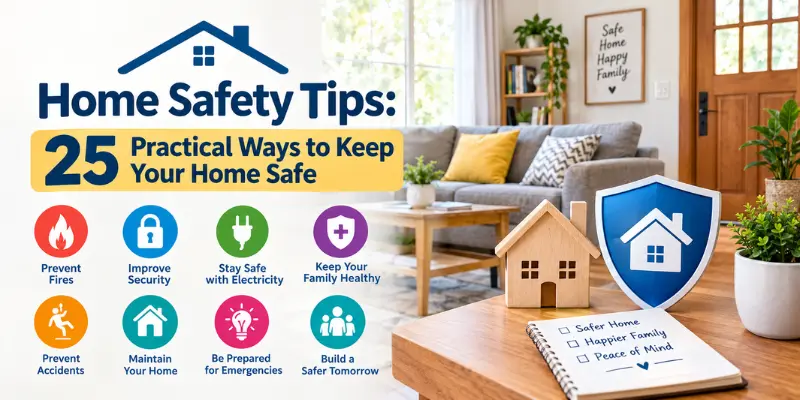
These home safety tips focus on practical actions that homeowners, tenants, families, and caregivers can apply during normal household routines. The goal is not to replace a professional inspection or electrical, gas, structural, or fire-safety service. The goal is to make common household safety practices easier to understand and apply.
A home safety routine should consider the people who live in the property. A home with young children may need stronger controls around medicines, chemicals, windows, furniture, and electrical outlets. A household with older adults may require additional attention to lighting, stairs, bathroom surfaces, and trip hazards.
A structured review can begin with a [home safety assessment] and then move into specific areas that require attention.
What Are Home Safety Tips?
Home safety tips are practical actions used to reduce common household risks and maintain safer living conditions. They can cover fire prevention, electrical safety, fall prevention, safe storage, child protection, bathroom safety, kitchen safety, emergency preparedness, and home security.
The most useful approach is to connect each safety tip with an observable condition or daily behavior.
A safer home should have:
- Clear walking routes
- Secure stairs and handrails
- Properly maintained smoke alarms
- Appropriate carbon monoxide protection where applicable
- Safe electrical equipment and cords
- Securely stored medicines and chemicals
- Stable furniture and televisions
- Safe cooking practices
- Dry and reasonably slip-resistant bathroom areas
- Accessible emergency exits
- Suitable emergency supplies
- Functional locks and lighting
- Safe outdoor walkways
25 Practical Home Safety Tips
1. Keep walking paths clear
Remove shoes, boxes, toys, cables, bags, and other objects from frequently used walkways. Furniture should not create narrow passages that make movement difficult.
Clear pathways are especially important for children, older adults, and anyone who has difficulty seeing or moving around the home.
2. Secure loose rugs and mats
Loose rugs can move when stepped on. Use appropriate non-slip backing or remove rugs that cannot be secured effectively.
Pay attention to rugs near entrances, bathrooms, kitchens, stairs, and beds. CDC fall-prevention guidance recommends removing trip hazards and improving lighting as part of making a home safer for older adults.
3. Improve lighting in high-use areas
Dark stairs, hallways, entrances, bathrooms, and routes between bedrooms and bathrooms can make hazards harder to see.
Use adequate lighting and keep switches easy to reach. Night lighting can be useful near bedrooms, stairs, and bathrooms.
4. Keep stairs free of objects
Do not use stairs as temporary storage. Shoes, toys, laundry, tools, and boxes can create immediate trip hazards.
Check that handrails are secure and that stair surfaces are maintained. If a stair is damaged or uneven, arrange appropriate repair instead of simply warning household members to be careful.
5. Use smoke alarms correctly
Install smoke alarms according to applicable requirements and manufacturer instructions. Test them regularly and respond to warning signals or faults.
Smoke alarms should not be treated as a substitute for fire prevention. A household should also have a practical escape plan and know how to leave the property during a fire.
6. Maintain carbon monoxide protection
Carbon monoxide is an invisible and potentially dangerous gas associated with fuel-burning appliances and equipment.
Where carbon monoxide alarms are appropriate for the home, install and maintain them according to manufacturer instructions and applicable local requirements. Never ignore an alarm.
7. Do not overload electrical outlets
Avoid connecting too many high-demand appliances to one outlet or power strip.
Watch for warning signs such as unusual heat, discoloration, burning smells, sparking, buzzing, damaged plugs, or repeated circuit-breaker trips.
For a dedicated electrical review, see the [electrical home safety inspection].
8. Replace damaged electrical cords
Do not continue using cords with exposed conductors, severe cuts, damaged insulation, broken plugs, or other obvious deterioration.
Keep cords away from heat, water, sharp edges, and areas where they can be crushed by furniture.
Avoid running cords where they create a walking hazard.
9. Keep electrical equipment away from water
Water and electricity create a serious combination of hazards.
Keep electrical appliances and chargers away from sinks, bathtubs, wet floors, and other water sources. Use electrical protection appropriate to the location and follow local electrical requirements.
Do not attempt electrical repairs beyond your qualifications.
10. Never leave cooking unattended
Stay attentive when cooking, especially when frying or using high heat.
Keep towels, paper products, curtains, packaging, and other combustible materials away from cooking surfaces.
Keep pot and pan handles positioned so they are less likely to be bumped or grabbed by children.
11. Store knives and sharp objects securely
Keep knives, scissors, razors, tools, and other sharp objects in appropriate storage.
Young children should not have easy access to sharp household items. Storage should reflect the age and abilities of children living in the home.
12. Secure medicines and household chemicals

Store medicines, cleaning products, detergents, pesticides, solvents, and similar substances where children cannot easily access them.
Keep products in their original labeled containers when practical. Do not transfer hazardous substances into food or drink containers.
The U.S. Consumer Product Safety Commission recommends safety latches and locks for cabinets and drawers containing medicines, cleaners, knives, matches, and other hazardous items.
13. Anchor unstable furniture
Tall bookcases, dressers, shelving units, televisions, and other furniture can tip when pulled, climbed on, or loaded improperly.
Use appropriate anti-tip devices and follow the manufacturer’s installation instructions.
CPSC specifically recommends anchoring furniture, televisions, and other tip-over hazards to help protect children.
14. Make windows safer
Keep windows and window-access areas appropriate for the occupants of the home.
Use suitable window guards or safety devices where needed and follow manufacturer instructions. Emergency escape requirements must also be considered. A window should not be secured in a way that prevents required emergency escape.
15. Keep bathrooms dry and uncluttered
Bathrooms contain water, hard surfaces, electrical equipment, medicines, and limited walking space.
Remove standing water, keep floors reasonably slip-resistant, maintain suitable lighting, and keep electrical devices away from wet areas.
Grab bars should be properly installed and secure when used.
16. Make the home safer for older adults
Older adults can face increased fall risk from poor lighting, loose rugs, clutter, uneven surfaces, unsafe stairs, and difficult bathroom access.
Clear pathways, improve lighting, secure rugs, maintain handrails, and consider appropriates CDC‘s current fall-prevention guidance recommends removing trip hazards, adding grab bars where appropriate, providing railings on stairs, and improving lighting.
17. Keep children away from household hazards
Child safety requires more than supervision.
Look at the home from a child’s perspective. Consider what a child can reach, climb, pull, open, touch, or place in their mouth.
Use appropriate cabinet locks, safety gates, outlet protection, window safety devices, furniture anchors, and other safety equipment according to the child’s age and the manufacturer’s instructions.
For more detailed guidance, read [how to ensure child safety at home].
18. Keep emergency exits accessible
Do not block doors, stairs, hallways, windows intended for emergency escape, or other designated escape routes with furniture or storage.
Household members should know at least two ways out where the building layout allows it.
An emergency plan should identify where everyone should meet after leaving the home.
19. Store flammable materials safely
Keep combustible and flammable products away from ignition sources.
Do not store fuels, solvents, aerosols, or similar products beside stoves, heaters, open flames, or other heat sources unless the product and storage arrangement specifically allow it.
Read product labels and follow storage instructions.
20. Maintain heating equipment
Keep portable heaters and other heat-producing equipment away from curtains, bedding, clothing, furniture, and other combustible materials.
Do not use damaged heating equipment.
Keep heaters on stable surfaces and follow the manufacturer’s clearance and operating instructions.
21. Keep outdoor walkways safe
Home safety extends beyond the interior.
Check entrances, steps, balconies, decks, driveways, walkways, and outdoor lighting. Remove objects that can cause trips and repair damaged surfaces when needed.
Keep outdoor tools and equipment stored safely.
22. Keep the garage and storage areas organized
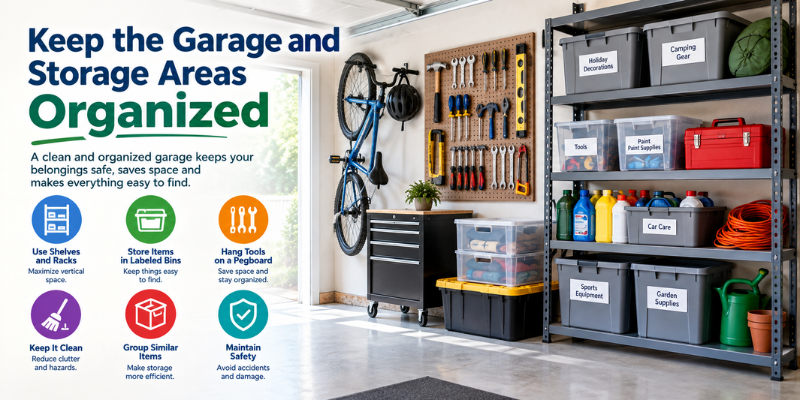
Garages can contain tools, chemicals, fuels, ladders, electrical equipment, and heavy objects.
Store hazardous materials appropriately. Keep heavy items stable and avoid creating narrow walking routes.
Ladders should be stored so they cannot fall unexpectedly. Tools should be kept away from children when appropriate.
23. Keep emergency supplies ready
A household emergency kit can support basic preparedness during power failures, severe weather, evacuation, or other disruptions.
Depending on household needs, supplies may include flashlights, batteries, first-aid materials, drinking water, essential medicines, communication equipment, and important contact information.
Review supplies periodically and replace items that have expired or become unusable.
24. Teach household members basic safety actions
Safety equipment works best when people know how to respond.
Children should learn age-appropriate rules for staying away from hot surfaces, electrical outlets, medicines, chemicals, sharp objects, and unsafe areas.
Adults and older children should know emergency numbers, exit routes, fire alarm procedures, and the household meeting location.
25. Fix hazards instead of simply remembering them
A hazard that is noticed but never corrected remains a hazard.
If you find a damaged cord, loose handrail, unstable cabinet, blocked exit, slippery surface, faulty alarm, or unsafe storage condition, record it and assign an appropriate corrective action.
Serious electrical, gas, structural, or fire-safety problems should be evaluated by a qualified professional when specialized knowledge or equipment is required.
Home Safety Tips for Different Areas of the House
Entryway and hallways
Keep entrances and hallways free from clutter. Make sure doors operate properly. Maintain adequate lighting and keep walking surfaces in good condition.
Living room
Secure tall furniture and televisions. Control electrical cords. Keep heating equipment away from combustible materials. Maintain clear paths between furniture and exits.
Kitchen
Keep cooking areas clear, store knives safely, secure cleaning products, inspect appliance cords, and avoid overloaded outlets. Keep children away from active cooking areas.
Bathroom
Reduce slip hazards, maintain adequate lighting, secure medicines and cleaning products, and keep electrical equipment away from water.
Bedroom
Keep escape routes clear. Position heaters safely. Maintain smoke-alarm protection. Keep charging cables and electrical equipment in safe condition.
Garage
Secure tools, chemicals, fuels, and heavy equipment. Maintain clear paths and adequate ventilation where required by the equipment or product instructions.
Outdoor areas
Maintain stairs, railings, lighting, walkways, gates, balconies, decks, and other areas used for access around the property.
Home Safety Tips for Families With Children
A child-safe home changes as children grow. A hazard that was inaccessible to a crawling infant may become reachable to a walking toddler.
Review furniture, windows, cabinets, stairs, electrical outlets, bathrooms, kitchens, and storage areas as the child’s abilities change.
CPSC recommends measures such as furniture anchoring, cabinet locks, window safety devices, smoke alarms, carbon monoxide alarms, and suitable outlet protection.
Do not describe a home as completely childproof. Safety devices reduce access to hazards but require correct installation, maintenance, and appropriate use.
Home Safety Tips for Older Adults
Fall prevention should be part of household safety planning for older adults.
Keep floors and walkways clear. Remove or secure loose rugs. Improve lighting. Maintain handrails on stairs. Consider appropriate bathroom grab bars. Keep commonly used items within comfortable reach.
CDC identifies home hazards such as broken or uneven steps, throw rugs, clutter, and inadequate lighting as modifiable fall risks.
For a structured review, homeowners can also use a [home safety checklist] rather than relying only on memory.
Home Safety Tips for Electrical Safety
Visible electrical warning signs should receive prompt attention.
Look for:
- Frayed cords
- Cracked plugs
- Loose outlets
- Discolored switches
- Burning smells
- Sparking
- Buzzing
- Unusual heat
- Repeated breaker trips
- Damaged extension cords
- Overloaded power strips
- Electrical equipment near water
Do not remove electrical panel covers or open outlets simply to investigate a suspected problem. Homeowners can identify visible warning signs, but electrical testing, repair, rewiring, and modifications may require a qualified electrician.
For prevention-focused guidance, read [how to prevent electrical hazards at home].
Home Safety Tips for Fire Prevention
Fire safety depends on prevention, early warning, and a workable escape plan.
Keep cooking areas controlled. Maintain smoke alarms. Keep combustible materials away from heat sources. Store flammable products correctly. Keep emergency exits accessible.
Every household should know what to do when a smoke alarm activates. A fire should never be treated as a situation to investigate personally when evacuation is safer.
When Should You Arrange a Professional Safety Inspection?
Everyday home safety tips are useful for routine prevention, but some conditions require professional assessment.
Consider professional help when you find:
- Suspected electrical wiring problems
- Repeated unexplained circuit-breaker trips
- Gas leaks or suspected gas problems
- Structural damage
- Serious water damage
- Unsafe heating equipment
- Fire-safety system problems
- Major renovation-related safety concerns
- Conditions that cannot be safely evaluated without specialized equipment
Do not attempt a repair simply because a problem was discovered during a household safety check.
For a structured inspection process, read [how to conduct a home safety inspection].
Home Safety Tips vs. Home Safety Checklist
Home safety tips provide practical actions that can be applied during everyday life. A checklist is a structured tool used to verify specific conditions.
For example, “keep stairs clear” is a safety tip. A written checklist may ask whether stairs are clear, handrails are secure, lighting is adequate, and steps are free from damage.
Use the [home safety checklist] when you need a room-by-room list of conditions to review.
Use a [home safety assessment] when you need to identify hazards, evaluate their significance, document findings, and establish corrective actions.
How Often Should You Review Home Safety?
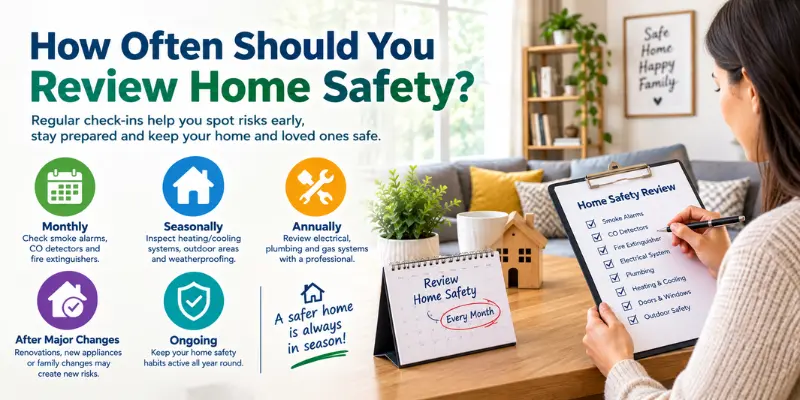
There is no single schedule that fits every household.
A quick visual review can be part of normal household routines. More structured reviews can be scheduled periodically and after important changes such as moving into a property, completing renovations, purchasing major appliances, having a baby, caring for an older adult, or changing the home’s layout.
Safety equipment should be maintained according to manufacturer instructions and applicable requirements.
Review the home again after a significant incident, repair, renovation, or change in household needs.
Frequently Asked Questions About Home Safety Tips
What are the most important home safety tips?
The most useful starting points include keeping walkways clear, maintaining smoke and carbon monoxide protection where appropriate, preventing electrical overloads, storing medicines and chemicals safely, securing unstable furniture, controlling cooking hazards, maintaining stairs and lighting, and keeping emergency exits accessible.
How can I make my home safer for children?
Secure medicines and chemicals, anchor unstable furniture and televisions, use suitable cabinet locks and safety gates, address window hazards, protect electrical outlets where appropriate, and keep hot, sharp, and hazardous items inaccessible to children.
How can I improve home safety for older adults?
Remove trip hazards, improve lighting, maintain secure stairs and handrails, make bathrooms safer, and consider appropriate grab bars. CDC specifically recommends removing trip hazards, improving lighting, and using handrails and grab bars where appropriate.
What electrical problems should homeowners never ignore?
Burning smells, sparking, unusual heat, damaged cords, discolored outlets, exposed wiring, repeated unexplained breaker trips, and unusual buzzing deserve attention. Do not attempt complex electrical repairs without appropriate qualifications.
Are home safety tips the same as a home safety inspection?
No. Safety tips describe preventive actions. A home safety inspection is a systematic review of rooms, equipment, hazards, exits, and other conditions. Use the [home safety inspection guide] when a structured inspection is required.
How can I check my home for fall hazards?
Look for loose rugs, clutter, uneven surfaces, poor lighting, unsafe stairs, unsecured handrails, and difficult bathroom access. CDC’s home fall-prevention resources specifically address these types of hazards.
What should I do when I find a serious home hazard?
Keep people away from the hazard when appropriate, avoid unsafe DIY repairs, and arrange qualified professional assistance for electrical, gas, structural, or other specialized problems.
Final Thoughts
Effective home safety tips are based on ordinary actions that prevent hazards from becoming emergencies. Clear walkways, safe electrical practices, secure storage, maintained alarms, controlled cooking, stable furniture, safer bathrooms, adequate lighting, and accessible exits form the foundation of a safer household.
A home should be reviewed as conditions change. Children grow, older adults may develop different mobility needs, appliances are replaced, rooms are rearranged, and equipment can deteriorate.
Use everyday safety habits for prevention, the [home safety checklist] for structured verification, the [home safety assessment] for broader risk evaluation, and professional services when a hazard requires specialized knowledge or equipment.
Please Write Your Comments