Home Safety Checklist: Complete Room-by-Room Guide
Updated: 19-Sep-2026
14
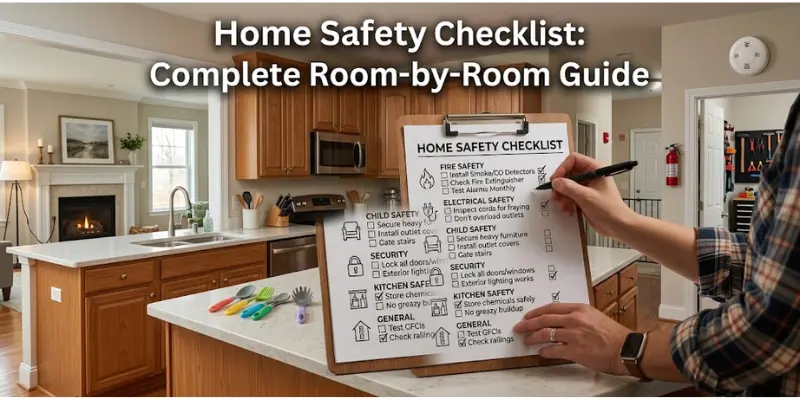
A home safety checklist gives homeowners a practical way to identify hazards before they result in injuries, fires, electrical incidents, poisoning, falls, or other emergencies. A structured checklist is useful because household safety involves more than smoke alarms and fire extinguishers. Floors, stairs, electrical outlets, appliances, furniture, windows, doors, chemicals, medicines, carbon monoxide alarms, emergency exits, and outdoor areas all need attention.
A useful home safety checklist should be simple enough to use regularly and detailed enough to cover the major risk areas of a property. It should also account for the people living in the home. A house with young children may require more attention to furniture anchoring, cabinet locks, windows, and electrical outlets. A household with older adults may need additional attention to lighting, stairs, bathroom surfaces, and clear walking paths.
This guide provides a room-by-room home safety checklist that can be used during routine household inspections. For a more detailed inspection process, see our how to conduct a home safety inspection guide. For a broader risk assessment, see our home safety assessment.
What Is a Home Safety Checklist?
A home safety checklist is a written list of safety conditions that should be reviewed throughout a house. It helps homeowners identify hazards, document problems, assign corrective actions, and repeat the review at regular intervals.
A home safety checklist can cover:
- Fire and smoke protection
- Carbon monoxide protection
- Electrical safety
- Slip, trip, and fall hazards
- Kitchen safety
- Bathroom safety
- Bedroom safety
- Child safety
- Furniture stability
- Chemical and medicine storage
- Doors and windows
- Emergency exits
- Home security
- Garage and storage areas
- Outdoor pathways
- Emergency preparedness
The checklist should not be treated as proof that a property is completely safe. Some electrical, structural, gas, heating, fire-system, or other technical problems require assessment by a qualified professional.
Why Use a Home Safety Checklist?
Household hazards can develop slowly. A power cord can become damaged, a stair railing can loosen, a rug can begin to slide, a smoke alarm can reach the end of its service life, or a cabinet can become overloaded.
A home safety checklist creates a repeatable process for finding these conditions.
It also prevents homeowners from relying only on memory. A written checklist makes it easier to remember less obvious areas such as garages, balconies, storage rooms, utility areas, exterior steps, and emergency exits.
A checklist is especially useful after moving into a new home, completing renovations, purchasing major appliances, changing furniture arrangements, having a baby, caring for an older adult, installing heating equipment, or experiencing a household safety incident.
For general household precautions, see what are safety precautions at home.
How to Use This Home Safety Checklist
Walk through the property systematically instead of checking random items. Keep a phone, flashlight, notebook, and copy of the checklist available.
Mark each item as:
- Safe: No obvious hazard identified.
- Needs attention: A condition should be corrected.
- Professional review: The condition requires a qualified professional.
- Not applicable: The item does not exist in the home.
Photograph significant hazards when appropriate. Record the location, problem, priority, and corrective action.
Do not dismantle electrical equipment, remove protective covers, inspect gas connections beyond your training, climb unstable surfaces, or attempt repairs simply because the checklist identifies a problem.
The purpose of a home safety checklist is to identify and prioritize hazards.
Home Entry and Exit Safety Checklist
The entrance and exit areas are important because occupants need clear access during normal use and emergencies.
Doors and exits
- Front and back doors open and close properly.
- Emergency exits are not blocked by furniture or storage.
- Door locks operate correctly.
- Exit doors can be opened when required during an emergency.
- Doorways are free from clutter.
- Glass doors are visible and not difficult to identify.
Steps and walkways
- Exterior steps are stable.
- Handrails are secure.
- Walkways are free from loose objects.
- Outdoor surfaces are not excessively slippery.
- Entry areas have adequate lighting.
- Water does not accumulate where people walk.
- Address numbers are visible to emergency responders.
A home safety checklist should include both the main entrance and secondary exits. An emergency exit that exists physically but cannot be reached quickly is not a useful escape route.
Living Room Home Safety Checklist
Living rooms often contain televisions, lamps, chargers, extension cords, rugs, furniture, fireplaces, and heating equipment.
Furniture and walking areas
- Walkways are clear.
- Rugs do not slide easily.
- Furniture does not obstruct doors.
- Bookshelves and tall cabinets are stable.
- Televisions are placed on suitable furniture or securely mounted.
- Heavy objects are not stored where children can easily reach them.
- Furniture does not create a narrow passage that could cause falls.
The U.S. Consumer Product Safety Commission recommends securing televisions and furniture such as bookcases and dressers to help prevent tip-over incidents.
Electrical and heating equipment
- Electrical cords are not frayed or damaged.
- Extension cords are not used as permanent wiring.
- Power strips are not overloaded.
- Cords do not cross major walking paths.
- Portable heaters have appropriate clearance from combustible materials.
- Lamps and other electrical equipment are in good condition.
- Fireplaces and heating equipment have appropriate clearance.
For a detailed electrical review, use our electrical home safety inspection guide.
Kitchen Home Safety Checklist
The kitchen combines heat, electricity, sharp objects, water, chemicals, and combustible materials. It should receive careful attention during every home safety checklist review.
Cooking equipment
- Stove and oven are clean and functioning properly.
- Cooking surfaces are free from unnecessary combustible materials.
- Pot handles are positioned safely.
- Towels and paper products are kept away from hot surfaces.
- Small appliances are positioned safely.
- Appliance cords are not damaged.
- Cooking areas have adequate lighting.
Electrical safety
- Kitchen outlets are not overloaded.
- Damaged cords are removed from service.
- Appliances are kept away from water.
- Extension cords are not being used as a substitute for suitable permanent wiring.
- Electrical warning signs such as repeated breaker trips, burning smells, sparking, or unusually warm outlets are investigated.
Storage
- Knives are stored safely.
- Cleaning chemicals are secured.
- Matches and lighters are kept away from children.
- Heavy objects are stored securely.
- Food is separated from household chemicals.
The kitchen section of a home safety checklist should also include smoke alarm coverage and access to appropriate fire protection equipment.
Bathroom Home Safety Checklist
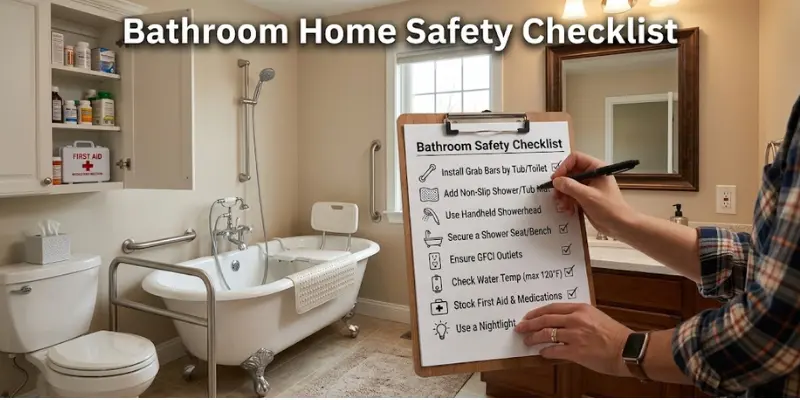
Bathrooms contain several common household hazards because water, electricity, slippery surfaces, hot water, medicines, and cleaning chemicals may be present in the same small area.
Floor and bathing areas
- Shower and bathtub surfaces are not excessively slippery.
- Bath mats are stable.
- Standing water is removed.
- Grab bars, where installed, are secure.
- Floor surfaces are in good condition.
- Lighting is adequate.
Electrical safety
- Electrical devices are kept away from water.
- Electrical outlets and protective devices are in suitable condition.
- Portable electrical appliances are stored safely.
- Damaged cords are removed from use.
Medicine and chemical storage
- Medicines are stored securely.
- Cleaning products are inaccessible to young children.
- Personal-care products are stored safely.
- Hazardous substances are kept in their original containers when applicable.
A home safety checklist for bathrooms should pay particular attention to nighttime access. A clear route from the bedroom to the bathroom can reduce avoidable trip and fall hazards.
Bedroom Home Safety Checklist
Bedrooms should provide safe sleeping conditions and accessible emergency exits.
Sleeping area
- Beds and bed frames are stable.
- Walking areas around the bed are clear.
- Charging cables do not create trip hazards.
- Portable heaters are positioned safely.
- Curtains and bedding are kept away from heat sources.
- Furniture is stable.
Smoke and carbon monoxide protection
- Smoke alarms are installed in appropriate locations.
- Smoke alarms can be heard from sleeping areas.
- Carbon monoxide alarms are installed where appropriate.
- Alarm testing and replacement follow manufacturer instructions.
The U.S. Fire Administration recommends smoke alarms in every bedroom, outside each separate sleeping area, and on every level of the home, including the basement. USFA also recommends monthly testing and replacing smoke alarms when they reach 10 years of age.
A home safety checklist should record the location and condition of every alarm rather than simply checking whether the property has an alarm somewhere.
Child Safety Checklist
Children can encounter hazards at a different height and from a different perspective than adults. A child-focused home safety checklist should include floor-level hazards, climbing opportunities, accessible chemicals, windows, stairs, electrical outlets, hot surfaces, and unstable furniture.
Childproofing
- Furniture and televisions are properly anchored.
- Safety gates are used where appropriate.
- Cleaning products are stored out of children’s reach.
- Medicines are secured.
- Sharp objects are inaccessible.
- Electrical outlets are protected where appropriate.
- Windows are secured appropriately.
- Blind and shade cords do not create accessible strangulation hazards.
- Small objects that could create choking hazards are removed from accessible areas.
- Matches and lighters are secured.
- Hot liquids and cooking equipment are inaccessible.
CPSC’s Anchor It! campaign recommends anchoring TVs and furniture and removing objects that may encourage children to climb.
For a dedicated child-focused guide, see how to ensure child safety at home.
Stairway and Hallway Safety Checklist
Stairs and hallways require regular inspection because they are frequently used and can become cluttered easily.
Stairways
- Handrails are secure.
- Steps are stable.
- Stairways have adequate lighting.
- Loose objects are removed.
- Floor coverings are secure.
- There are no obvious uneven surfaces.
- Items are not stored on stairs.
- Children have appropriate protection where needed.
Hallways
- Walking paths are clear.
- Cords are routed safely.
- Lighting is adequate.
- Rugs are stable.
- Doors do not create unexpected obstacles.
A home safety checklist for older adults should give additional attention to lighting, stairs, bathroom access, and clear pathways. The CDC provides a home fall-prevention checklist covering areas such as stairs, floors, kitchens, bedrooms, and bathrooms.
Electrical Safety Checklist
Electrical hazards can be difficult to identify without professional testing. A homeowner checklist should focus on visible warning signs and conditions that require professional evaluation.
Check for:
- Frayed or damaged cords.
- Cracked plugs.
- Loose outlets.
- Discolored outlets or switches.
- Burning smells.
- Sparking.
- Buzzing or unusual electrical sounds.
- Frequently tripped circuit breakers.
- Extension cords used permanently.
- Overloaded power strips.
- Electrical equipment used near water.
- Cords placed under rugs or heavy furniture.
- Damaged outdoor electrical equipment.
Do not remove electrical panels or attempt repairs outside your qualifications.
Our electrical safety at home and work guide provides additional information about electrical hazards and safe practices.
A home safety checklist should identify visible electrical warning signs and create a clear instruction to seek qualified assistance where necessary.
Fire Safety Checklist
Fire protection should be one of the most important sections of any home safety checklist.
Smoke alarms
- Smoke alarms are installed in appropriate locations.
- Alarms are tested according to manufacturer instructions.
- Alarm batteries or power supplies are maintained.
- Smoke alarms are not obstructed.
- Alarm age is checked.
- Older units are replaced according to manufacturer guidance.
USFA recommends smoke alarms inside every sleeping room, outside each separate sleeping area, and on every level of the home, including the basement. Its current guidance also recommends monthly testing and replacement at 10 years.
Fire extinguishers
- Appropriate extinguishers are available where needed.
- Extinguishers are accessible.
- Extinguishers are not visibly damaged.
- Pressure indicators are checked where applicable.
- Household members know where extinguishers are located.
- Maintenance follows manufacturer instructions.
Do not allow fire extinguishers, alarms, or other equipment to create a false sense of security. Safe cooking, electrical maintenance, clear escape routes, and an emergency plan remain important.
For related information, see our fire detector guide and fire extinguisher maintenance resource.
Carbon Monoxide Safety Checklist
Carbon monoxide is colorless and odorless, so household occupants cannot rely on their senses to detect it.
A carbon monoxide section of a home safety checklist should include:
- CO alarms near or inside sleeping areas where appropriate.
- CO alarms on suitable levels of the home according to applicable guidance.
- Monthly alarm testing.
- Proper alarm maintenance.
- Fuel-burning appliances maintained appropriately.
- Furnaces, fireplaces, and chimneys inspected when required.
- Attached garages checked for potential CO exposure.
- Vehicles are never left running inside a garage.
EPA guidance recommends CO alarms in central locations on every level of livable space, near or inside sleeping areas, and near the door leading to an attached garage. EPA also advises following manufacturer instructions and applicable building codes.
A CO alarm is a warning device, not a substitute for proper installation, maintenance, and professional inspection of fuel-burning appliances.
Chemical and Poison Prevention Checklist
Household chemicals can create poisoning, fire, or environmental risks when they are stored or used incorrectly.
Check:
- Cleaning products are stored securely.
- Pesticides are kept away from children and pets.
- Chemicals remain in appropriate labeled containers.
- Hazardous products are not transferred into food or drink containers.
- Flammable liquids are stored away from ignition sources.
- Household chemicals are not stored with food.
- Product labels and storage instructions are followed.
- Damaged or unidentified containers are dealt with appropriately.
EPA recommends keeping pesticides out of children’s reach, preferably in a locked cabinet, and keeping them in their original labeled containers.
A home safety checklist should include the garage, shed, basement, laundry area, and utility spaces because hazardous products are often stored outside the main living areas.
Home Security Checklist
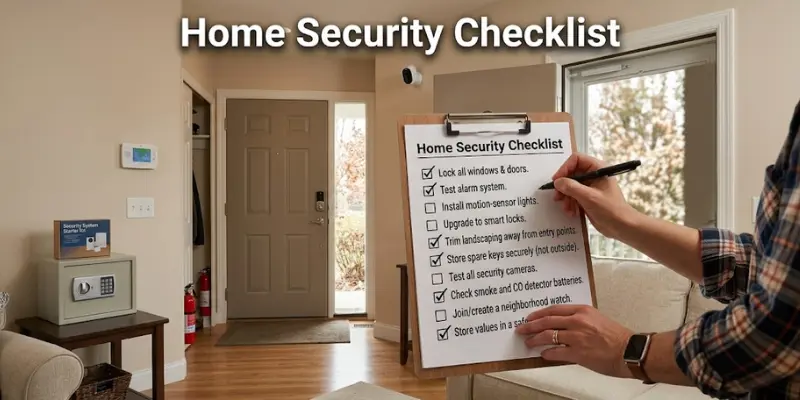
Security is another part of household safety.
Check:
- Exterior doors have functioning locks.
- Windows can be secured.
- Exterior lighting is adequate.
- Garage doors operate properly.
- Entry points are not hidden by excessive vegetation.
- House numbers are visible.
- Spare keys are not left in obvious outdoor locations.
- Security devices are maintained.
- Emergency access is not blocked.
Security improvements should not interfere with emergency escape. Doors and windows must remain usable as required for occupants to leave safely.
Garage, Basement, and Storage Checklist
Storage areas are frequently overlooked during routine household inspections.
Garage
- Flammable materials are stored appropriately.
- Chemicals are kept away from children.
- Walkways are clear.
- Tools are stored securely.
- Heavy items are placed safely.
- Electrical equipment is in suitable condition.
- Vehicles are not left running inside an enclosed garage.
- Emergency access is maintained.
Basement and utility areas
- Water leaks are addressed.
- Heating equipment has appropriate clearance.
- Electrical warning signs are investigated.
- Combustible storage is controlled.
- Emergency exits are accessible.
- Lighting is adequate.
- Stairways are clear.
A complete home safety checklist should include these spaces even when they are used only occasionally.
Outdoor Home Safety Checklist
Outdoor areas can contain fall, fire, electrical, chemical, and security hazards.
Check:
- Walkways are clear.
- Exterior steps are stable.
- Handrails are secure.
- Outdoor lighting works.
- Balconies and decks are maintained.
- Pool or water areas have appropriate safety controls.
- Garden tools are stored securely.
- Pesticides are stored safely.
- Fuel and flammable liquids are handled according to product instructions.
- Tree branches are assessed when damaged or unstable.
- Driveways are free from major trip hazards.
- Garage and shed doors are secure.
A home safety checklist that stops at the front door leaves important hazards unchecked.
Emergency Preparedness Checklist
A safe home should be prepared for emergencies beyond everyday accidents.
Check whether the household has:
- Emergency contact information.
- First-aid supplies.
- Flashlights.
- Spare batteries.
- Emergency drinking water.
- Basic emergency supplies.
- Fire extinguishers.
- Smoke alarms.
- Carbon monoxide alarms.
- Emergency communication methods.
- Clearly identified escape routes.
- An outdoor meeting location.
- Important documents stored securely.
- Essential household supplies.
Every household member should know the basic emergency plan. Children should receive age-appropriate instructions about how to leave the home and how to contact emergency services.
Home Safety Checklist for Older Adults
Older adults may face additional fall risks related to lighting, stairs, vision, balance, mobility, and bathroom access.
Review:
- Bedroom-to-bathroom pathways.
- Night lighting.
- Stair lighting.
- Handrails.
- Bathroom grab bars where appropriate.
- Shower and bathtub surfaces.
- Loose rugs.
- Uneven flooring.
- Electrical cords across walking paths.
- Frequently used items stored within safe reach.
- Emergency communication access.
The CDC’s STEADI program provides a home fall-prevention checklist that addresses hazards in areas including stairs, floors, kitchens, bedrooms, and bathrooms.
A home safety checklist should be adapted to the person’s actual mobility and daily routine rather than using the same approach for every household.
Home Safety Checklist for New Homeowners
A newly purchased or newly occupied home should still receive a safety review.
Check:
- Smoke alarm locations.
- CO alarm locations.
- Electrical outlets.
- Visible wiring.
- Breaker panel warning signs.
- Stairs and handrails.
- Windows and doors.
- Locks.
- Kitchen appliances.
- Heating equipment.
- Fire extinguishers.
- Emergency exits.
- Garage.
- Basement.
- Outdoor areas.
- Chemical storage.
- Furniture stability.
- Emergency supplies.
Do not assume that a new, renovated, or recently purchased property is automatically free from safety hazards.
How Often Should You Use a Home Safety Checklist?
There is no single schedule that fits every household. The appropriate frequency depends on the property, occupants, equipment, local conditions, and changes inside the home.
A practical routine is:
- Perform a detailed home safety checklist review at least once or twice a year.
- Check smoke alarms according to manufacturer guidance and established fire-safety recommendations.
- Check CO alarms regularly according to manufacturer instructions.
- Review fire extinguishers according to manufacturer requirements.
- Recheck child-safety measures as children grow.
- Review fall hazards when an older adult’s mobility changes.
- Inspect after renovations.
- Inspect after major furniture changes.
- Review outdoor areas after severe weather.
- Recheck safety equipment after an incident.
Frequent smaller checks can be useful because household conditions change between annual reviews.
Common Home Safety Checklist Mistakes
Checking only visible hazards
A quick visual walk-through may miss electrical warning signs, chemical storage problems, unstable furniture, or blocked secondary exits.
Ignoring outdoor areas
Garages, balconies, decks, sheds, driveways, and walkways are part of the household safety environment.
Inspecting only at adult eye level
Children may access hazards that adults do not notice during a normal inspection.
Forgetting emergency exits
Furniture and storage can gradually reduce access to doors and windows.
Treating safety equipment as permanent
Alarms, extinguishers, gates, locks, and other safety devices require correct installation, maintenance, testing, and replacement when necessary.
Attempting repairs beyond your skills
A checklist is an identification tool. It does not turn a homeowner into an electrician, gas technician, structural professional, or fire-system specialist.
Printable Home Safety Checklist
Use the following condensed home safety checklist during a household review:
Entry and Exits
- Doors operate correctly.
- Exit routes are clear.
- Steps and handrails are secure.
- Exterior lighting works.
- Address numbers are visible.
Living Areas
- Walkways are clear.
- Rugs are stable.
- Furniture is secure.
- TVs are stable or anchored.
- Electrical cords are undamaged.
- Heating equipment has suitable clearance.
Kitchen
- Cooking equipment is maintained.
- Combustible materials are away from heat.
- Outlets are not overloaded.
- Chemicals are secured.
- Knives are stored safely.
- Fire protection equipment is accessible.
Bathroom
- Floors are reasonably slip-resistant.
- Bath and shower areas are safe.
- Medicines are secured.
- Chemicals are secured.
- Electrical equipment is kept away from water.
- Lighting is adequate.
Bedrooms
- Beds and furniture are stable.
- Walking areas are clear.
- Heaters have suitable clearance.
- Smoke alarms are maintained.
- CO alarms are maintained where appropriate.
- Emergency exits are accessible.
Child Safety
- Furniture is anchored where appropriate.
- Dangerous chemicals are secured.
- Medicines are inaccessible.
- Windows are appropriately secured.
- Stairs have suitable protection.
- Hot surfaces are inaccessible.
- Small hazardous objects are removed.
Electrical
- No damaged cords.
- No damaged plugs.
- No burning smells.
- No unusual sparking.
- No overloaded power strips.
- Electrical warning signs receive professional attention.
Fire and CO
- Smoke alarms are correctly located.
- Smoke alarms are tested.
- CO alarms are correctly located where needed.
- CO alarms are tested.
- Fire extinguishers are accessible.
- Escape routes are clear.
Garage and Outdoor Areas
- Chemicals are stored safely.
- Flammable materials are controlled.
- Walkways are clear.
- Tools are stored safely.
- Outdoor lighting works.
- Decks, balconies, and steps are maintained.
Emergency Preparedness
- First-aid supplies are available.
- Flashlights are available.
- Batteries are available.
- Emergency contacts are accessible.
- Escape routes are known.
- Outdoor meeting location is known.
What to Do After Completing the Home Safety Checklist
Do not leave the checklist as a list of observations. Turn the findings into corrective actions.
Prioritize conditions that could cause immediate serious harm, fire, poisoning, electrical injury, or blocked emergency escape.
Record each significant issue with:
- Location
- Hazard
- Risk priority
- Recommended action
- Responsible person
- Target completion date
- Completion status
Items requiring electrical, gas, structural, fire-system, or other specialist expertise should be referred to an appropriately qualified professional.
After corrective actions are completed, review the affected area again. A home safety checklist becomes more useful when it is part of an ongoing maintenance process rather than a one-time document.
Final Home Safety Checklist Review
A complete home safety checklist should cover the entire property rather than one room or one type of hazard. Entryways, living rooms, kitchens, bathrooms, bedrooms, stairs, electrical systems, fire protection, carbon monoxide protection, child safety, security, garages, outdoor areas, and emergency preparedness all deserve attention.
The most useful checklist is one that matches the actual household. Families with children should focus strongly on childproofing and furniture stability. Homes with older adults should pay close attention to fall hazards, lighting, stairs, and bathrooms. Properties with fuel-burning appliances require appropriate carbon monoxide protection and professional maintenance.
Regularly using a home safety checklist can help homeowners identify conditions that may otherwise remain unnoticed. The checklist should support safe habits, routine maintenance, appropriate safety equipment, and professional evaluation when a hazard exceeds the homeowner’s knowledge or ability.
Please Write Your Comments