Home Safety Assessment: Complete Room-by-Room Guide
Updated: 14-Sep-2026
28
A home safety assessment is a systematic inspection of a house to identify hazards that could cause injuries, fires, falls, electrical incidents, poisoning, or other emergencies. A proper assessment looks beyond obvious problems and examines how people actually use each room.
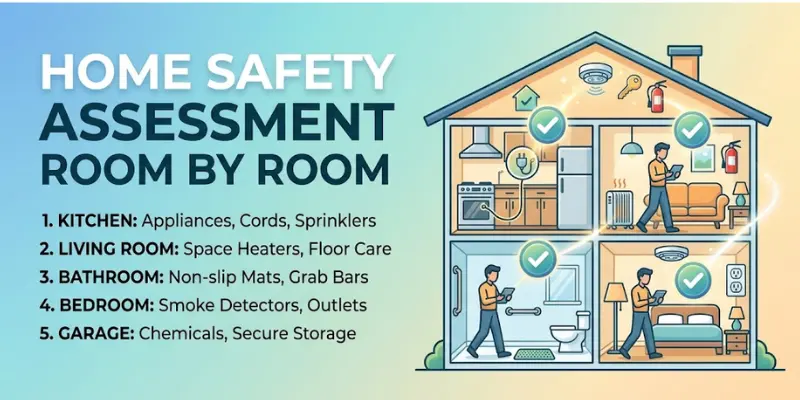
Home safety is not limited to having a fire extinguisher or locking the front door. Floors, stairs, electrical outlets, appliances, windows, furniture, smoke alarms, carbon monoxide alarms, emergency exits, and outdoor areas all contribute to household safety.
If you are beginning with general household risks, see our guide on What Are Safety Precautions at Home. A room-by-room home safety assessment provides a more structured way to identify, document, and prioritize those risks.
What Is a Home Safety Assessment?
A home safety assessment is a planned inspection of the property to find conditions that could threaten residents, visitors, pets, or emergency responders.
The assessment can include:
- Fire and smoke hazards
- Carbon monoxide risks
- Electrical hazards
- Slip, trip, and fall hazards
- Child safety hazards
- Bathroom and kitchen risks
- Unsafe furniture placement
- Poor lighting
- Blocked exits
- Security weaknesses
- Outdoor and garage hazards
- Emergency preparedness gaps
The goal is not simply to create a list of problems. A useful assessment identifies the hazard, determines who may be affected, estimates its seriousness, and establishes a practical corrective action.
Why Is a Home Safety Assessment Important?
Household hazards can develop gradually. A loose handrail, overloaded power strip, blocked hallway, expired smoke alarm, or unstable bookshelf may not appear dangerous until an incident occurs.
A regular home safety assessment helps homeowners identify these conditions before they become emergencies.
It is particularly useful after:
- Moving into a new home
- Completing renovations
- Purchasing new appliances
- Having children
- Caring for an older adult
- Installing a fireplace or heating system
- Changing the home’s layout
- Experiencing a fire, electrical incident, fall, or other safety event
For a broader overview of household hazards, you can also review Common Safety Hazards at Home.
How to Conduct a Home Safety Assessment
Start at the exterior and move through the property systematically. Do not inspect rooms randomly.
Carry a checklist, flashlight, phone or camera, and a way to record corrective actions. Do not attempt repairs that require professional electrical, gas, structural, or fire-safety expertise.
A practical inspection sequence is:
- Entry and exit routes
- Living room and common areas
- Kitchen
- Bathrooms
- Bedrooms
- Children’s areas
- Stairways and hallways
- Electrical systems
- Fire protection
- Carbon monoxide protection
- Security
- Emergency preparedness
- Outdoor areas
- Garage and storage spaces
Use a Simple Risk Priority System
Classify each hazard according to its potential severity.
High risk: A condition that could cause serious injury, death, fire, poisoning, or prevent emergency escape.
Medium risk: A condition that could cause injury or property damage but is less immediately dangerous.
Low risk: A minor issue that should still be corrected as part of routine maintenance.
Record the hazard, location, risk level, recommended correction, responsible person, and target completion date.
Start With Home Entry and Exit Routes
Every home safety assessment should begin by checking how people enter and leave the property.
Inspect:
- Front and back doors
- Door locks
- Door frames
- Walkways
- Exterior lighting
- Steps
- Porches
- Handrails
- Emergency exits
- Exit routes
Make sure doors can be opened without unnecessary difficulty during an emergency.
Do not allow furniture, boxes, shoes, equipment, or storage containers to obstruct normal exit routes.
Check whether exterior steps are stable and whether handrails are secure. Uneven paving and poor lighting can create fall hazards before someone even enters the house.
Home Safety Assessment for Living Room
Living rooms contain many electrical devices, furniture items, cords, rugs, fireplaces, and decorative objects.
Check:
- Power strips and extension cords
- Television placement
- Furniture stability
- Floor rugs
- Walkways
- Fireplace areas
- Lamps
- Electrical outlets
- Window coverings
- Heating equipment
Secure unstable furniture and televisions where appropriate. Keep electrical cords away from walking paths.
Remove rugs that slide easily or use appropriate non-slip solutions.
Keep combustible materials away from fireplaces, heaters, and other heat sources.
A living room inspection should also verify that furniture does not block doors, windows, or emergency escape routes.
Home Safety Assessment for Kitchen
The kitchen contains several simultaneous hazards, including heat, electricity, sharp objects, chemicals, water, and combustible materials.
Inspect:
- Stove and oven
- Microwave
- Refrigerator
- Small appliances
- Electrical outlets
- Power cords
- Gas connections
- Cabinets
- Cleaning products
- Knives
- Fire extinguisher
- Smoke alarm placement
- Cooking ventilation
Keep towels, paper products, curtains, and other combustible materials away from cooking surfaces.
Store knives and cleaning chemicals where children cannot easily access them.
Do not overload kitchen outlets with multiple high-power appliances.
If you have young children, combine this inspection with our Child Safety at Home Kitchen guide.
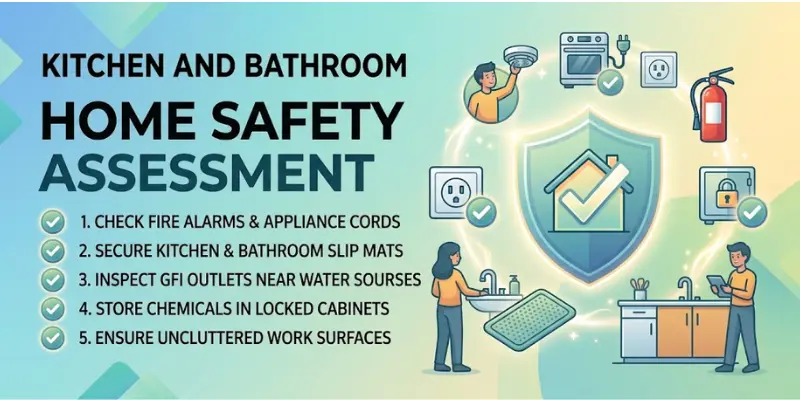
Home Safety Assessment for Bathrooms
Bathrooms require special attention because water, electricity, slippery surfaces, hot water, and confined spaces can create multiple hazards.
Check:
- Shower and bathtub surfaces
- Grab bars
- Bathroom mats
- Electrical outlets
- Ground-fault protection
- Water temperature
- Medicines
- Cleaning chemicals
- Cabinet locks
- Lighting
- Ventilation
Keep electrical devices away from sinks, bathtubs, and wet surfaces.
For households with children, store medicines, cleaning products, cosmetics, and other potentially hazardous substances securely.
Assess Bedrooms and Sleeping Areas
Bedrooms should provide safe sleeping conditions and clear escape routes.
Inspect:
- Beds and bed frames
- Electrical cords
- Space heaters
- Lamps
- Windows
- Window coverings
- Furniture stability
- Smoke alarms
- Carbon monoxide alarms
- Exit routes
Avoid placing heaters close to bedding, curtains, furniture, or other combustible materials.
Check that windows intended for emergency escape can be opened when necessary and are not obstructed by furniture.
Smoke alarms deserve particular attention. The National Fire Protection Association’s smoke alarm installation guidance recommends smoke alarms in bedrooms, outside separate sleeping areas, and on every level of the home, including the basement.
Assess Children’s Areas and Childproofing
Children can encounter hazards that adults barely notice.
During a home safety assessment, inspect areas from a child’s perspective.
Look for:
- Unsecured furniture
- Accessible medicines
- Cleaning products
- Open electrical outlets
- Window hazards
- Blind cords
- Sharp corners
- Stairs
- Small objects
- Hot surfaces
- Accessible tools
- Unlocked cabinets
The U.S. Consumer Product Safety Commission recommends measures such as anchoring furniture and televisions, using appropriate safety gates, securing hazardous cabinets, and installing smoke and carbon monoxide alarms in appropriate locations.
See How to Ensure Child Safety at Home for a broader child-safety strategy.
A childproofing inspection should not create a false sense of security. Safety devices must be correctly installed and maintained, and children still require supervision.
Assess Stairways and Hallways
Stairs and hallways should remain clear and adequately illuminated.
Check:
- Handrails
- Stair treads
- Carpeting
- Lighting
- Loose objects
- Rugs
- Storage
- Emergency exits
- Safety gates
Do not use stairs as permanent storage areas.
If young children live in the home, use appropriate safety gates where necessary. Gates installed at the top of stairs should be securely mounted according to manufacturer instructions.
Assess Electrical Safety
Electrical safety should be a dedicated part of every home safety assessment.
Look for:
- Damaged cords
- Loose outlets
- Warm or discolored receptacles
- Flickering lights
- Frequent breaker trips
- Overloaded power strips
- Extension cords used permanently
- Improperly repaired wiring
- Electrical equipment near water
Never ignore repeated circuit-breaker trips or signs of overheating.
Do not attempt complex electrical repairs unless you are qualified to perform them safely and according to applicable electrical requirements.
For a dedicated inspection, see Electrical Home Safety Inspection.
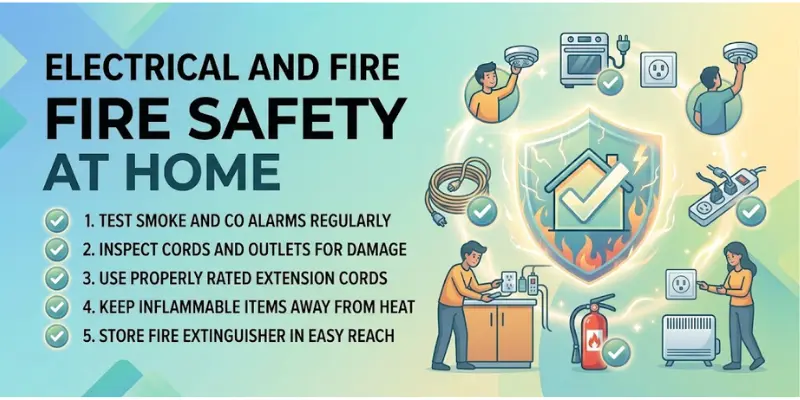
Assess Fire Safety Equipment
Fire protection should be one of the highest priorities in a home safety assessment.
Check:
- Smoke alarms
- Fire extinguishers
- Escape routes
- Fire doors where applicable
- Cooking areas
- Heating equipment
- Electrical equipment
- Combustible storage
- Emergency lighting
Test smoke alarms according to manufacturer instructions and replace units according to their service-life requirements.
The NFPA guidance linked above recommends installing smoke alarms inside bedrooms, outside sleeping areas, and on every level of the home.
You can also review our Fire Detector and Smoke Alarm guides.
Fire extinguishers should be accessible, appropriate for the hazards present, and maintained according to manufacturer instructions. See Fire Extinguisher Maintenance for additional guidance.
Assess Carbon Monoxide Protection
Carbon monoxide is an invisible and odorless gas that can become dangerous when fuel-burning appliances, fireplaces, vehicles, or other combustion sources produce CO indoors.
During your home safety assessment, check:
- CO alarm locations
- Alarm condition
- Battery or power status
- Fuel-burning appliances
- Garage access
- Heating equipment
- Water heaters
- Fireplaces
- Ventilation systems
The U.S. EPA recommends CO alarms near sleeping areas and provides additional placement guidance for different areas of a home.
CO alarms are a backup safety measure, not a replacement for proper installation, maintenance, and inspection of fuel-burning appliances.
Follow the alarm manufacturer’s instructions and applicable local requirements for placement, testing, and replacement.
Assess Home Security
Home security is another component of household safety.
Inspect:
- Exterior doors
- Door locks
- Window locks
- Exterior lighting
- Garage doors
- Door viewers or cameras
- Accessible windows
- Spare-key practices
- Address visibility for emergency responders
Avoid leaving spare keys in obvious outdoor locations.
Make sure windows and doors can be secured without preventing occupants from escaping during an emergency.
Assess Emergency Preparedness
A safe home should be prepared for emergencies beyond fires.
Check whether your household has:
- Emergency contact information
- First-aid supplies
- Flashlights
- Backup batteries
- Emergency drinking water
- Essential medications
- Basic tools
- Fire extinguishers
- Smoke alarms
- CO alarms
- Emergency communication methods
Store emergency supplies where household members can locate them quickly.
Create an emergency plan that identifies escape routes and a meeting location outside the home.
Assess Outdoor Areas
Outdoor areas can contain hazards that are easy to overlook.
Inspect:
- Walkways
- Steps
- Driveways
- Decks
- Balconies
- Pools
- Outdoor electrical equipment
- Grills
- Garden tools
- Chemicals
- Fences
- Exterior lighting
Remove standing water and unnecessary clutter.
Keep grills and other heat-producing equipment away from combustible structures and materials.
Pool areas require special attention when children are present. Barriers, gates, alarms, and supervision should work together rather than relying on one protective measure.
Assess Garage and Storage Areas
Garages often combine electrical equipment, fuel, chemicals, tools, vehicles, and combustible materials.
Check:
- Gasoline and fuel storage
- Paints and solvents
- Power tools
- Extension cords
- Electrical equipment
- Vehicle exhaust
- Garage doors
- Shelving
- Heavy storage containers
- Water heaters
- Furnaces
- Emergency exits
Keep hazardous chemicals in appropriate containers and store them according to manufacturer instructions.
Never use a garage as a place to accumulate unnecessary combustible materials.
If the garage is attached to the house, pay particular attention to the door between the garage and living space.
Assess Home Safety for Older Adults
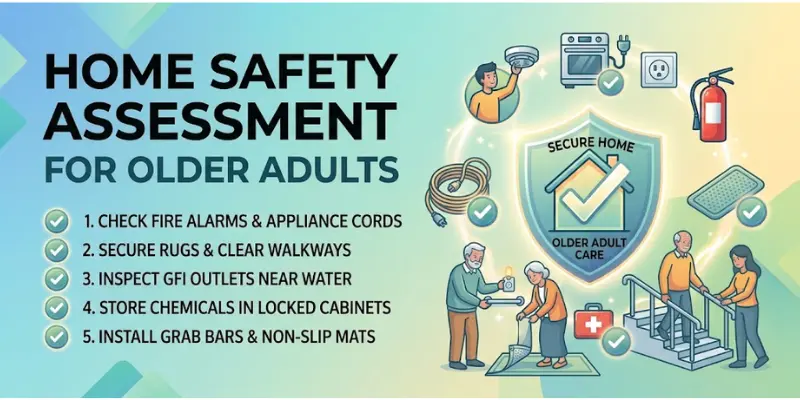
Older adults may face increased fall risks from clutter, poor lighting, unstable rugs, stairs, bathrooms, and changing mobility needs.
During a home safety assessment, pay special attention to:
- Stairways
- Bathroom floors
- Shower and bathtub access
- Toilet area
- Bed height
- Lighting
- Throw rugs
- Electrical cords
- Furniture placement
- Handrails
The CDC recommends removing trip hazards, improving lighting, installing grab bars in bathrooms, and placing handrails on both sides of staircases as part of making homes safer for older adults.
The safest home arrangement depends on the individual’s mobility and daily activities. A professional assessment may be appropriate when there are significant mobility or fall concerns.
Create a Home Safety Assessment Checklist
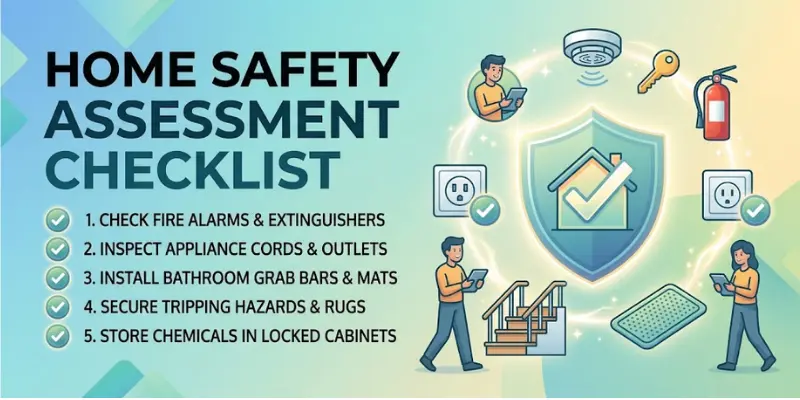
A written checklist makes it easier to repeat the inspection and track improvements.
Entry and Exits
- Doors open and close properly
- Emergency exits are unobstructed
- Exterior steps are stable
- Handrails are secure
- Walkways are adequately illuminated
- Address numbers are visible
Living Areas
- Furniture is stable
- Walkways are clear
- Rugs do not slide
- Cords are controlled
- Heating equipment has adequate clearance
- Windows and exits are accessible
Kitchen
- Cooking appliances are in good condition
- Combustible materials are away from heat
- Electrical outlets are not overloaded
- Cleaning chemicals are secured
- Knives are safely stored
- Fire extinguisher is accessible
- Smoke alarm protection is appropriate
Bathroom
- Floors provide adequate traction
- Grab bars are installed where appropriate
- Electrical devices are kept away from water
- Medicines are secured
- Cleaning products are inaccessible to young children
- Lighting is adequate
Bedrooms
- Smoke alarms are correctly located
- CO alarms are correctly located
- Escape routes are clear
- Heaters have safe clearance
- Furniture is stable
- Windows are accessible when needed for emergency escape
Electrical
- Cords are undamaged
- Outlets show no signs of overheating
- Power strips are not overloaded
- Extension cords are not being used as permanent wiring
- Breaker trips are investigated
Fire and CO
- Smoke alarms are tested
- CO alarms are tested
- Fire extinguishers are accessible
- Escape routes are clear
- Emergency meeting location is established
Outdoor Areas
- Walkways are clear
- Stairs and railings are secure
- Outdoor lighting works
- Pools have appropriate barriers
- Chemicals are safely stored
- Grills and heat sources have adequate clearance
Document the Findings
Do not rely on memory after completing the inspection.
A simple table can make the assessment actionable:
| Location | Hazard | Risk Level | Corrective Action | Status |
|---|---|---|---|---|
| Kitchen | Overloaded outlet | High | Have electrical system evaluated | Open |
| Stairway | Loose handrail | High | Repair or replace handrail | Open |
| Bedroom | Missing smoke alarm | High | Install appropriate alarm | Open |
| Bathroom | Slippery floor | Medium | Improve slip resistance | Open |
| Garage | Chemical clutter | Medium | Organize and secure storage | Open |
| Living room | Loose rug | Low | Remove or secure rug | Open |
Photographs can help document conditions before and after corrective work.
When Should You Call a Professional?
A DIY home safety assessment can identify many obvious hazards, but some problems require qualified professionals.
Consider professional help for:
- Electrical wiring problems
- Gas leaks or suspected combustion problems
- Structural damage
- Roof-related safety concerns
- Major fire protection issues
- Significant accessibility modifications
- Complex security systems
- Persistent water or moisture problems
- Serious fall risks
- Suspected carbon monoxide problems
Never treat a suspected gas leak, electrical emergency, fire, or dangerous CO exposure as a routine maintenance issue.
How Often Should You Perform a Home Safety Assessment?
There is no single schedule that fits every household.
A practical approach is to perform a detailed home safety assessment at least annually and conduct smaller checks whenever circumstances change.
Repeat the assessment after:
- Moving
- Renovating
- Having a baby
- Children becoming mobile
- An older adult moving into the home
- Purchasing major appliances
- Installing heating equipment
- Experiencing a safety incident
- Changing furniture layouts
- Severe weather or property damage
Smoke and CO alarms should be checked according to their manufacturer’s instructions rather than waiting for the annual inspection.
Common Home Safety Assessment Mistakes
Only Checking the Most Obvious Hazards
People often look for fire extinguishers and smoke alarms while ignoring trip hazards, overloaded outlets, unstable furniture, or blocked exits.
Inspecting Only at Eye Level
Children encounter hazards at floor level, while older adults may be affected by lighting, stairs, and bathroom access.
Inspect the home from different perspectives.
Ignoring Outdoor Areas
Driveways, balconies, pools, garages, sheds, and walkways can contain serious hazards.
Failing to Document Problems
A hazard that is not recorded can easily be forgotten.
Treating Safety Equipment as a Complete Solution
Smoke alarms, CO alarms, fire extinguishers, and safety gates are important, but they do not replace safe behavior, maintenance, supervision, or professional inspection when needed.
Home Safety Assessment for a New Home
A new house should be assessed even when it appears clean and well maintained.
Check:
- Smoke and CO alarm locations
- Electrical outlets
- Breaker panel
- Stairs
- Railings
- Windows
- Doors
- Locks
- Appliances
- Fire extinguisher availability
- Emergency exits
- Garage
- Outdoor areas
Do not assume that a newly built or recently purchased home is automatically hazard-free.
Home Safety Assessment After Renovation
Renovation can introduce new risks.
Inspect after work involving:
- Electrical systems
- Plumbing
- Gas appliances
- Walls and ceilings
- Flooring
- Stairs
- Windows
- Doors
- Kitchens
- Bathrooms
- Heating and cooling systems
Check that construction materials, tools, nails, wires, dust, and temporary barriers have been removed before normal household use resumes.
Home Safety Assessment for Rental Properties
Renters can also conduct a home safety assessment.
Document problems such as:
- Damaged outlets
- Missing smoke alarms
- Unsafe stairs
- Broken locks
- Poor lighting
- Water leaks
- Blocked exits
- Damaged windows
- Unsafe heating equipment
Notify the property owner or manager about hazards that require building-level repairs.
Keep written records of reported safety issues when appropriate.
Final Home Safety Assessment Checklist
Before considering the assessment complete, verify:
- Entry and exit routes are clear
- Doors and windows function correctly
- Stairs and handrails are secure
- Floors are free from major trip hazards
- Furniture is stable
- Kitchen appliances are safe
- Bathroom hazards are controlled
- Electrical equipment is in good condition
- Smoke alarms are correctly positioned and maintained
- CO alarms are correctly positioned and maintained
- Fire extinguishers are accessible
- Children cannot easily access dangerous substances or equipment
- Outdoor areas are maintained
- Garage storage is organized
- Emergency supplies are available
- Emergency escape routes are known
- Serious hazards have been assigned corrective actions
Frequently Asked Questions About Home Safety Assessment
What is included in a home safety assessment?
A home safety assessment typically covers fire protection, electrical safety, fall hazards, child safety, bathrooms, kitchens, bedrooms, emergency exits, carbon monoxide protection, security, outdoor areas, garages, and emergency preparedness.
How often should you conduct a home safety assessment?
A detailed assessment can be performed annually, with additional checks after renovations, household changes, new appliances, safety incidents, or changes involving children or older adults.
Can I perform a home safety assessment myself?
Yes. Homeowners can identify many common hazards using a structured checklist. Electrical, gas, structural, and other specialized hazards may require qualified professionals.
What is the difference between a home safety assessment and a home inspection?
A home inspection generally evaluates the physical condition of a property, often during a real-estate transaction. A home safety assessment focuses specifically on hazards that could affect the safety of people living in or visiting the home.
What are the most important things to check first?
Prioritize conditions that could cause immediate serious harm, including blocked exits, fire hazards, suspected gas or CO problems, dangerous electrical conditions, unstable stairs, and unsecured furniture that could tip over.
Should renters perform a home safety assessment?
Yes. Renters can inspect their living space for hazards and report building-related problems to the landlord or property manager.
Conclusion
A home safety assessment turns household safety from a general concern into a practical inspection process.
By examining the property room by room, documenting hazards, assigning risk levels, and completing corrective actions, homeowners can identify problems before they result in injuries, fires, electrical incidents, falls, or other emergencies.
The strongest assessment combines everyday observation with appropriate safety equipment, regular maintenance, responsible household practices, and professional assistance when a hazard exceeds the homeowner’s expertise.
A written checklist should be reviewed periodically because household conditions change over time. New appliances, children, older adults, renovations, furniture changes, and seasonal conditions can all introduce new risks.
Author: Best Safety Equipments Editorial Team
Please Write Your Comments