Food Safety Standards for Seafood: FDA Rules, HACCP, and Compliance Guide
Updated: 11-Nov-2026
22
Seafood is an important part of the American food supply, providing protein, essential nutrients, and a wide variety of products for consumers. However, fish and seafood can also carry biological, chemical, and physical hazards when they are harvested, processed, transported, or stored under unsafe conditions. For this reason, food safety standards for seafood play an essential role in protecting public health and maintaining consumer confidence. For more information read article Food Safety Legislation
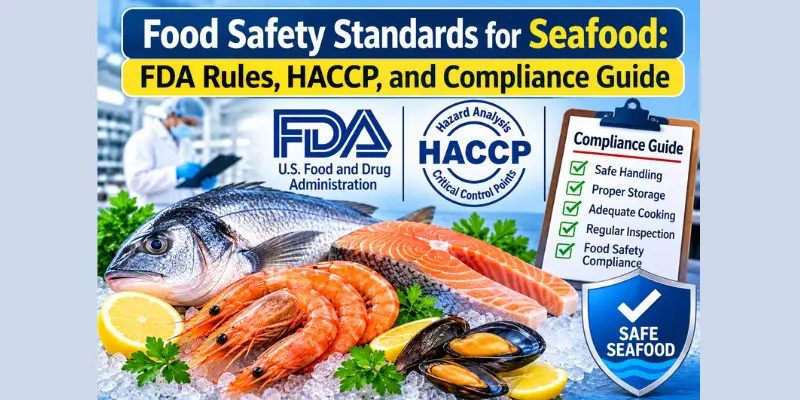
In the United States, seafood businesses must follow applicable federal, state, and local requirements. The Food and Drug Administration (FDA) is the primary federal agency responsible for regulating most seafood products. One of its most important regulatory frameworks is the Seafood Hazard Analysis and Critical Control Point (HACCP) regulation, established under Title 21 of the Code of Federal Regulations, Part 123.
These requirements help seafood processors identify potential hazards and establish appropriate controls throughout production. They also address sanitation, processing practices, recordkeeping, corrective actions, and special requirements for certain imported and shellfish products.
Understanding these standards is important for seafood processors, importers, distributors, cold storage operators, restaurants, and other businesses involved in the seafood supply chain. This guide explains US seafood safety regulations, HACCP requirements, contamination risks, safe handling practices, storage conditions, and practical steps businesses can take to maintain compliance.
What Are Food Safety Standards for Seafood?
Food safety standards for seafood are regulations, procedures, and recommended practices designed to ensure that fish and fishery products are safe for human consumption. They address potential hazards that may occur during harvesting, processing, packaging, transportation, storage, and preparation.
Unlike some other food categories, seafood requires specialized controls because different fish species and seafood products can present different safety risks. For example, certain fish may develop histamine when temperature controls are inadequate, while raw or undercooked seafood may carry harmful microorganisms or parasites.
In the United States, the FDA administers a seafood safety program under the Federal Food, Drug, and Cosmetic Act, the Public Health Service Act, and related regulations. Its regulatory framework includes inspections, compliance activities, enforcement, research, and industry guidance.
The main regulatory requirements for seafood processors are established under 21 CFR Part 123. This regulation requires covered seafood processors to conduct hazard analyses and implement HACCP plans when hazards requiring control are identified.
The FDA also publishes its Fish and Fishery Products Hazards and Controls Guidance, which helps businesses understand potential hazards and appropriate control measures. The June 2022 edition is an important technical reference for developing seafood HACCP plans.
Businesses can consult the FDA Seafood Guidance Documents and Regulatory Information for official regulations and guidance.
Why Are Seafood Safety Standards Important?
Seafood safety standards are important because contamination can occur at almost every stage of the seafood supply chain. Fish may be exposed to microorganisms in harvesting waters, while processing facilities may introduce contamination through equipment, workers, water, or poor sanitation practices.
Furthermore, certain seafood products contain naturally occurring hazards that cannot be identified through appearance or smell alone. Histamine formation in susceptible fish, marine toxins, parasites, and environmental contaminants require specific preventive measures.
The following factors explain why seafood safety standards are essential.
Protecting Public Health
The primary purpose of seafood safety regulations is to reduce the risk of foodborne illness and protect consumers. Contaminated fish and shellfish can cause serious health problems, particularly when harmful bacteria, viruses, parasites, or toxins are present.
Proper harvesting, processing, temperature control, and sanitation help reduce these risks.
Preventing Seafood Contamination
Seafood may become contaminated through unsafe harvesting areas, contaminated water, unclean equipment, improper handling, or contact with other raw products. Food safety standards establish procedures to prevent contamination and maintain sanitary conditions.
Maintaining Product Quality
Temperature management, hygienic processing, and appropriate packaging help maintain seafood quality. Although quality and safety are not identical, proper handling can help prevent spoilage and reduce certain safety risks.
Supporting Legal Compliance
Seafood processors and importers must understand which federal requirements apply to their activities. Failure to comply with applicable regulations may lead to inspections, corrective actions, product detention, recalls, or other enforcement measures.
Building Consumer Confidence
Consumers expect seafood products to be safe, properly identified, and handled responsibly. Businesses that maintain effective food safety systems can strengthen their reputation and relationships with retailers, restaurants, and distributors.
Protecting Seafood Businesses
A well-managed safety program can help reduce product losses, customer complaints, recalls, legal exposure, and interruptions to business operations.
Who Regulates Seafood Safety in the United States?
Several federal and state authorities contribute to seafood safety in the United States. However, the FDA has the primary federal regulatory role for most fish and fishery products.
Understanding the responsibilities of these agencies helps seafood businesses identify the requirements that apply to their products and operations.
Food and Drug Administration (FDA)
The FDA regulates most domestic and imported seafood products. Its responsibilities include seafood safety requirements, HACCP regulations, inspections, compliance, enforcement, and industry guidance.
The FDA’s seafood safety framework is particularly important for processors handling fresh fish, frozen seafood, shellfish, smoked fish, and other fishery products covered by the relevant regulations.
The agency also publishes guidance explaining hazards such as pathogenic bacteria, parasites, natural toxins, histamine, chemical contaminants, and allergens.
National Oceanic and Atmospheric Administration (NOAA)
NOAA Fisheries supports sustainable fisheries management, seafood inspection and quality programs, fisheries monitoring, and related activities.
Its voluntary seafood inspection services can help participating businesses assess product quality, grading, and other characteristics. However, NOAA’s voluntary inspection services should not be confused with mandatory FDA seafood safety requirements.
United States Department of Agriculture (USDA)
The USDA’s Food Safety and Inspection Service (FSIS) regulates covered meat, poultry, and processed egg products. Most seafood is regulated by the FDA rather than USDA FSIS.
Businesses handling products that combine seafood with meat or poultry ingredients should determine which agency has jurisdiction over the particular product.
State and Local Health Authorities
State and local agencies may oversee restaurants, retail seafood markets, food service establishments, shellfish harvesting programs, and other activities within their jurisdictions.
Their responsibilities can include food establishment permits, inspections, sanitation requirements, and enforcement of applicable state or local food codes.
Seafood businesses should therefore understand both federal requirements and the additional rules applicable to their operating locations.
Understanding FDA Seafood HACCP Requirements
One of the most important parts of food safety standards for seafood is the FDA Seafood HACCP regulation.
HACCP stands for Hazard Analysis and Critical Control Point. It is a preventive food safety system designed to identify hazards and establish controls at important stages of food production.
The FDA’s seafood HACCP regulation is established under 21 CFR Part 123. It applies to covered processors of fish and fishery products, including certain domestic and imported seafood processing activities.
Under this regulation, covered processors must conduct a hazard analysis to determine whether food safety hazards are reasonably likely to occur. When such hazards are identified, an appropriate written HACCP plan must be developed and implemented.
A seafood HACCP system generally involves seven internationally recognized principles.
1. Conduct a Hazard Analysis
The first step is identifying potential biological, chemical, and physical hazards associated with a seafood product and its production process.
For example, a processor handling tuna may need to consider histamine formation, while a facility producing raw fish products may need to evaluate parasite and pathogen hazards.
The analysis should consider the product’s characteristics, processing steps, packaging, storage conditions, and intended use.
2. Determine Critical Control Points
Critical Control Points (CCPs) are steps where control can be applied to prevent, eliminate, or reduce an identified food safety hazard to an acceptable level.
Depending on the product and process, a CCP may involve cooking, chilling, freezing for parasite destruction, or another necessary control.
Not every production step is automatically a CCP. Businesses must determine critical points through their actual hazard analysis.
3. Establish Critical Limits
Critical limits define measurable boundaries that must be met at a CCP to control the identified hazard.
For example, a specific time and temperature combination may be necessary for a validated cooking process. A different product or hazard may require another type of measurable limit.
These limits should be based on appropriate scientific and regulatory information.
4. Establish Monitoring Procedures

Monitoring helps determine whether a CCP remains within its established critical limits.
Depending on the process, monitoring may involve temperature checks, time measurements, equipment readings, or other appropriate observations.
Employees responsible for monitoring should understand the procedure and know how to record results accurately.
5. Establish Corrective Actions
Corrective actions are necessary when monitoring shows that a critical limit has not been met.
The business must take appropriate action to control affected product, correct the underlying problem, and prevent unsafe seafood from entering commerce.
Corrective action procedures should be established in advance and documented as required.
6. Establish Verification Procedures
Verification activities help determine whether the HACCP system is functioning as intended.
These activities may include reviewing monitoring records, checking corrective action records, calibrating instruments, and conducting other required verification activities.
The purpose is to confirm that the food safety controls are implemented consistently.
7. Establish Recordkeeping Procedures
Records provide evidence that the HACCP system has been implemented and monitored.
Depending on the requirements, records may include hazard analyses, HACCP plans, monitoring results, corrective actions, verification activities, and other relevant information.
Accurate documentation also helps businesses investigate problems and respond to regulatory inspections.
For additional technical information, businesses should consult the FDA Seafood HACCP Guidance and the official 21 CFR Part 123 regulations.
Common Food Safety Hazards in Seafood
Seafood can present several different food safety hazards. The risks depend on the species, harvesting environment, processing method, storage conditions, and intended use of the product.
The FDA’s Fish and Fishery Products Hazards and Controls Guidance identifies numerous hazards that seafood processors should evaluate when developing their HACCP systems.
Biological Hazards
Biological hazards include bacteria, viruses, and parasites that may contaminate seafood or survive under certain processing and storage conditions.
Examples include:
- Vibrio species, which can be associated with raw or undercooked shellfish.
- Salmonella, which may contaminate seafood through unsafe handling or cross-contamination.
- Listeria monocytogenes, which can be a concern in certain ready-to-eat seafood products.
- Norovirus, which may be transmitted through contaminated shellfish or infected food handlers.
- Parasites that may occur in certain fish species and require appropriate controls.
Processors should identify the hazards relevant to their products rather than assuming that one control method works for every seafood category.
Chemical Hazards
Chemical hazards may include environmental contaminants, pesticide residues, aquaculture drugs, cleaning chemicals, and naturally occurring marine toxins.
Some fish species can accumulate methylmercury, while certain shellfish can contain marine biotoxins depending on harvesting conditions.
Processors should evaluate the relevant chemical hazards and use appropriate supplier controls, sourcing procedures, testing, and other measures where necessary.
Histamine Formation
Histamine formation is a significant seafood safety concern for certain fish species, particularly tuna, mahi-mahi, mackerel, and other susceptible species.
When these fish are exposed to inadequate temperature control, certain bacteria can convert naturally occurring histidine into histamine.
High histamine levels can cause scombroid fish poisoning. Importantly, histamine that has already formed cannot reliably be eliminated through ordinary cooking, freezing, or washing.
For this reason, temperature management from harvesting through distribution is essential.
Parasites
Certain raw or undercooked fish products may contain parasites that can cause illness.
Businesses preparing fish intended to be consumed raw or undercooked should evaluate applicable parasite hazards and use appropriate controls.
The FDA provides guidance on freezing treatments and other measures for controlling parasites in fish products. However, exemptions and special conditions may apply to certain products and processes.
Physical Hazards
Physical hazards include materials such as metal fragments, glass, plastic, or other foreign objects that may enter seafood during harvesting, processing, packaging, or transportation.
Facilities should establish appropriate preventive measures, equipment maintenance procedures, and inspection controls based on the hazards associated with their operations.
Seafood Processing Standards and Sanitation Requirements
Seafood processing facilities must maintain sanitary conditions and implement practices that prevent contamination.
Under the seafood HACCP regulation, covered processors must comply with applicable sanitation requirements, including the requirements of 21 CFR 123.11.
Sanitation procedures should address conditions that may affect seafood safety, such as water quality, food-contact surfaces, equipment cleanliness, employee hygiene, and protection against contamination.
Clean and Sanitize Processing Equipment
Knives, cutting boards, conveyors, storage containers, and other food-contact equipment should be cleaned and sanitized using appropriate procedures.
Cleaning removes visible soil and organic material, while sanitizing helps reduce microorganisms to appropriate levels.
Facilities should establish cleaning schedules and verify that sanitation procedures are performed effectively.
Maintain Employee Hygiene
Workers handling seafood should follow suitable hygiene practices, including proper handwashing, clean work clothing, and procedures that prevent contamination.
Employees should understand how to handle raw and ready-to-eat products separately and how to avoid transferring contaminants between processing areas.
Control Water and Ice Quality
Water and ice that come into direct contact with seafood can become sources of contamination if they are not suitable for their intended use.
Facilities should ensure that water and ice meet applicable requirements and are handled in sanitary conditions.
Ice-making equipment, storage bins, and handling tools should also be maintained and cleaned regularly.
Prevent Cross-Contamination
Raw seafood, cooked seafood, ready-to-eat products, and other food materials should be handled in ways that prevent contamination.
Separate equipment, appropriate workflow arrangements, proper cleaning, and suitable employee practices can help reduce cross-contamination risks.
Maintain Suitable Protective Equipment
Employees working in seafood processing facilities may require protective clothing, gloves, footwear, aprons, and other equipment depending on their tasks and workplace hazards.
The selection of PPE should consider both worker protection and hygienic food handling.
For more information about workplace protection, businesses can explore our guides on Food Industry PPE and Food Processing and Packaging PPE.
Protective equipment is an important workplace measure, but it cannot replace sanitation, cleaning, and food safety controls.
Seafood Storage and Temperature Control Standards
Temperature control is one of the most important elements of seafood safety.
Fish and shellfish are highly perishable products. When seafood remains at unsuitable temperatures, harmful microorganisms may grow, and certain species may develop histamine.
Seafood businesses should establish temperature controls appropriate to each product, process, and identified hazard.
Refrigerated Seafood Storage
Fresh seafood should be maintained under suitable refrigeration conditions. Facilities should establish and monitor storage temperatures according to the applicable regulatory requirements and the product’s safety characteristics.
Refrigeration equipment should be checked regularly, and temperature records should be maintained where required.
Seafood should be protected from contamination during storage and kept separate from chemicals and other materials that could compromise product safety.
Frozen Seafood Storage
Frozen seafood should remain under appropriate frozen storage conditions to maintain product safety and quality.
Facilities should monitor freezer temperatures, inspect packaging, and prevent unnecessary thawing and refreezing.
Freezing can control certain hazards under specified conditions, but it does not eliminate every microorganism, chemical contaminant, or toxin.
Temperature Control During Transportation
Seafood transportation requires suitable refrigerated or frozen conditions, depending on the product.
Transport vehicles should be clean, appropriately equipped, and capable of maintaining the required temperature throughout delivery.
Businesses should establish receiving procedures to check product condition, packaging, and temperature when shipments arrive.
Safe Cooking Temperatures for Consumers
For consumer food preparation, the FDA’s general safe food handling guidance recommends cooking fin fish to an internal temperature of 145°F, or until the flesh is opaque and separates easily with a fork.
Shrimp, lobster, and crabs should have pearly, opaque flesh. Clams, oysters, and mussels should be cooked until their shells open.
These are consumer cooking recommendations, not universal processing critical limits for every commercial seafood product. Seafood processors must establish controls appropriate to their specific hazards and regulatory obligations.
For additional information, consult the FDA Safe Food Handling Guidance.
FDA Requirements for Imported Seafood
The United States imports seafood from many countries. Imported fish and fishery products must meet applicable US food safety requirements before entering the American market.
The FDA uses several regulatory and compliance activities to help ensure that imported seafood is produced under appropriate conditions.
Seafood HACCP Requirements for Foreign Processors
Foreign seafood processors exporting products to the United States may be subject to the requirements of 21 CFR Part 123.
Their operations must comply with applicable seafood HACCP requirements, including hazard analysis, HACCP plans where required, sanitation controls, and recordkeeping.
The FDA may inspect foreign facilities and review relevant compliance information.
Importer Responsibilities
US seafood importers have responsibilities under applicable FDA requirements.
The seafood HACCP regulation includes specific requirements for importers under 21 CFR 123.12. These requirements include affirmative steps intended to ensure that imported seafood has been processed in accordance with the applicable seafood HACCP requirements.
Seafood imports that comply with the FDA seafood HACCP regulation may qualify for an exemption from certain Foreign Supplier Verification Program (FSVP) requirements under the conditions specified in the regulations.
However, businesses should not assume that every seafood shipment or every importer is automatically exempt from all import requirements. The applicable conditions must be reviewed carefully.
Import Documentation and Traceability
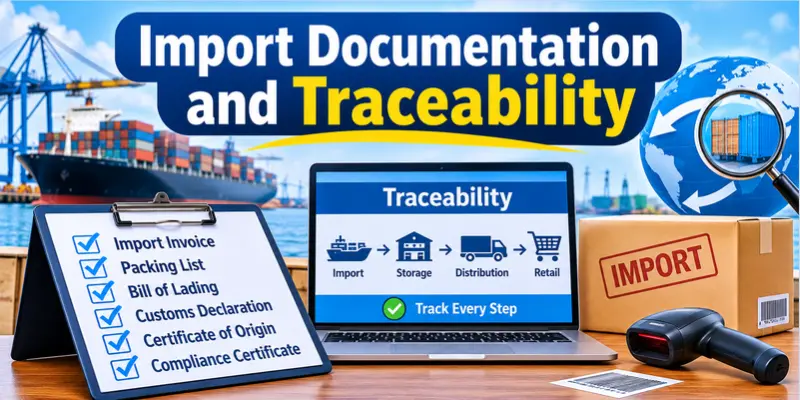
Importers should maintain relevant supplier information, product identification, shipping documents, and records necessary to demonstrate compliance.
Accurate documentation helps businesses identify the source of seafood, investigate safety concerns, and respond to regulatory inquiries.
FDA Import Inspections
The FDA may examine imported seafood shipments, review documents, collect samples, and take appropriate enforcement action when products fail to meet applicable requirements.
Products that do not comply with US food safety laws may be refused admission or subject to other regulatory action.
Importers should review the FDA Seafood Regulatory Information before establishing import procedures.
Shellfish Safety and Sanitation Requirements
Shellfish require specialized safety controls because they may accumulate microorganisms and marine toxins from their surrounding waters.
Oysters, clams, mussels, and other molluscan shellfish can present risks when harvested from contaminated waters or handled under unsuitable conditions.
The FDA works with state authorities and industry participants through the National Shellfish Sanitation Program (NSSP).
The program is designed to improve sanitary controls for molluscan shellfish produced and sold for human consumption.
Approved Harvesting Areas
Shellfish should be harvested from approved or otherwise appropriately classified growing areas under the applicable regulatory framework.
Harvesting from restricted or prohibited waters can create significant food safety risks.
Businesses should obtain shellfish from approved sources and verify the necessary supplier and harvest information.
Shellfish Identification and Traceability
Shellfish dealers must follow applicable tagging, labeling, shipping document, and recordkeeping requirements.
These measures help trace shellfish products back to their harvest or processing sources and support investigations when contamination is suspected.
Temperature and Handling Controls
Shellfish should be handled and stored under suitable conditions to reduce the risk of contamination and spoilage.
Processors and distributors should establish procedures for receiving, storage, transportation, and product handling according to applicable requirements.
Shellfish Sanitation Compliance
Businesses handling molluscan shellfish should understand the FDA’s National Shellfish Sanitation Program and the relevant state requirements.
The official FDA National Shellfish Sanitation Program provides information about the program and related guidance.
Seafood Labeling, Allergens, and Product Traceability
Accurate seafood labeling is an important part of food safety and consumer protection.
Labels help consumers identify products, understand their ingredients, and recognize relevant allergen information.
Seafood businesses should ensure that product labels comply with applicable FDA requirements and other relevant laws.
Correct Seafood Identification
Seafood products should be identified accurately by their appropriate common or usual names.
Using incorrect species names or misleading product descriptions can create consumer protection and regulatory concerns.
The FDA’s Seafood List provides information about acceptable market names and scientific names for different seafood species.
Allergen Labeling
Fish and crustacean shellfish are among the major food allergens recognized under US federal labeling requirements.
Food manufacturers must evaluate applicable allergen declaration requirements for products containing these ingredients.
Cross-contact can also occur when seafood is processed on shared equipment or in facilities handling other allergens. Appropriate sanitation, ingredient controls, and labeling procedures help reduce these risks.
Country of Origin Information
Certain seafood products are subject to country-of-origin labeling requirements under applicable federal rules, including requirements administered by the USDA for covered retail products.
Businesses should determine whether their products fall within the applicable categories and follow the relevant declaration requirements.
Traceability Records
Traceability helps businesses identify where seafood originated, how it moved through the supply chain, and which customers received affected products.
The FDA Food Traceability Rule may apply to certain foods included on the Food Traceability List, subject to its scope, exemptions, and compliance provisions.
Seafood businesses should assess the specific products they handle and determine whether additional traceability records are required.
Accurate product identification and distribution records can also help support recalls and other corrective actions.
Seafood Food Safety Compliance Checklist for Businesses
Seafood businesses can use a structured checklist to review their food safety systems and identify areas requiring attention.
The following points provide a practical starting point. They do not replace a product-specific hazard analysis or the applicable regulatory requirements.
- Identify the seafood products handled by the business.
- Determine which FDA, state, and local requirements apply.
- Conduct a hazard analysis for covered processing activities.
- Develop and implement a written HACCP plan when required.
- Establish appropriate critical limits for identified hazards.
- Monitor critical control points according to documented procedures.
- Maintain corrective action and verification records.
- Follow applicable sanitation control procedures.
- Use suitable water and ice for seafood handling.
- Prevent cross-contamination between raw and ready-to-eat products.
- Maintain appropriate refrigeration and frozen storage conditions.
- Train employees in hygiene and safe seafood handling.
- Verify supplier information and approved sourcing arrangements.
- Follow applicable shellfish harvesting and tagging requirements.
- Review product labels and allergen declarations.
- Maintain appropriate import and traceability documentation.
- Establish procedures for handling complaints and product recalls.
- Review food safety procedures when products or processes change.
Businesses should assign responsibility for each compliance activity and review the checklist regularly.
Common Seafood Safety Mistakes Businesses Should Avoid
Even businesses with established food safety procedures can experience problems when controls are not implemented consistently.
Understanding common mistakes can help processors, importers, and distributors strengthen their systems.
Ignoring Temperature Control
Allowing seafood to remain at unsuitable temperatures can encourage bacterial growth and histamine formation in susceptible species.
Businesses should monitor storage, processing, and transportation conditions and respond appropriately when temperature requirements are not met.
Using Incomplete HACCP Plans
A generic HACCP plan may fail to address hazards associated with a particular species, product, or processing method.
Plans should be based on the actual product and process, with appropriate controls for identified hazards.
Poor Sanitation Practices
Insufficient cleaning, unclean equipment, contaminated water, and poor employee hygiene can introduce harmful microorganisms.
Facilities should implement suitable sanitation procedures and verify that they are followed.
Inadequate Supplier Verification
Buying seafood from suppliers without evaluating their safety practices can introduce unnecessary risks.
Businesses should establish appropriate supplier approval and verification procedures based on the product and applicable requirements.
Weak Recordkeeping
Missing temperature logs, incomplete HACCP records, and insufficient supplier information can make it difficult to demonstrate compliance.
Accurate documentation supports food safety management and helps businesses respond to inspections or complaints.
Incorrect Seafood Labeling
Misidentifying species, omitting required allergen information, or making misleading product claims can create serious compliance problems.
Businesses should review labels before products are released for sale.
How Seafood Businesses Can Improve Their Food Safety Programs
Maintaining compliance requires continuous attention rather than a one-time inspection or documentation exercise.
Seafood businesses should review their operations regularly and improve their food safety procedures when new risks or requirements are identified.
First, they should ensure that management understands the applicable regulations and assigns clear responsibilities to qualified personnel.
Second, they should evaluate harvesting sources, suppliers, processing methods, and distribution arrangements to identify possible contamination risks.
Third, they should provide suitable training so employees understand their responsibilities and can follow hygiene, sanitation, and monitoring procedures correctly.
Fourth, they should maintain reliable equipment for refrigeration, freezing, temperature monitoring, cleaning, and processing.
Finally, they should review HACCP plans, sanitation procedures, records, and corrective actions whenever changes in products, processes, suppliers, or regulations make an update necessary.
Businesses should also monitor official FDA guidance rather than relying on outdated regulatory summaries.
Frequently Asked Questions About Food Safety Standards for Seafood
What are the main food safety standards for seafood in the United States?
The main federal seafood safety requirements include the FDA Seafood HACCP regulation under 21 CFR Part 123, applicable sanitation requirements, and relevant provisions of federal food law. Additional requirements may apply to shellfish, imported seafood, labeling, and state-regulated activities.
What is seafood HACCP?
Seafood HACCP is a preventive food safety system that requires covered seafood processors to analyze potential hazards and establish appropriate controls. It includes hazard analysis, critical control points, monitoring, corrective actions, verification, and recordkeeping.
Who regulates seafood safety in the USA?
The FDA is the primary federal agency regulating most seafood products in the United States. State and local agencies also have responsibilities for retail food operations and shellfish programs. NOAA provides additional fisheries and voluntary inspection services.
Does every seafood business need a HACCP plan?
Not every business has identical HACCP obligations. The seafood HACCP regulation applies to covered processors of fish and fishery products. Retail establishments and certain other operations may be subject to different requirements or exemptions. Businesses should review the regulation to determine their responsibilities.
What is 21 CFR Part 123?
21 CFR Part 123 is the FDA regulation covering fish and fishery products. It establishes requirements for hazard analysis, HACCP plans, corrective actions, verification, recordkeeping, training, sanitation control procedures, and certain imported seafood products.
What are the most common seafood food safety hazards?
Common hazards include pathogenic bacteria, viruses, parasites, histamine, marine toxins, environmental chemical contaminants, undeclared allergens, and physical contaminants. The specific hazards depend on the seafood species and processing method.
Why is temperature control important for seafood?
Temperature control helps prevent the growth of harmful microorganisms and reduces the risk of histamine formation in susceptible fish species. Appropriate refrigeration, freezing, and transportation controls are essential throughout the seafood supply chain.
What is the FDA National Shellfish Sanitation Program?
The National Shellfish Sanitation Program is a cooperative federal and state program designed to improve the sanitary control of molluscan shellfish produced and sold for human consumption. It includes controls related to harvesting areas, shellfish handling, and traceability.
Are imported seafood products subject to FDA requirements?
Yes. Imported seafood must meet applicable US food safety requirements. Foreign processors and importers may have responsibilities under the seafood HACCP regulation, including specific requirements for imported products under 21 CFR 123.12.
Where can seafood businesses find official FDA guidance?
Seafood businesses can consult the FDA Seafood Guidance Documents and Regulatory Information page, the Fish and Fishery Products Hazards and Controls Guidance, and the official 21 CFR Part 123 regulation.
Conclusion
Food safety standards for seafood are essential for protecting consumers and maintaining a reliable seafood supply chain in the United States. Because fish and fishery products can present different biological, chemical, and physical hazards, businesses must establish controls appropriate to their products and processing activities.
The FDA Seafood HACCP regulation under 21 CFR Part 123 provides a central framework for covered seafood processors. It requires hazard analysis, appropriate HACCP plans where necessary, sanitation controls, verification, corrective actions, and accurate records.
Seafood businesses must also pay attention to temperature management, supplier controls, shellfish sanitation, allergen labeling, product traceability, and import requirements.
Ultimately, effective seafood safety is a shared responsibility across the supply chain. By understanding applicable regulations, training employees, maintaining sanitary facilities, and implementing preventive controls, businesses can reduce food safety risks and help ensure that seafood products reaching consumers are safe and properly handled.
Please Write Your Comments