How Online Calculators Can Make Everyday Financial Decisions Easier
Updated: 8-Nov-2026
21
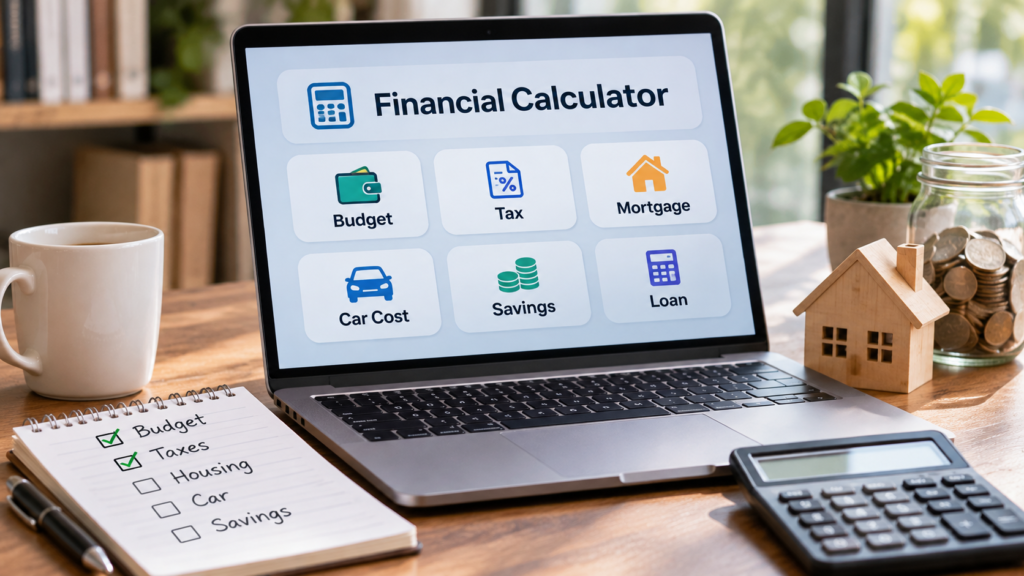
Managing household finances often involves more than checking a bank balance. People make decisions about taxes, monthly expenses, home improvements, car ownership, savings, and borrowing. Each decision may require a calculation, and even a simple mistake can make it harder to understand the real cost of an option.
Online calculators offer a practical way to organize numbers and explore different scenarios. They do not replace professional advice or official information, but they can help people make sense of everyday financial questions more efficiently.
Why Financial Calculations Matter in Daily Life
A household budget is built from many moving parts. Income may change from month to month, while expenses such as rent, electricity, insurance, transport, and groceries can fluctuate. Looking at these figures together helps people understand how much flexibility they have.
For example, someone considering a new monthly subscription might focus on its small recurring price. Calculating the annual cost can provide a clearer perspective. Similarly, comparing a car’s purchase price with its estimated fuel, insurance, maintenance, and financing costs can reveal a more complete picture of ownership.
Calculators are useful because they make these comparisons easier to repeat. Instead of relying on mental arithmetic, users can enter their figures, adjust assumptions, and see how the results change.
Using Online Tools for Household Budgeting

A household budget does not need to be complicated. The first step is to list regular income and expenses, then identify the difference between the two.
A budgeting calculator can help organize categories such as:
- Housing and utilities
- Food and household supplies
- Transportation
- Insurance and recurring bills
- Savings and emergency funds
- Leisure and discretionary spending
Once the numbers are visible, it becomes easier to identify expenses that may need attention. A budget is not a prediction that every month will be identical. Rather, it is a planning tool that can be updated when circumstances change.
For Norwegian households, tools such as a nors kalkulator can offer a convenient starting point for calculations related to personal finance, taxes, housing, vehicles, and mathematics. The key is to enter realistic figures and understand what each result represents.
Understanding Taxes and Take-Home Income
Tax calculations can be especially important when reviewing a job offer, estimating annual income, or planning household expenses. Gross income is not the same as the amount available to spend after taxes and other deductions.
A calculator can help users explore an estimate of take-home income, but the result depends on the information entered and the rules used by the tool. Tax systems may include deductions, thresholds, and individual circumstances that affect the final amount.
For authoritative information in Norway, users can consult the Norwegian Tax Administration. Official guidance is important when checking tax rules, filing requirements, or personal tax information. An online estimate should be treated as a planning aid rather than a substitute for an official assessment.
It can also be useful to compare several scenarios. For example, someone considering a change in working hours may want to understand how a different gross income could affect their monthly budget. Reviewing the assumptions behind the calculation helps prevent an estimate from being mistaken for a guaranteed outcome.
Planning for Housing and Major Purchases

Housing decisions often involve several calculations at once. A prospective buyer may need to consider a mortgage payment, interest costs, maintenance, insurance, and other recurring expenses. Homeowners may also want to estimate the cost of renovations or compare different project budgets.
A calculator can help illustrate how changing one input affects the result. For example, adjusting a loan amount or interest rate can show how the estimated monthly payment changes. This can be useful when comparing possibilities, although actual loan terms depend on the lender and the borrower’s circumstances.
For larger purchases, it is helpful to separate one-time costs from ongoing expenses. A home improvement project may have an initial price, but maintenance and operating costs can continue for years. Considering both categories gives a more balanced view of affordability.
Make Better Use of Calculator Results
A calculator is only as useful as the information entered into it. Before relying on a result, users should check that the figures are current, the units are correct, and the tool’s assumptions match the situation.
A few simple habits can improve the process:
Use reliable inputs. Base calculations on actual bills, current prices, official figures, or clearly stated estimates.
Compare like with like. When reviewing two options, use the same time period and include the same categories of cost.
Test different scenarios. Explore how the outcome changes if income, interest rates, expenses, or other assumptions shift.
Keep a record. Saving the inputs and result can make it easier to revisit a decision later.
Check important details. For taxes, borrowing, and other consequential financial matters, confirm the relevant information through official sources or a qualified professional.
Statistics can also help put personal figures into context. Statistics Norway, known as SSB, publishes data on areas such as prices, household finances, and the broader economy. Its official website can be useful when researching economic trends or looking for background information.
A Practical Tool for More Confident Decisions
Online calculators can make everyday planning more approachable by turning complicated-looking figures into understandable estimates. Whether someone is reviewing a household budget, comparing a purchase, or exploring tax-related questions, a clear calculation can help identify the next question to ask.
The most useful approach is to combine convenience with careful judgment. Enter accurate information, review the assumptions, and verify important results when necessary. Used this way, calculators become a practical part of financial planning—not a replacement for informed decisions, but a helpful way to make them.
Please Write Your Comments