Food Safety and Standards Authority: Roles, Regulations, and Global Guide
Updated: 16-Oct-2026
3
Food safety is an essential part of public health, consumer protection, and international trade. Governments establish food safety regulations to ensure that food is produced, processed, stored, transported, and sold under appropriate conditions. The Food Safety and Standards Authority of India (FSSAI) is responsible for developing food standards and regulating food safety across India. In the United States, food safety responsibilities are shared by agencies such as the Food and Drug Administration (FDA) and the United States Department of Agriculture (USDA).
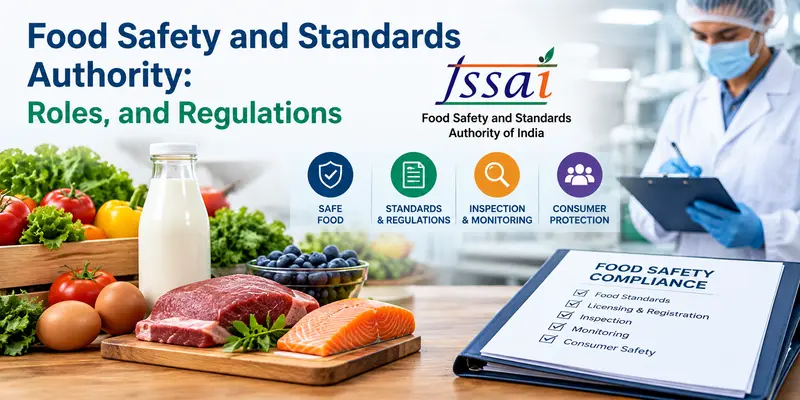
Understanding the food safety and standards authority framework is important for food manufacturers, restaurant owners, retailers, importers, exporters, and consumers. Although India and the United States operate under different regulatory systems, both aim to prevent food contamination, protect consumers, and ensure compliance with applicable food safety laws. International organizations such as the World Health Organization (WHO) and the Codex Alimentarius Commission also contribute to global food safety practices.
What Is the Food Safety and Standards Authority?
The Food Safety and Standards Authority generally refers to a government body responsible for establishing food safety requirements, monitoring compliance, and protecting consumers from unsafe or adulterated food. In India, the official name is the Food Safety and Standards Authority of India, commonly known as FSSAI.
FSSAI was established under the Food Safety and Standards Act, 2006. It operates under the administrative responsibility of India’s Ministry of Health and Family Welfare. Its responsibilities include developing food standards and regulating food manufacturing, processing, storage, distribution, sale, and import.
Food safety regulations cover several areas, including food ingredients, additives, contaminants, packaging, labelling, hygiene, and product testing. For example, a food manufacturer must maintain hygienic production facilities, use suitable raw materials, prevent cross-contamination, and comply with the applicable requirements for its products.
Food authorities also provide guidance to businesses and consumers. Their regulations establish minimum safety requirements, while inspections, laboratory testing, and enforcement activities help identify violations and reduce public health risks.
Why Is Food Safety Regulation Important?
Unsafe food may contain harmful bacteria, viruses, parasites, chemical contaminants, or foreign objects. Contamination can occur during farming, transportation, manufacturing, packaging, storage, preparation, or serving.
According to the World Health Organization’s food safety guidance, contaminated food can cause more than 200 diseases. Foodborne illnesses can affect anyone, although certain groups may face greater risks.
Food safety regulations help reduce these risks by requiring appropriate hygiene practices, safe storage conditions, preventive controls, and proper handling procedures. Businesses must identify hazards, train employees, maintain clean facilities, and take corrective action when food safety controls fail.
Furthermore, effective regulation supports fair competition. Companies that invest in safe production practices should not be disadvantaged by businesses that ignore hygiene, product testing, or legal requirements.
Food safety compliance is also important for international trade. Exporters may need to meet the requirements of both the country where food is manufactured and the country where it will be sold. Understanding the applicable food safety regulations can help businesses avoid preventable compliance problems.
Main Responsibilities of the Food Safety and Standards Authority of India
FSSAI has a central role in India’s food regulatory framework. Its responsibilities include developing food standards, supporting enforcement, overseeing licensing and registration systems, and providing food safety information.
Developing food standards: FSSAI establishes science-based requirements for food products, ingredients, additives, contaminants, packaging, and labelling. These standards help determine whether products meet applicable safety and quality requirements.
Licensing and registration: Food businesses must identify the appropriate registration or licence for their activities. Requirements depend on the business category and the applicable eligibility criteria.
Businesses can consult the official FoSCoS food licensing portal for licensing and registration services.
Inspection and enforcement: Relevant food safety authorities may inspect facilities, collect samples, investigate suspected violations, and take enforcement action under applicable laws. These activities help identify unsafe products and poor hygiene practices.
Consumer awareness: Food safety authorities publish guidance to help consumers and businesses understand safe food handling, product labelling, and regulatory responsibilities.
For more information, visit the official FSSAI website and review its regulatory resources.
Food Safety and Standards Act, 2006
The Food Safety and Standards Act, 2006 provides the principal legislative foundation for India’s modern food safety framework. It consolidated earlier food-related laws and established a central authority to develop standards and coordinate food regulation.
The Act covers food safety matters involving manufacturing, storage, distribution, sale, and import, together with other issues related to food intended for human consumption.
Businesses must comply with the Act and the regulations applicable to their activities. These requirements may cover product standards, additives, contaminants, packaging, labelling, licensing, and other aspects of food production and distribution.
The official Food Safety and Standards Act, 2006 is an important resource for understanding the legal framework. Businesses should also check FSSAI notifications for relevant amendments and regulatory updates.
Because requirements can change, food operators should verify the latest rules applicable to their particular products and activities rather than relying solely on general summaries.
FSSAI Licence and Registration Requirements in India
Food business licensing is an important part of India’s food safety system. It helps establish accountability and brings eligible businesses within the regulatory framework.
Depending on the applicable rules, a food business may require registration, a state licence, or a central licence. The correct category depends on factors such as the nature of the activity, the business’s scale, and the relevant eligibility criteria.
Restaurants, manufacturers, food processors, distributors, storage operators, retailers, and importers should determine their licensing obligations before starting or expanding operations.
Applicants can begin by visiting the FoSCoS portal. They should review the current eligibility criteria, application process, supporting documents, fees, and any conditions associated with their business category.
After receiving the required authorization, businesses must continue meeting applicable food safety standards. They should maintain appropriate records, follow hygiene requirements, and update or renew their authorization when necessary.
An FSSAI licence does not automatically guarantee that every product or process complies with all applicable requirements. Businesses remain responsible for maintaining food safety throughout their operations.
Food Safety Regulations for Businesses
Food businesses must follow the regulations relevant to their products and activities. These requirements may cover ingredients, additives, contamination limits, manufacturing practices, packaging, labelling, and storage conditions.
For example, a packaged food manufacturer should verify the safety of its ingredients, maintain hygienic production equipment, use appropriate packaging, and provide accurate product information. A distributor handling refrigerated products must also maintain suitable storage and transportation conditions.
Food hygiene and sanitation: Clean production areas, suitable handwashing facilities, hygienic food-contact surfaces, pest management, and proper waste disposal help prevent contamination.
Food handling and storage: Raw ingredients should be separated from ready-to-eat foods where necessary. Temperature-sensitive products must be stored and transported under appropriate conditions.
Packaging and labelling: Packaging must be suitable for its intended use. Product labels must comply with the relevant legal requirements, which may cover ingredients, allergens, nutrition information, and dates.
Testing and traceability: Appropriate testing helps verify compliance with applicable criteria. Traceability records help businesses identify affected batches and respond efficiently to contamination incidents.
Businesses can review the FSSAI regulatory resources to identify requirements relevant to their products and activities.
Food Safety and Standards Authority in the United States
The United States does not use India’s FSSAI as its national food regulator. Instead, responsibilities are divided among federal agencies and state and local authorities.
The U.S. Food and Drug Administration (FDA) regulates many foods, including numerous packaged foods, processed products, seafood, and food ingredients. Its responsibilities include implementing relevant laws, developing regulations, conducting oversight, and responding to food safety problems.
The FDA Food Safety Modernization Act (FSMA) strengthened the preventive approach to food safety by emphasizing the prevention of contamination rather than relying exclusively on responses after problems occur.
The USDA Food Safety and Inspection Service (FSIS) has important responsibilities for meat, poultry, and certain processed egg products under applicable federal laws.
Other agencies also contribute to food safety. The Environmental Protection Agency regulates pesticides and establishes certain pesticide residue tolerances, while the Centers for Disease Control and Prevention supports foodborne disease surveillance and outbreak investigations.
State and local authorities commonly oversee restaurants and other retail food establishments. The FDA Food Code provides a model that jurisdictions can use when developing or updating retail food safety requirements.
Consequently, businesses operating in the United States should identify the specific agencies and regulations relevant to their products and activities. Importers and exporters must also examine applicable requirements in both the country of origin and the destination market.
India vs. United States: Food Safety Regulatory Systems
India and the United States share the objective of protecting consumers, but their regulatory structures differ.
| Area | India | United States |
|---|---|---|
| Main food authority | FSSAI | FDA and other relevant agencies |
| Principal framework | Food Safety and Standards Act, 2006, and related regulations | Federal food laws and other applicable legislation |
| Meat and poultry oversight | Relevant Indian laws and designated authorities | USDA FSIS has major responsibilities for covered products |
| Retail food oversight | Relevant central, state, and local authorities | State and local authorities, often using the FDA Food Code as a model |
| Business authorization | Applicable FSSAI registration or licence | Requirements vary by product, facility, activity, and jurisdiction |
| Compliance monitoring | Inspections, sampling, testing, and enforcement | Inspections, testing, surveillance, and enforcement |
An authorization issued in one country does not automatically establish compliance with another country’s requirements. For instance, an Indian manufacturer exporting packaged food to the United States must consider applicable import requirements, labelling rules, facility obligations where relevant, and product-specific regulations.
Similarly, US businesses exporting food to India must assess the relevant Indian requirements and determine whether FSSAI licensing or other import-related obligations apply.
The best approach is to consult the relevant official agencies before launching a product, changing its formulation, or entering a new export market.
International Food Safety Standards and Organizations
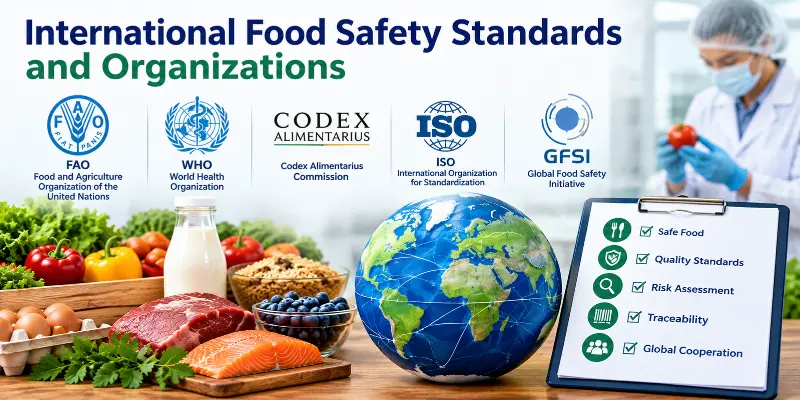
Food products frequently cross international borders, making cooperation between countries essential. International organizations help develop science-based standards, share technical guidance, and improve food safety systems.
The World Health Organization works with countries and partners to reduce foodborne disease and strengthen food safety practices.
The Food and Agriculture Organization of the United Nations (FAO) supports safer food production and food control systems across the supply chain.
The Codex Alimentarius Commission, established jointly by FAO and WHO, develops international food standards, guidelines, and codes of practice. These resources help protect consumer health and support fair practices in food trade.
International standards are influential references, but their legal effect depends on how individual countries adopt or apply them. Businesses must still follow the laws of the countries where their products are manufactured, sold, or imported.
For manufacturers and exporters, international guidance can provide a starting point for reviewing food safety procedures, contaminants, labelling, and product standards. However, national requirements should always be checked before making compliance decisions.
HACCP and Food Safety Management Systems
Hazard Analysis and Critical Control Points (HACCP) is a systematic approach to identifying, evaluating, and controlling food safety hazards. It emphasizes preventive measures throughout production and handling rather than relying only on finished-product inspections.
A HACCP-based approach begins by identifying possible biological, chemical, and physical hazards. The business then determines where controls are necessary, establishes monitoring procedures, and defines corrective actions when a control fails.
For example, a food processing facility may identify inadequate cooking temperatures as a potential biological hazard. It can establish an appropriate critical limit, monitor the cooking process, document the results, and take corrective action when necessary.
The formal requirement to maintain a HACCP plan depends on the product, activity, and applicable jurisdiction. Businesses should consult the relevant FDA food guidance and regulatory resources to determine which preventive controls and records apply to their operations.
An effective food safety management system may include written procedures, employee training, supplier controls, sanitation schedules, equipment maintenance, monitoring records, and a process for investigating deviations.
Regular reviews help identify weaknesses before they lead to contamination, product recalls, or regulatory problems.
Food Safety Equipment and Hygiene Practices
Food safety compliance depends on more than licences and written procedures. Businesses also need suitable equipment, hygienic facilities, and effective maintenance practices.
Depending on the operation, useful equipment may include food-grade work surfaces, handwashing stations, refrigeration systems, temperature-monitoring devices, protective clothing, cleaning tools, and appropriate pest-control measures.
Temperature monitoring equipment helps staff check whether food is being stored, transported, or prepared under suitable conditions. Instruments should be appropriate for their intended purpose and checked or calibrated when necessary.
Protective clothing and hygiene supplies can help maintain cleanliness when selected and used correctly. Gloves, aprons, hair restraints, and other protective items should support proper hygiene rather than replace handwashing or safe food handling.
Cleaning and sanitation equipment helps maintain hygienic food-contact surfaces. Cleaning products must be suitable for the intended task and used according to their instructions and relevant requirements.
Storage and refrigeration systems help maintain appropriate conditions for temperature-sensitive products. Businesses should consider equipment capacity, maintenance, temperature monitoring, and contingency arrangements for equipment failures.
Food safety equipment must be selected according to the identified risks and applicable requirements. A general-purpose safety product is not necessarily suitable for food-contact use, so businesses should verify material compatibility and intended use before purchasing equipment.
Readers can explore related workplace protection resources through Best Safety Equipments. Food-specific recommendations should always be based on suitable food safety guidance.
Common Food Safety Compliance Mistakes
One common mistake is assuming that obtaining a licence is enough to demonstrate ongoing compliance. Businesses must continue meeting the requirements applicable to their activities.
Inadequate employee training can also create problems. Staff may mishandle raw ingredients, neglect temperature checks, or use cleaning products incorrectly. Practical training and supervision help reduce these risks.
Poor documentation makes it difficult to verify that food safety controls are working. Businesses should maintain the records required by applicable law and keep their operational documents accurate and up to date.
Incorrect labelling can create additional risks. Depending on the product and market, labels may require specific ingredient, allergen, nutrition, date, or other information. Labels should be reviewed against current requirements before products are released or exported.
Another mistake is relying on outdated guidance or applying another country’s regulations without checking local requirements. Food businesses should regularly review official notifications and confirm the rules relevant to their facilities and products.
A structured compliance review can identify gaps in licensing, hygiene, documentation, testing, equipment maintenance, and labelling before they lead to more serious problems.
How Consumers Can Check Food Safety and Product Information
Consumers can contribute to food safety by making informed purchasing decisions and handling food carefully. When buying packaged products, they should check the label, product condition, relevant dates, and storage instructions.
In India, consumers can consult the official FSSAI website for food safety information and relevant reporting resources.
In the United States, the FDA food safety website provides consumer guidance, recall information, and safety alerts.
At home, important precautions include washing hands before food preparation, keeping raw foods separate from ready-to-eat items, cooking food appropriately, refrigerating perishable products promptly, and cleaning utensils and food-contact surfaces.
Consumers should not assume that food is safe solely because it looks or smells normal. Some forms of contamination cannot be detected through sight, smell, or taste.
Frequently Asked Questions
What does the Food Safety and Standards Authority do?
The Food Safety and Standards Authority of India develops food standards, regulates food-related activities, supports licensing and registration, and works with relevant authorities to protect public health under the applicable legal framework.
Is FSSAI responsible for food safety in the United States?
No. FSSAI is India’s food regulatory authority. The United States has a separate system involving the FDA, USDA FSIS, and other federal, state, and local authorities.
Is an FSSAI licence mandatory for every food business in India?
Food businesses must determine which registration or licence applies to their activities under the relevant rules. Businesses can consult the official FoSCoS portal for current eligibility and application information.
What is the difference between FSSAI and FDA?
FSSAI is India’s central food safety authority, while the FDA is a US federal agency responsible for a wide range of products, including many foods. Their legal powers, procedures, and regulatory coverage differ.
What are international food safety standards?
International food safety standards include guidance and standards developed by organizations such as the Codex Alimentarius Commission. They support consumer protection and international trade, but businesses must also comply with applicable national laws.
Why is HACCP important in food safety?
HACCP helps businesses identify food safety hazards and establish preventive controls, monitoring procedures, and corrective actions. Its formal use may be required or recommended depending on the operation and jurisdiction.
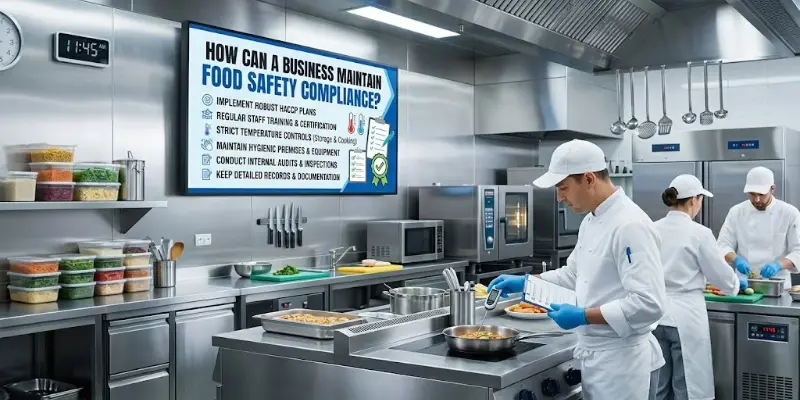
How can a business maintain food safety compliance?
A business should identify applicable regulations, maintain the required authorization, train employees, follow hygiene procedures, control storage temperatures, maintain required records, and review current regulatory guidance
.
Conclusion
The Food Safety and Standards Authority of India plays an important role in protecting consumers by developing food standards, regulating food businesses, and supporting compliance throughout the Indian food supply chain. Its work demonstrates how legislation, scientific standards, inspections, and public education contribute to safer food production and distribution.
The United States follows a different regulatory structure, with the FDA, USDA FSIS, and other agencies sharing responsibilities according to the product and activity. International organizations such as WHO, FAO, and the Codex Alimentarius Commission also support global food safety practices.
For food businesses, the most effective approach combines regulatory awareness with practical controls, suitable equipment, employee training, reliable documentation, and continuous improvement. Understanding the food safety and standards authority framework in each relevant market helps businesses make informed decisions while protecting public health.
Please Write Your Comments