Emergency Personal Protective Equipment: Types, Uses, and Top Manufacturers
Updated: 26-Aug-2026
690
Emergency Personal Protective Equipment (PPE) is essential for workers, emergency responders, healthcare professionals, and others who may face hazardous conditions during emergencies, rescue operations, disaster recovery, hazardous-material incidents, and other high-risk activities. The right PPE can reduce exposure to chemicals, biological agents, airborne contaminants, impact hazards, heat, electrical energy, and other workplace risks.
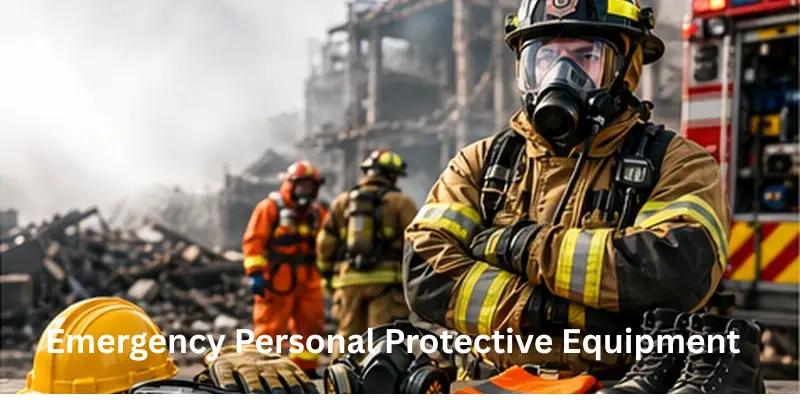
Emergency PPE is not a single type of equipment. The correct protection depends on the hazard, exposure route, work activity, duration of exposure, and conditions of the emergency. OSHA requires employers to assess workplaces for hazards and select PPE that protects affected employees and properly fits the user. Damaged or defective PPE must not be used.
This guide explains Emergency Personal Protective Equipment, its major types, applications, selection principles, inspection and training requirements, common mistakes, and leading companies that manufacture or supply PPE used in emergency and occupational settings.
What Is Emergency Personal Protective Equipment?
Emergency Personal Protective Equipment refers to protective equipment selected and used to reduce exposure to hazards during emergency response, rescue, disaster recovery, hazardous-material incidents, medical emergencies, fire-related activities, and other dangerous operations.
Depending on the situation, emergency PPE may include respirators, protective clothing, safety gloves, eye and face protection, hard hats, safety footwear, hearing protection, and specialized equipment for particular hazards.
The important point is that emergency PPE is hazard-specific. A firefighter responding to a structure fire may require very different protection from a worker cleaning up chemical contamination after a flood. Similarly, a healthcare worker handling infectious materials may need different protection from a worker performing electrical recovery work.
A useful PPE program therefore begins with identifying the hazard rather than choosing equipment simply because it is labeled “emergency,” “industrial,” or “protective.”
Why Is Emergency Personal Protective Equipment Important?
Emergency situations can change quickly and expose workers to several hazards at the same time. A damaged building may contain unstable materials, airborne contaminants, exposed electrical equipment, sharp debris, chemicals, and contaminated water.
Proper PPE can help reduce exposure when hazards cannot be adequately controlled through elimination, engineering controls, administrative controls, or safe work practices. OSHA treats PPE as one part of a broader hazard-control program rather than a replacement for other protective measures.
Emergency PPE is particularly important because responders may have limited time to assess conditions. Organizations should therefore identify likely emergency hazards, establish PPE requirements, maintain adequate supplies, and train workers before an incident occurs.
For a broader explanation of workplace protective equipment, see [Safety Equipment] as a related resource. Safety Equipment
Types of Emergency Personal Protective Equipment
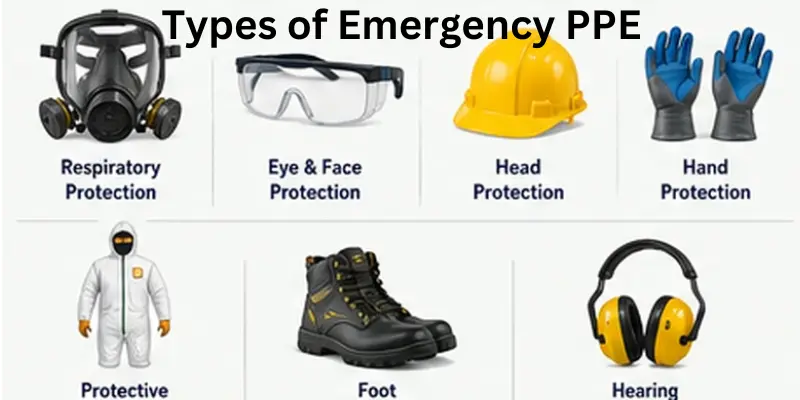
Different types of PPE protect different parts of the body and address different exposure routes. More than one type may be necessary during the same emergency.
Respiratory Protection
Respiratory protection is used when workers may inhale hazardous particles, gases, vapors, fumes, or other airborne contaminants.
Depending on the hazard, respiratory equipment may include filtering facepiece respirators, elastomeric respirators, powered air-purifying respirators, supplied-air respirators, or self-contained breathing apparatus.
Respirator selection must be based on the respiratory hazard and workplace conditions. OSHA requires employers to evaluate respiratory hazards and select appropriate respirators; NIOSH certification requirements also apply to respirators used under the OSHA respiratory protection standard.
A general face mask should not automatically be treated as adequate respiratory protection for a hazardous emergency. Respiratory protection programs may also involve medical evaluation, fit testing, training, maintenance, and other requirements.
For more information, see [Respiratory Protection] and [Self-Contained Breathing Apparatus (SCBA)]. Respiratory Protection Self-Contained Breathing Apparatus (SCBA)
Eye and Face Protection
Safety glasses, goggles, and face shields can protect against flying particles, chemical splashes, biological materials, and other eye or facial hazards.
The equipment must match the exposure. Safety glasses may be appropriate for some impact hazards, while goggles may provide better protection against splashes. A face shield may be needed for broader facial protection but may require additional eye protection underneath.
Emergency workers should inspect eye and face protection before use and replace equipment that is cracked, heavily scratched, damaged, or otherwise unable to provide the intended protection.
See [Goggles PPE] for additional information about protective eyewear. Goggles PPE
Head Protection
Hard hats and other protective headgear help protect workers from falling or flying objects, impact hazards, and certain overhead risks.
Emergency response and disaster-recovery operations can expose workers to falling debris, unstable structures, damaged equipment, and overhead hazards. Head protection should therefore be selected according to the actual work environment.
A hard hat should fit correctly and be inspected for damage, deterioration, or other conditions that could affect its protective performance.
Hand Protection
Protective gloves are used against hazards such as cuts, punctures, chemicals, biological materials, heat, and other exposures.
The most important principle is that not every glove protects against every hazard. A glove suitable for mechanical impact or cuts may not provide adequate chemical resistance. Chemical-resistant gloves must be selected according to the substance, concentration, exposure time, and manufacturer’s information.
For electrical work, specialized electrically insulated gloves may be necessary when the applicable hazard assessment and requirements call for them. See [Electrically Insulated Gloves] for additional information. Electrically Insulated Gloves
Protective Clothing
Protective clothing helps reduce exposure to chemicals, biological materials, heat, flames, contaminated substances, and other hazards.
Depending on the emergency, workers may use coveralls, chemical-resistant suits, gowns, flame-resistant clothing, protective aprons, or specialized protective ensembles.
Chemical emergencies require particularly careful selection because protection depends on the properties of the substance and expected exposure. Organizations should use appropriate hazard information and manufacturer guidance rather than assuming that one protective garment will work for every chemical.
For additional information about chemical protection, see [Chemical Protection Equipment]. Chemical Protection Equipment
Foot Protection
Safety footwear can help protect against impact, punctures, electrical hazards, chemicals, slips, and other workplace risks.
Disaster recovery may involve broken glass, sharp debris, contaminated liquids, unstable surfaces, and damaged infrastructure. Safety footwear should therefore be selected for the actual risks present rather than simply chosen because it has a general safety label.
Footwear should also be inspected regularly for damage, excessive wear, separation of soles, contamination, and other conditions that could reduce protection.
Emergency PPE for Different Hazards
The same PPE combination should not be used for every emergency. Hazard assessment must determine what protection is necessary.
Chemical Emergencies
Chemical incidents may involve liquids, vapors, gases, corrosive materials, or contaminated surfaces. Depending on the substance and exposure conditions, workers may require chemical-resistant gloves, protective clothing, eye and face protection, boots, and respiratory protection.
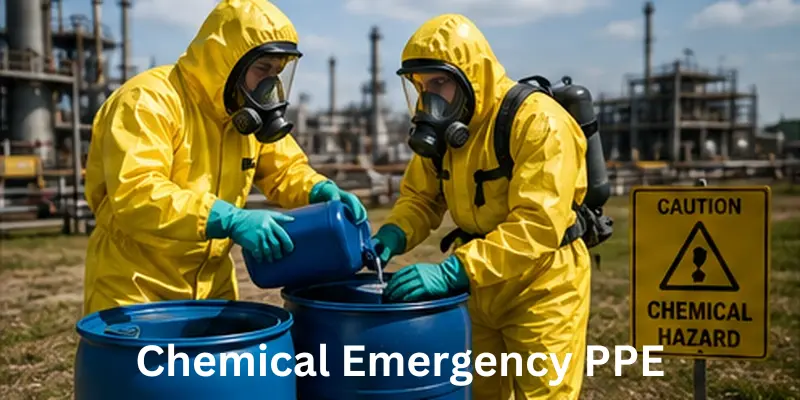
OSHA’s hazardous-waste and emergency-response requirements address PPE selection and different levels of protection for hazardous-substance operations.
The level of protection should be determined from the identified hazard rather than the severity of the situation alone.
Biological Hazards
Healthcare workers, emergency responders, cleanup crews, and others may encounter infectious or contaminated materials.
Possible protection includes gloves, protective clothing, eye and face protection, and appropriate respiratory protection. PPE should work together with hygiene procedures, engineering controls, administrative controls, and other infection-control measures.
Fire and Heat Hazards
Fire-response operations can expose personnel to flames, extreme heat, smoke, falling debris, and combustion products.
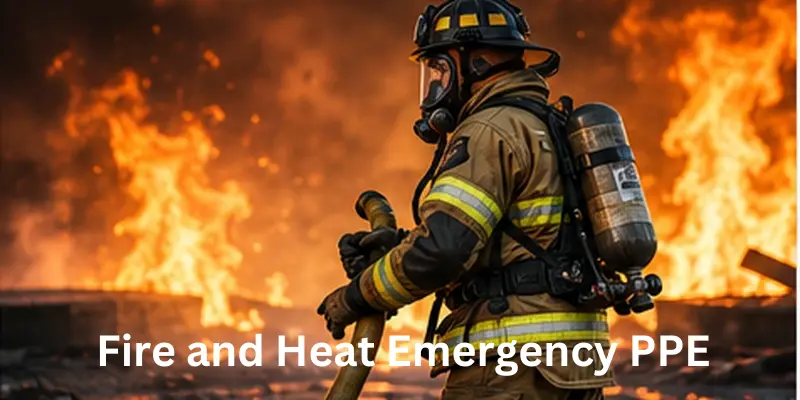
Specialized firefighting PPE is required for conditions that ordinary industrial PPE cannot adequately address. Emergency personnel should use equipment designed for their assigned firefighting or rescue activities and follow applicable organizational procedures and standards.
For general workplace fire-related protective clothing information, see [Fireproof Clothing]. Fireproof Clothing
Disaster and Storm Recovery
Natural disasters may create combinations of hazards, including structural damage, contaminated water, sharp debris, fallen electrical lines, chemicals, dust, and unstable surfaces.
Recovery workers should reassess PPE when conditions change. The equipment appropriate for initial cleanup may not remain adequate as new hazards are identified.
Electrical Emergencies
Electrical recovery operations may expose workers to energized equipment, damaged wiring, arc hazards, and other electrical risks.
Ordinary work gloves should not be considered electrical protection. Specialized electrical protective equipment must be selected according to the specific electrical hazard and applicable requirements.
Confined-Space Emergencies
Confined-space emergencies can involve oxygen deficiency, toxic gases, engulfment, restricted access, or other life-threatening conditions.
Rescue operations may require specialized respiratory protection, protective clothing, gloves, footwear, retrieval equipment, and trained rescue personnel. Confined-space PPE should never be selected based solely on the appearance of the space.
How to Choose Emergency Personal Protective Equipment
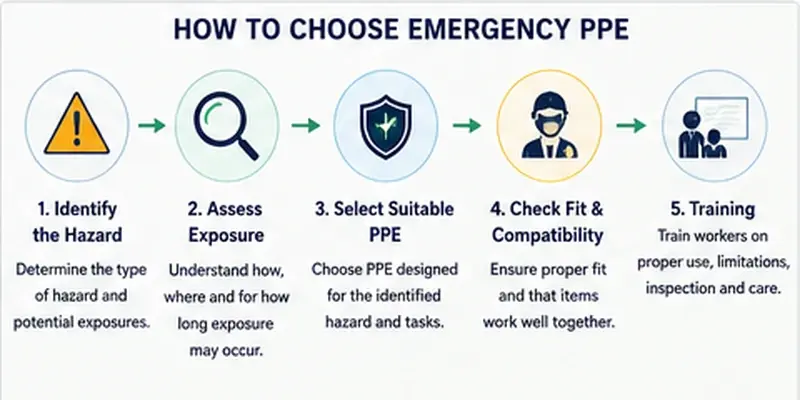
Selecting Emergency Personal Protective Equipment should begin with a structured hazard assessment.
Identify the Hazard
Determine whether the emergency involves chemicals, biological materials, airborne contaminants, heat, flames, impact, electricity, sharp objects, falling materials, or another hazard.
Determine the Exposure Route
Consider whether exposure could occur through inhalation, skin contact, eye exposure, impact, heat, or another route.
Select Suitable PPE
Choose equipment specifically designed for the identified hazard. Product labels, technical documentation, certification information, and manufacturer instructions should be reviewed before use.
Check Proper Fit
PPE must fit the person using it. Poor fit can reduce protection and may interfere with movement, visibility, communication, or other equipment.
For respirators, fit can be especially important. OSHA’s respiratory protection standard contains specific selection and fit-testing requirements for tight-fitting respirators.
Check Compatibility
Several PPE items may need to be worn simultaneously. A respirator, face shield, helmet, goggles, gloves, and protective clothing must work together without creating gaps or interfering with safe movement.
Consider Duration and Working Conditions
Heat, humidity, mobility requirements, work duration, visibility, communication, and physical workload can affect PPE selection and worker tolerance.
Inspection, Maintenance, and Storage of Emergency PPE
Emergency PPE should be ready for use before an incident occurs.
Inspect equipment for:
- Cuts, cracks, holes, or tears
- Contamination
- Deterioration
- Missing parts
- Damaged straps or closures
- Poor fit
- Expired or compromised components
- Other defects identified by the manufacturer
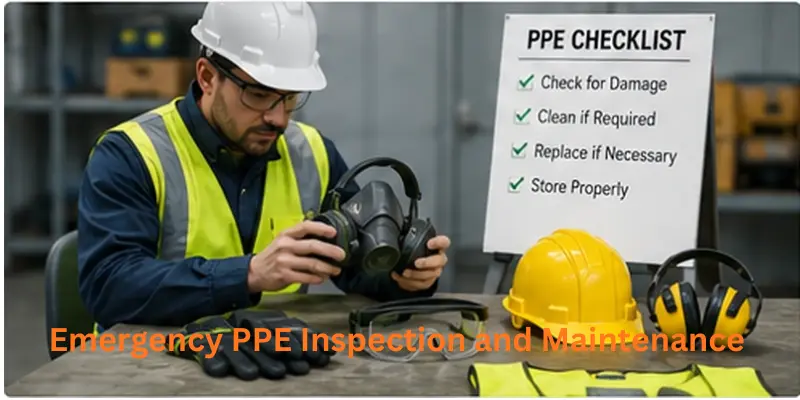
OSHA states that defective or damaged PPE must not be used.
Reusable equipment should be cleaned, disinfected, stored, and maintained according to applicable requirements and manufacturer instructions.
Emergency respirators have additional inspection and maintenance requirements under OSHA’s respiratory protection standard.
Organizations should also maintain sufficient supplies so that workers are not forced to use damaged, contaminated, or inappropriate PPE during an emergency.
Training for Emergency PPE
Proper PPE does not provide adequate protection if workers do not know how to use it.
Training should cover:
- When PPE is necessary
- What PPE is required
- How to put PPE on and remove it
- How to adjust and wear equipment properly
- Equipment limitations
- Inspection procedures
- Cleaning and storage
- Replacement requirements
- Emergency procedures
- Additional respirator requirements where applicable
OSHA requires training for employees who are required to use PPE, including instruction on when PPE is necessary, what PPE is necessary, and how to properly don, doff, adjust, and wear it.
For broader workplace training information, see [Safety Training]. Safety Training
Top Companies Producing Emergency Personal Protective Equipment
Many established companies manufacture or supply PPE used across emergency response, healthcare, construction, industrial safety, and other sectors. The companies below are retained from the original article’s manufacturer-focused section, but outdated workforce and production figures have been removed.
1. 3M
3M offers a broad portfolio of occupational safety products, including respiratory protection, eye and face protection, hearing protection, fall protection, and other PPE. Its emergency-use products should be selected according to the specific hazard, task, and applicable requirements.
2. Honeywell
Honeywell has historically offered a wide range of industrial safety products, including respiratory protection, eye and face protection, protective clothing, and other workplace safety equipment. Product suitability should always be confirmed for the particular hazard and application.
3. Ansell
Ansell is known for hand and body protection products used in healthcare, chemical handling, industrial work, and other applications. Its protective solutions may be relevant when emergency tasks create chemical, biological, cut, or contamination risks.
4. DuPont
DuPont is associated with protective materials and apparel used for chemical, thermal, and other industrial exposures. Its protective garments should be selected according to the exposure and the manufacturer’s technical guidance.
5. Kimberly-Clark Professional
Kimberly-Clark Professional supplies workplace and healthcare protective products, including items related to respiratory protection, protective apparel, and other PPE applications.
6. Alpha Pro Tech
Alpha Pro Tech provides protective products for healthcare, industrial, and contamination-sensitive environments, including protective apparel and face protection.
7. Lakeland Industries
Lakeland specializes in protective clothing and related PPE for industrial, chemical, thermal, and other hazards. Its products can be relevant to specialized emergency-response applications where appropriate.
8. MSA Safety
MSA Safety provides safety equipment for occupational and emergency environments, including respiratory protection, head protection, fall protection, gas detection, and other safety technologies.
9. Protective Industrial Products
Protective Industrial Products supplies a broad range of workplace PPE, including gloves, eyewear, protective clothing, hearing protection, head protection, and other safety products.
10. Cardinal Health
Cardinal Health provides healthcare products and PPE used in clinical and patient-care environments. Appropriate PPE should be selected according to the healthcare hazard and applicable infection-control procedures.
The purpose of this manufacturer list is to help readers understand the market, not to imply that one company or product is appropriate for every emergency.
Common Mistakes When Using Emergency PPE
Choosing PPE Without Assessing the Hazard
A product should not be selected simply because it looks protective. PPE must address the actual hazard identified during the assessment.
Using the Wrong Respirator
Different contaminants require different respiratory protection. Respirator selection must account for the contaminant, concentration, oxygen conditions, workplace factors, and user factors.
Ignoring Fit
Poorly fitting PPE can leave gaps, reduce protection, interfere with movement, or make equipment uncomfortable enough that workers misuse it.
Combining Incompatible Equipment
Multiple PPE items may interfere with one another. Compatibility should be checked before an emergency occurs.
Using Damaged Equipment
Cracked eye protection, torn gloves, damaged protective clothing, deteriorated helmets, or compromised respirators should not be treated as acceptable emergency equipment. OSHA specifically prohibits the use of defective or damaged PPE.
Waiting Until the Emergency to Train Workers
Training should occur before employees or responders need the equipment. Emergency conditions are not the right time to learn basic PPE procedures.
Emergency PPE and the Hierarchy of Controls
Emergency Personal Protective Equipment is important, but PPE should not be treated as the only method of hazard control.
A stronger safety program considers hazard elimination, substitution, engineering controls, administrative controls, safe work practices, and PPE according to the circumstances.
PPE is often considered the last line of defense because it protects the worker after other controls have reduced the hazard as much as reasonably practical. OSHA’s PPE requirements emphasize hazard assessment and appropriate equipment selection as part of a broader protective program.
Emergency PPE and Regulatory Requirements
Employers and emergency organizations should verify the requirements that apply to their specific operations, industry, jurisdiction, and PPE type.
For general industry, OSHA’s PPE requirements include hazard assessment, appropriate PPE selection, proper fit, maintenance, and training. Respiratory protection is covered separately under OSHA’s respiratory protection standard, which contains additional requirements for respirator selection, fit testing, training, medical evaluation, maintenance, and program administration where applicable.
Requirements can change over time, so organizations should rely on current OSHA requirements, applicable NIOSH certifications, manufacturer instructions, and relevant consensus standards when developing or revising emergency PPE procedures.
FAQs About Emergency Personal Protective Equipment
What is Emergency Personal Protective Equipment?
Emergency Personal Protective Equipment is protective equipment selected to reduce exposure to hazards during emergency response, rescue, disaster recovery, hazardous-material incidents, healthcare emergencies, and other high-risk situations.
What are the main types of emergency PPE?
Common types include respiratory protection, eye and face protection, head protection, hand protection, protective clothing, safety footwear, and specialized equipment for electrical, chemical, fire, biological, and other hazards.
How is emergency PPE selected?
Emergency PPE should be selected after identifying the hazard, exposure route, task, working conditions, required protection level, equipment fit, and compatibility with other PPE.
Is PPE enough to make an emergency environment safe?
No. PPE is one part of a broader safety program. Hazard elimination, engineering controls, administrative controls, safe work practices, emergency procedures, and training may also be required.
Does emergency PPE require training?
Yes. Workers required to use PPE should receive training covering when PPE is necessary, what equipment is required, proper use and adjustment, limitations, and other applicable procedures. Additional requirements apply to certain PPE such as respirators.
How should emergency PPE be maintained?
PPE should be inspected regularly and maintained according to applicable requirements and manufacturer instructions. Damaged or defective PPE should be removed from service and replaced.
Who may need emergency PPE?
Firefighters, emergency medical personnel, rescue workers, hazardous-material responders, healthcare workers, disaster-recovery personnel, industrial workers, and others may need emergency PPE depending on their assigned tasks and hazards.
You May Also Read
For readers who want more detailed information about specific PPE categories, the following related resources can provide additional guidance:
- [Chemical Protection Equipment]
- [Respiratory Protection]
- [Self-Contained Breathing Apparatus (SCBA)]
- [Goggles PPE]
- [ Electrically Insulated Gloves]
- [Safety Training]
These supporting resources allow readers to move from the general principles of Emergency Personal Protective Equipment to more specialized PPE topics.
Conclusion
Emergency Personal Protective Equipment is an important part of protecting workers and responders from hazards during emergencies, rescue operations, hazardous-material incidents, disaster recovery, healthcare activities, and other high-risk work.
Effective PPE selection begins with hazard identification. The right equipment must match the hazard, exposure route, task, and working conditions. Proper fit, training, inspection, maintenance, storage, and replacement are equally important because even high-quality PPE can fail to provide adequate protection when it is damaged or incorrectly used.
Organizations should prepare before emergencies occur by assessing likely hazards, selecting appropriate equipment, training workers, maintaining adequate supplies, and reviewing procedures regularly.
PPE should always be viewed as part of a broader safety program rather than the only control. When combined with effective hazard assessment, engineering controls, safe work practices, emergency planning, and training, appropriate PPE can play an important role in reducing exposure and supporting safer emergency response.
Please Write Your Comments