Sensors: The Backbone of Modern Technology
Updated: 25-Jul-2025
215
Introductory Summary
Sensors are fundamental components in modern electronics, enabling real-time monitoring, automation, and smart system integration. This article explores sensor technology, types of sensors, working principles, applications across industries, and future trends in sensor-based systems. Whether you’re a tech enthusiast, engineer, or industry professional, this complete guide on sensors provides everything you need to know.
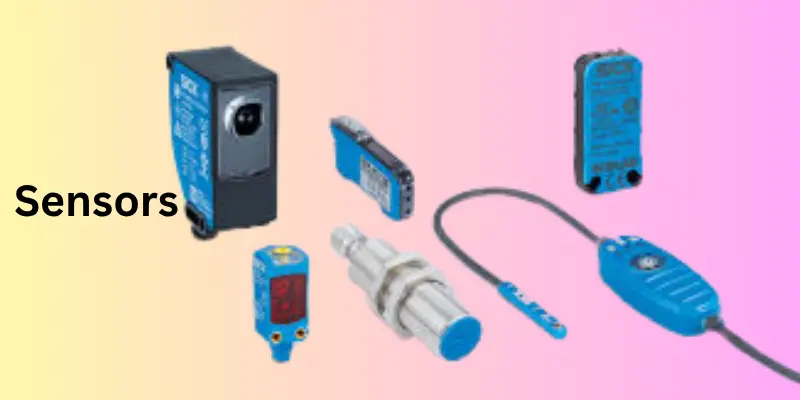
What are Sensors
A sensors are devices that detect and respond to input from the physical environment. The input could be light, heat, motion, moisture, pressure, or any other environmental phenomena. The sensor converts this information into a readable output signal, often used in sensor-based systems for decision-making or action.
Modern sensor technology powers everything from smartphones to industrial automation systems, IoT devices, smart homes, wearables, and robotics.
Types of Sensors
There are different types of sensors, each designed to detect specific inputs. Here’s an overview of the major sensor types:
| Sensor Type | Function | Common Applications |
|---|---|---|
| Temperature Sensors | Detect temperature changes | HVAC, medical, industrial controls |
| Proximity Sensors | Sense object presence/absence | Mobile phones, security systems |
| Motion Sensors | Detect movement | Alarms, gaming, automation |
| Touch Sensors | Sense physical touch | Smartphones, ATMs, kiosks |
| Light Sensors | Measure light intensity | Smartphones, solar panels, cameras |
| Pressure Sensors | Measure force or pressure | Automotive, medical devices |
| Gas Sensors | Detect gas concentrations | Environmental monitoring, safety |
| Humidity Sensors | Measure moisture in the air | Weather forecasting, agriculture |
| Infrared Sensors | Sense IR radiation | Night vision, object detection |
| Ultrasonic Sensors | Use sound waves to measure distance | Parking assistance, robotics |
Sensor Technology and Components
Sensor technology has evolved rapidly with the rise of MEMS sensors (Micro-Electro-Mechanical Systems), offering compact and highly sensitive solutions for advanced systems.
Typical sensor components include:
- Sensing element
- Signal conditioning circuits
- Sensor interface
- Power supply
- Output stage
These components work in tandem to deliver high sensor performance, accuracy, and sensitivity.
Working Principle of Sensors
The sensor working principle depends on the type:
- Analog sensors produce a continuous signal.
- Digital sensors produce binary output (on/off).
- Wireless sensors transmit data via RF, Bluetooth, or Wi-Fi.
- IoT sensors integrate with cloud platforms for remote monitoring.
Signal conversion and sensor calibration ensure reliable and accurate sensor output.
Applications of Sensors
1. Industrial Sensors
Used in industrial automation with sensors for real-time control, predictive maintenance, and safety monitoring.
2. Smart Sensors
Used in smart devices, wearables, and embedded sensor systems for intelligent decision-making.
3. Environmental Sensors
Measure parameters like air quality, temperature, humidity—crucial for climate control and health applications.
4. Automotive Sensors
Control airbag systems, fuel injection, and navigation assistance.
5. Medical Sensors
Used in diagnostics, patient monitoring, and wearable health tech.
6. Smart Home Sensors
Include motion detectors, thermostats, leak detectors, and security alarms.
Sensor Modules and Integration
Sensor modules combine multiple sensors into one compact unit with onboard sensor signal processing and microcontrollers. This allows easy sensor integration into larger data acquisition systems, robotics, and real-time monitoring setups.
Sensor-Based Automation
Sensor-based automation is transforming industries by enabling:
- Autonomous machines
- Smart manufacturing
- Predictive analytics
- Energy efficiency
Through microcontrollers and sensors, systems can interact with environments using input devices in electronics and transducers and actuators.
Benefits of Modern Sensors
- High sensor accuracy and sensitivity
- Compact MEMS sensor designs
- Fast response and reliable data
- Easy integration with embedded systems
- Wireless and IoT capabilities
10 Most Popular Sensors in 2025
| Rank | Sensor | Type | Use Case |
|---|---|---|---|
| 1 | Bosch BMP390 | Pressure | Altitude sensing in drones |
| 2 | DHT22 | Temperature/Humidity | Smart thermostats |
| 3 | HC-SR04 | Ultrasonic | Distance measurement in robotics |
| 4 | PIR Motion Sensor | Motion | Home security systems |
| 5 | ADXL345 | Accelerometer | Wearables, smart devices |
| 6 | TCS34725 | Color Sensor | Product packaging automation |
| 7 | MQ-135 | Air Quality | Indoor air quality monitoring |
| 8 | LM35 | Analog Temp Sensor | Embedded projects |
| 9 | MLX90614 | IR Temp Sensor | Non-contact temperature checks |
| 10 | VL53L0X | Laser ToF | Distance sensing in drones |
How do Sensors Work in Electronic Devices?
Sensors detect physical inputs (like light, heat, motion, or pressure) and convert them into electrical signals that electronic devices can interpret, process, and respond to. For example, a light sensor in a smartphone adjusts screen brightness based on ambient light levels.
Best Sensors for Industrial Automation
Top sensors for industrial automation include:
- Proximity sensors (object detection)
- Photoelectric sensors (position sensing)
- Pressure sensors (fluid/gas control)
- Temperature sensors (thermal regulation)
- Vibration sensors (equipment condition monitoring)
- Flow sensors (monitoring liquids/gases)
- Ultrasonic sensors (distance measurement)
Top Types of Sensors Used in Robotics
Robotics relies on:
- Infrared sensors (object detection)
- Ultrasonic sensors (distance measurement)
- Gyroscope and accelerometer (motion tracking)
- Lidar sensors (mapping/navigation)
- Force/torque sensors (grip control)
- Touch sensors (surface interaction)
- Camera-based sensors (visual recognition)
Applications of Sensors in Daily Life
Sensors are used in:
- Smartphones (touch, motion, light sensors)
- Cars (parking, lane assist, airbags)
- Smart homes (motion detectors, thermostats)
- Wearables (heart rate, step counters)
- Appliances (temperature, humidity sensors in ACs/fridges)
- Elevators, security systems, lighting controls
Importance of Sensors in Medical Devices
Medical sensors enable:
- Real-time monitoring (ECG, SpO2, blood pressure)
- Non-invasive diagnostics
- Remote patient care
- Wearable health tracking
- Improved accuracy in drug delivery and surgical tools
Role of Sensors in Smart Homes
Sensors are critical in:
- Security (motion, glass-break sensors)
- Energy efficiency (temperature, light sensors)
- Convenience (voice-triggered automation)
- Fire/gas alerts (smoke and CO sensors)
- Occupancy detection (smart lighting, thermostats)
Sensors Used in Environmental Monitoring
Common ones include:
- Temperature and humidity sensors
- Air quality sensors (PM2.5, CO2)
- Water quality sensors (pH, turbidity)
- Soil moisture sensors
- Radiation and UV sensors
Difference Between Analog and Digital Sensors
- Analog sensors output continuous signals (e.g., varying voltage)
- Digital sensors output discrete signals (0 or 1, or binary)
Analog offers precision, while digital provides ease of interfacing with microcontrollers.
Working Principle of Proximity Sensors
Proximity sensors detect the presence of nearby objects without physical contact by emitting a field (magnetic, electric, or infrared) and sensing disturbances. Types include capacitive, inductive, ultrasonic, and optical.
What are IoT-Based Sensors?
IoT-based sensors are internet-connected devices that gather real-time data (temperature, pressure, motion, etc.) and transmit it wirelessly for cloud-based monitoring, analytics, or automation in smart systems (homes, cities, industries).
Which Sensors are Used in Smartphones?
Smartphones use:
- Accelerometer and gyroscope (motion sensing)
- Magnetometer (compass)
- Ambient light sensor (brightness control)
- Proximity sensor (turns off display during calls)
- Fingerprint and facial recognition sensors
- Barometer (elevation tracking)
- GPS (location tracking)
Advantages of Wireless Sensor Networks
- Easy deployment and scalability
- Remote data collection
- Low maintenance and energy consumption
- Real-time monitoring and automation
- Reduced wiring and infrastructure cost
High-Sensitivity Temperature Sensors for Labs
Common lab-grade sensors:
- RTDs (Resistance Temperature Detectors) – High accuracy
- Thermistors – High sensitivity over narrow ranges
- Thermocouples – Broad temperature range
- Infrared temperature sensors – Non-contact thermal readings
How to Choose the Right Sensor for Your Project
Consider:
- Sensing range and accuracy
- Type of signal output (analog/digital)
- Environmental conditions (humidity, temp)
- Power consumption
- Compatibility with microcontrollers
- Cost and availability
- Application-specific features (wireless, miniaturization, etc.)
Comparison of Motion Sensors vs Proximity Sensors
| Feature | Motion Sensors | Proximity Sensors |
|---|---|---|
| Function | Detect movement | Detect nearby object presence |
| Example Types | PIR, ultrasonic, radar | Capacitive, inductive, IR |
| Use Case | Security, lighting automation | Mobile devices, manufacturing |
| Distance Range | Larger range (up to 12m) | Shorter range (a few cm to mm) |
Future Trends in Sensor Technology
- Miniaturized and flexible sensors
- AI-integrated smart sensors
- Self-powered energy-harvesting sensors
- 5G-enabled IoT sensor networks
- Quantum sensors for ultra-precise data
- Environmental biosensors for sustainability
Cost-Effective Sensors for Arduino Projects
- DHT11/DHT22 – Temperature and humidity
- HC-SR04 – Ultrasonic distance
- IR sensors – Object detection
- Photoresistors (LDR) – Light intensity
- MQ series – Gas sensors
- BMP180/BME280 – Barometric pressure and temp
- Joystick module, tilt switch, PIR sensor
How Sensors are Used in Autonomous Vehicles
Sensors guide self-driving systems through:
- Lidar and radar (mapping, distance)
- Cameras (lane detection, object recognition)
- Ultrasonic sensors (close-range parking)
- IMU (inertial measurement unit) for motion and stability
- GPS for navigation
- Speed, brake, and throttle sensors
Safety Sensors in Industrial Machines
Used for personnel and machine protection:
- Emergency stop buttons
- Pressure-sensitive mats
- Safety light curtains
- Two-hand control sensors
- Guard interlock switches
- Vibration and overload sensors
How do Biometric Sensors Work?
Biometric sensors capture unique biological traits (fingerprint, iris, facial features) and convert them into digital data using:
Data is matched against stored profiles for identification or authentication in security and personal devices.
Optical, capacitive, or ultrasonic methods
Major Types of Sensors Along With Their Working Principles and Functions:
1. Temperature Sensors
| Type | Working Principle | Function / Use Case |
|---|---|---|
| Thermistor | Resistance changes with temperature; made of semiconductor material (nonlinear). | Thermostats, battery packs, medical thermometers. |
| Thermocouple | Generates voltage due to Seebeck effect between two different metals. | Furnaces, engines, industrial thermal systems. |
| RTD (Pt100) | Resistance of platinum wire increases linearly with temperature. | Laboratory, industrial instrumentation, precision HVAC. |
2. Proximity Sensors
| Type | Working Principle | Function / Use Case |
|---|---|---|
| Inductive | Detects metallic objects via eddy current changes in a magnetic field. | Object detection in conveyors, packaging lines. |
| Capacitive | Senses changes in capacitance to detect nearby objects (metal or non-metal). | Liquid level detection, plastic/glass detection. |
| Ultrasonic | Sends sound pulses, measures return time (time-of-flight). | Distance measuring, parking sensors, robotics. |
| Infrared (IR) | Emits and detects reflected infrared light. | Smartphones, counters, security systems. |
3. Pressure Sensors
| Type | Working Principle | Function / Use Case |
|---|---|---|
| Piezoelectric | Generates voltage when pressure is applied to crystal material. | Microphones, acoustic sensors, engine monitoring. |
| Strain Gauge | Resistance varies as the material is stretched or compressed. | Load cells, weighing scales, structural sensors. |
4. Motion and Position Sensors
| Type | Working Principle | Function / Use Case |
|---|---|---|
| Accelerometer | Detects acceleration via changes in capacitance or piezoelectric effect. | Smartphone orientation, fall detection. |
| Gyroscope | Senses angular velocity using Coriolis effect or MEMS. | Navigation, drones, aircraft control. |
| Magnetometer | Measures Earth’s magnetic field vector. | Compass, GPS assistance, metal detection. |
5. Optical Sensors
| Type | Working Principle | Function / Use Case |
|---|---|---|
| Photoresistor (LDR) | Resistance decreases with increased light exposure. | Street lights, light meters, solar devices. |
| Photodiode | Converts light to current via photoelectric effect. | Barcode scanners, remote controls, solar panels. |
| Phototransistor | Amplifies photo-induced current. | Light interruption detectors, automation. |
6. Gas and Chemical Sensors
| Type | Working Principle | Function / Use Case |
|---|---|---|
| MQ Series (e.g., MQ-2) | Detects gases via resistance changes in a sensitive semiconductor layer. | LPG, smoke, methane leak detection. |
| Electrochemical Sensor | Gas reacts chemically, producing current proportional to concentration. | Industrial toxic gas monitors, safety alarms. |
7. Humidity Sensors
| Type | Working Principle | Function / Use Case |
|---|---|---|
| Capacitive | Measures change in capacitance due to moisture in a dielectric layer. | HVAC systems, greenhouses, weather stations. |
| Resistive | Detects changes in electrical resistance based on moisture level. | Environmental monitoring, industrial drying. |
8. Touch and Force Sensors
| Type | Working Principle | Function / Use Case |
|---|---|---|
| Resistive Touch | Two conductive layers touch under pressure, creating a voltage drop. | Basic touchscreens, ATMs, industrial HMI. |
| Capacitive Touch | Detects change in capacitance from human finger contact. | Smartphones, tablets, interactive kiosks. |
| FSR (Force-Sensitive Resistor) | Resistance decreases as applied force increases. | Robotics, pressure pads, wearable devices. |
9. Level Sensors
| Type | Working Principle | Function / Use Case |
|---|---|---|
| Ultrasonic Level Sensor | Measures liquid level using reflected ultrasonic pulses. | Water tanks, chemical silos, wastewater plants. |
| Capacitive Level Sensor | Changes in capacitance detect fluid or material level. | Beverage, pharmaceutical, grain silos. |
10. Lidar Sensors (Light Detection and Ranging)
| Attribute | Description |
|---|---|
| Working Principle | Emits laser pulses and measures the time taken for each to reflect off a surface (Time of Flight). |
| Function / Use Case | 3D mapping, obstacle detection, terrain modeling, used in autonomous vehicles, drones, topography, archaeology. |
| Advantages | High precision, excellent spatial resolution, unaffected by ambient light. |
| Limitations | Expensive, less effective in heavy fog or rain. |
11. Radar Sensors (Radio Detection and Ranging)
| Attribute | Description |
|---|---|
| Working Principle | Emits radio waves and detects reflected signals from objects to calculate distance, speed, and motion. |
| Function / Use Case | Vehicle collision avoidance, air traffic control, speed monitoring, weather forecasting. |
| Advantages | Long range, works in all weather, detects motion and velocity. |
| Limitations | Lower resolution than Lidar, interference possible from other RF sources. |
12. Biosensors
| Attribute | Description |
|---|---|
| Working Principle | Combines a biological recognition element (enzyme, antibody, DNA) with a transducer (electrochemical, optical, piezoelectric) that converts a biological interaction into a measurable signal. |
| Function / Use Case | Glucose monitoring, disease diagnostics, drug testing, environmental monitoring, wearables. |
| Types | Enzymatic sensors (glucose), DNA sensors (genetics), Immunosensors (antibodies). |
| Advantages | High sensitivity and specificity. |
| Limitations | Can be expensive and require calibration. |
13. Smart Sensors
| Attribute | Description |
|---|---|
| Working Principle | Integrates sensing, signal processing, and communication (e.g., wireless) within a single unit. Often enhanced with AI or machine learning algorithms. |
| Function / Use Case | IoT applications, predictive maintenance, smart homes, Industry 4.0 systems. |
| Examples | Smart temperature sensors (self-calibrating), smart motion sensors, AI-vision systems. |
| Advantages | Real-time data, remote monitoring, reduced wiring, predictive analytics. |
| Limitations | Higher cost, complexity, power consumption. |
14. Fiber Optic Sensors
| Attribute | Description |
|---|---|
| Working Principle | Measures changes in light transmission through optical fibers, due to strain, temperature, or pressure. |
| Function / Use Case | Structural health monitoring, oil & gas pipelines, bridges, aerospace systems. |
| Advantages | Immune to electromagnetic interference, long-distance signal transmission. |
| Limitations | Fragile fibers, costly installation. |
15. Image Sensors (CMOS/CCD)
| Attribute | Description |
|---|---|
| Working Principle | Converts light into electrical signals using photo-sensitive elements. |
| Function / Use Case | Digital cameras, machine vision, automotive vision (ADAS), surveillance. |
| Types | CCD (Charge Coupled Device) – High image quality; CMOS (Complementary Metal-Oxide Semiconductor) – Lower power, faster. |
| Advantages | Enables real-time image and video capture. |
| Limitations | Sensitive to light conditions and noise. |
16. Quantum Sensors
| Attribute | Description |
|---|---|
| Working Principle | Utilizes quantum entanglement, superposition, or tunneling for highly sensitive measurements. |
| Function / Use Case | Magnetic field sensing, atomic clocks, gravitational wave detection, quantum navigation. |
| Advantages | Ultra-high precision and sensitivity. |
| Limitations | Still in research/early commercialization; expensive. |
17. LVDT Sensors (Linear Variable Differential Transformer)
| Attribute | Description |
|---|---|
| Working Principle | Measures linear displacement by detecting the movement of a ferromagnetic core in a coil system. |
| Function / Use Case | Aerospace, military-grade positioning, robotics, structural health monitoring. |
| Advantages | High accuracy, durability, frictionless operation. |
| Limitations | Requires signal conditioning electronics. |
18. PH Sensors (Electrochemical Sensors)
| Attribute | Description |
|---|---|
| Working Principle | Measures hydrogen ion concentration using a glass electrode and reference electrode. |
| Function / Use Case | Water quality, food processing, medical labs, chemical analysis. |
| Advantages | Accurate pH measurement across industries. |
| Limitations | Needs regular calibration, limited life span. |
list of specialized sensor types
These are especially used in advanced, niche, or high-precision applications across industries like aerospace, biomedical, IoT, automation, military, and scientific research:
1. Lidar Sensor (Light Detection and Ranging)
- Function: Measures distance using pulsed laser light.
- Used in: Autonomous vehicles, mapping, topography, agriculture, drones.
- Working: Emits laser pulses, measures reflection time to create 3D maps.
2. Radar Sensor (Radio Detection and Ranging)
- Function: Detects objects and measures speed/distance using radio waves.
- Used in: Aviation, military, weather monitoring, ADAS in cars.
- Working: Emits radio waves and detects reflections to analyze object position and velocity.
3. Biosensors
- Function: Detects biological or chemical reactions and converts them into electrical signals.
- Used in: Medical diagnostics (glucose monitoring, infectious disease detection), environmental monitoring.
- Working: Uses biological components (enzymes, antibodies) to interact with analytes and produce measurable signals.
4. Smart Sensors
- Function: Sensors with built-in processing and communication capabilities.
- Used in: IoT devices, smart homes, industrial automation, predictive maintenance.
- Working: Combine sensing, processing (MCUs), and wireless communication (BLE, Zigbee, Wi-Fi).
5. Fiber Optic Sensors
- Function: Use light signals to measure strain, temperature, pressure.
- Used in: Structural health monitoring (bridges, buildings), aerospace, oil & gas pipelines.
- Working: Changes in light properties (intensity, phase) in optical fibers correlate to physical parameters.
6. Piezoelectric Sensors
- Function: Convert mechanical stress into electrical charge.
- Used in: Vibration, pressure, and impact sensing in aerospace, medical devices.
- Working: Piezoelectric materials deform under stress and generate voltage.
7. Hall Effect Sensors
- Function: Detect magnetic field strength and direction.
- Used in: Proximity sensing, speed sensing, electric motors.
- Working: Voltage is generated perpendicular to electric current and magnetic field in a conductor.
8. Ultrasonic Sensors
- Function: Use sound waves to measure distance or detect objects.
- Used in: Robotic navigation, parking assist systems, fluid level detection.
- Working: Emit ultrasonic pulses and measure the time taken for echo return.
9. Eddy Current Sensors
- Function: Detect conductive material displacement via magnetic field interaction.
- Used in: Non-destructive testing, material thickness gauges.
- Working: Induces circulating eddy currents in metal, changes are detected by coil sensors.
10. Infrared (IR) Sensors
- Function: Detect IR radiation or changes in temperature.
- Used in: Motion detectors, thermal imaging, flame detectors.
- Working: Measure emitted or reflected IR light, converted to electrical signals.
11. Capacitance Sensors
- Function: Measure changes in capacitance due to proximity or displacement.
- Used in: Touchscreens, fluid levels, thickness detection.
- Working: Sensing plates change capacitance with object proximity or dielectric change.
12. Laser Sensors
- Function: High-precision distance or position measurement using laser beams.
- Used in: Machine tools, robotics, high-speed assembly lines.
- Working: Measures reflected laser beam characteristics to determine displacement.
13. Image Sensors (CMOS/CCD)
- Function: Convert light into electronic signals for image formation.
- Used in: Cameras, medical imaging, machine vision.
- Working: Photodiodes convert photons to electrons, processed into digital images.
14. Electrochemical Gas Sensors
- Function: Detect specific gases through chemical reactions generating electrical current.
- Used in: Industrial gas monitoring, environmental safety.
- Working: Gas reacts with an electrolyte, producing a current proportional to concentration.
15. Strain Gauge Sensors
- Function: Measure strain (deformation) in an object.
- Used in: Structural engineering, mechanical testing.
- Working: Resistance of metallic foil changes when stretched/compressed.
16. Radiation Sensors (Geiger-Müller, Scintillation)
- Function: Detect ionizing radiation like alpha, beta, gamma rays.
- Used in: Nuclear plants, space missions, medical diagnostics.
- Working: Detect ionization events and convert to pulses/counts.
17. Acoustic Sensors (MEMS Microphones)
- Function: Detect sound waves and convert them to electrical signals.
- Used in: Smartphones, hearing aids, voice assistants.
- Working: MEMS diaphragm moves with sound pressure, generating a voltage.
18. Tactile or Haptic Sensors
- Function: Sense touch, force, or texture.
- Used in: Robotics, prosthetics, gaming.
- Working: Pressure-sensitive materials convert force to digital signals.
19. Spectroscopic Sensors
- Function: Analyze material composition by light spectrum interaction.
- Used in: Food quality control, material science, medical diagnostics.
- Working: Analyze absorption/emission spectra to identify materials.
20. Chemical Sensors
- Function: Detect and quantify specific chemicals.
- Used in: Water quality testing, pollution control.
- Working: Use selective chemical reactions that generate measurable signals (electrical/optical).
Next-Generation Sensor Types, Along With Application-Wise
Advanced Sensor Types with Overview
1. Quantum Sensors
- Working Principle: Utilize quantum states of atoms (e.g., spin, superposition, entanglement) to measure physical quantities with extreme precision.
- Functions: Detect gravitational waves, magnetic fields, time (atomic clocks), acceleration, and rotation.
- Applications: Quantum computing, geophysics, navigation without GPS, ultra-sensitive MRI, and space exploration.
2. Neural Interface Sensors
- Working Principle: Measure and interpret neural activity (EEG, EMG, ECoG) via electrodes or optoelectronic interfaces.
- Functions: Facilitate brain-computer interaction, record neural signals, and decode motor intent or cognitive states.
- Applications: Neuroprosthetics, brain-machine interfaces (BMIs), rehabilitation, and cognitive therapy.
3. Gesture Recognition Sensors
- Working Principle: Use infrared light, ultrasonic waves, time-of-flight, or capacitive sensing to detect hand/limb motion and proximity.
- Functions: Track body movements, interpret commands via motion.
- Applications: Gaming consoles (like Kinect), smart TVs, AR/VR, automotive infotainment, contactless UI in smart homes.
4. RF (Radio Frequency) Sensors
- Working Principle: Emit and receive radio waves to detect motion, proximity, speed, or material characteristics.
- Functions: Non-contact measurement, object presence detection, speed tracking.
- Applications: Automotive radar, intrusion detection, wireless charging feedback, smart doors.
Application-Wise Sensor Mapping
| Sector | Sensors Used | Key Applications |
|---|---|---|
| Aerospace | Gyroscopes, accelerometers, pressure sensors, thermal sensors, LIDAR, radar | Navigation, altitude measurement, fault detection |
| Agriculture | Soil moisture sensors, humidity sensors, pH sensors, drone-mounted multispectral sensors | Smart irrigation, crop monitoring, precision farming |
| Biomedical | Biosensors, ECG, EEG, glucose sensors, pulse oximeters, neural sensors | Diagnostics, health monitoring, drug delivery systems |
| Automotive | Proximity sensors, ultrasonic sensors, LiDAR, radar, oxygen sensors, TPMS, IMU | ADAS, self-driving, crash detection, engine management |
| Consumer Electronics | Touch sensors, light sensors, gyroscopes, magnetometers, temperature sensors | Smartphones, wearables, smartwatches, tablets |
| Industrial Automation | Pressure sensors, proximity sensors, vibration sensors, thermal sensors, vision systems | Predictive maintenance, machine automation, robotics |
| Defense & Military | Night vision sensors, seismic sensors, radar, sonar, chemical detection sensors | Surveillance, weapon guidance, border security |
| Environmental Monitoring | Gas sensors, humidity sensors, radiation sensors, air quality sensors | Pollution tracking, weather stations, disaster alert systems |
| Smart Homes | Motion sensors, gas leak sensors, light sensors, smart temperature sensors | Security, automation, energy optimization |
| Healthcare (Wearables) | Biosensors, accelerometers, PPG, ECG, GSR sensors | Fitness tracking, vital signs monitoring, emotional analysis |
| Aviation | Airspeed sensors, angle-of-attack sensors, vibration and thermal sensors | Flight control, safety systems |
| Oil & Gas | Pressure sensors, flow sensors, temperature sensors, leak detectors | Pipeline monitoring, safety control |
| Energy Sector | Current sensors, voltage sensors, temperature sensors, solar irradiance sensors | Smart grid, battery monitoring, energy efficiency |
Top 10 Manufacturers of Sensors (Global Ranking)
| Rank | Manufacturer | Common Usage | Avg. Operation Duration | Suitable Applications | Approx. Price (USD) |
|---|---|---|---|---|---|
| 1 | Bosch Sensortec | Pressure, MEMS, environmental sensors | 5–10 years | Automotive, smartphones, wearables | $3 – $30 |
| 2 | Honeywell | Industrial, thermal, gas, pressure sensors | 10–15 years | Industry, aerospace, medical devices | $10 – $250+ |
| 3 | Texas Instruments | Analog & digital, temperature, proximity | 5–10 years | Robotics, automotive, IoT | $2 – $100 |
| 4 | STMicroelectronics | MEMS, gyroscopes, accelerometers | 5–8 years | Mobile devices, automation | $2 – $40 |
| 5 | TE Connectivity | Pressure, humidity, force, vibration | 8–15 years | Industrial, transport, medical | $5 – $200 |
| 6 | Omron | Proximity, motion, temperature sensors | 5–12 years | Smart homes, healthcare, robotics | $5 – $80 |
| 7 | Denso Corporation | Vehicle sensors (radar, LiDAR, ultrasonic) | 7–10 years | Automotive electronics | $15 – $300 |
| 8 | Infineon Technologies | Hall effect, radar, pressure | 5–10 years | Industrial, automotive, consumer | $4 – $120 |
| 9 | Analog Devices (ADI) | Precision MEMS, biosensors | 7–12 years | Aerospace, medical, automation | $10 – $250+ |
| 10 | Panasonic | PIR, temperature, air quality | 5–10 years | HVAC, smart devices, appliances | $3 – $70 |
International Standards and Guidelines Governing Sensors
| Sector | Governing Bodies / Standards | Key Focus Areas |
|---|---|---|
| General Electronics | IEC (International Electrotechnical Commission), ISO | Sensor calibration, electrical safety, EMC |
| Industrial Automation | ISO 13849, IEC 61508 | Functional safety, system reliability |
| Automotive | ISO 26262, SAE J3016 (AV), AEC-Q100 | Functional safety, reliability, ADAS sensor testing |
| Medical Devices | FDA (USA), ISO 13485, IEC 60601 | Biocompatibility, safety, clinical performance |
| Environmental | EPA (USA), ISO 14001, WMO guidelines | Accuracy of air/water/soil sensors |
| Aerospace | DO-160, MIL-STD-810G, RTCA/DO-254 | Harsh environment tolerance, reliability |
| Telecom & IoT | IEEE 802.15.4, ISO/IEC 30141 (IoT Architecture) | Wireless communication, interoperability |
International Statistics of Losses Due to Ineffective Use of Sensors
| Sector | Estimated Loss (Annual) | Key Causes |
|---|---|---|
| Industrial Equipment | $50+ billion (global) | Faulty pressure/temp sensors leading to breakdowns |
| Automotive | $12 billion (global) | Sensor failure causing accidents & recalls |
| Medical Devices | $2 billion (USA alone) | Misdiagnosis due to sensor inaccuracy |
| Agriculture | $5 billion (global) | Crop loss due to miscalibrated soil sensors |
| Energy | $8 billion | Oil spills, power outages from sensor failures |
International Statistics of Achievements Due to Effective Sensor Use
| Sector | Achievements (Annual) | Impact Highlights |
|---|---|---|
| Automotive Safety | 30% reduction in crash risk | ADAS systems with Lidar, radar, and camera sensors |
| Smart Manufacturing | 20–25% cost savings | Predictive maintenance via vibration/thermal sensors |
| Smart Homes | $25 billion energy savings | Occupancy & temp sensors regulating consumption |
| Healthcare Monitoring | 40% better outcomes | Continuous monitoring via wearable biosensors |
| Environment | 30% faster pollution alerts | Air/water quality sensors in cities and industries |
Recommended Sensor Replacement Duration (By Type)
| Sensor Type | Recommended Replacement Duration |
|---|---|
| Temperature Sensors (Thermistors/RTDs) | 5–10 years |
| Pressure Sensors | 8–12 years |
| Gas/CO/Smoke Sensors | 5–7 years (calibrate annually) |
| Motion/Proximity Sensors | 5–8 years |
| Humidity Sensors | 5–10 years |
| Biosensors (Wearable) | 1–3 years |
| Lidar/Radar (Auto) | 5–10 years |
| Soil/Environmental Sensors | 3–7 years |
Temperature Compatibility Chart for Common Sensors
| Sensor Type | Operating Temperature Range | Classification |
|---|---|---|
| Thermistors | -55°C to +150°C | 🔴 High |
| RTDs (Pt100) | -200°C to +600°C | 🔴 High |
| Thermocouples (Type K) | -200°C to +1250°C | 🔴 High |
| Proximity Sensors | -25°C to +70°C | 🟠 Normal |
| Pressure Sensors | -40°C to +125°C | 🔴 High |
| Gas Sensors | -10°C to +50°C | 🟢 Low |
| Humidity Sensors | 0°C to +60°C | 🟠 Normal |
| Ultrasonic Sensors | -20°C to +70°C | 🟠 Normal |
| IR Temperature Sensors | -20°C to +100°C | 🟠 Normal |
| Soil Moisture Sensors | 0°C to +50°C | 🟢 Low |
Color Code:
🟢 Low Temp Range | 🟠 Normal | 🔴 High Temp Tolerance
Summary
Sensors are essential components in today’s digital world, enabling devices to perceive, measure, and respond to physical phenomena. With a wide range of types of sensors—from temperature and proximity to motion and gas sensors—they are deeply integrated into electronics, smart systems, industrial automation, healthcare, environmental monitoring, and more.
Advancements in sensor technology, including MEMS sensors, wireless sensors, and IoT sensor networks, have significantly enhanced accuracy, sensitivity, and real-time data acquisition capabilities. Modern applications depend on sensor-based systems for automation, control, and predictive analysis.
The future of sensors lies in further miniaturization, enhanced sensor integration, intelligent processing, and expanded use in wearable tech, smart homes, and AI-powered systems—cementing their role as the invisible yet powerful drivers of innovation and connectivity.
Conclusion
Sensors are the cornerstone of the digital world, enabling smart devices, intelligent systems, and real-time automation. From industrial sensors to environmental sensors and wearable sensor tech, their versatility and adaptability continue to revolutionize every sector.
As sensor technology advances, we can expect more precise, compact, and energy-efficient solutions, enhancing our interaction with the world through intelligent systems and automation.
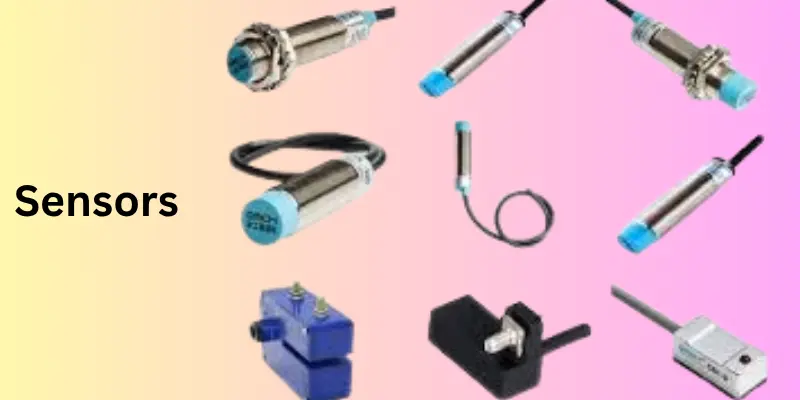
FAQs About Sensors
1. What is a sensor in electronics?
A sensor in electronics is a device that detects physical input (light, heat, motion, etc.) and converts it into an electrical signal for monitoring or control.
2. What are the main types of sensors?
The main types include temperature, motion, pressure, proximity, touch, gas, and humidity sensors, among others.
3. What is the difference between analog and digital sensors?
Analog sensors provide continuous data, while digital sensors give binary (discrete) output, suitable for digital systems.
4. How are sensors used in IoT?
IoT sensors are embedded in devices to collect and transmit data over the internet for remote monitoring and automation.
5. What is sensor calibration?
Calibration ensures a sensor’s output accurately reflects the physical quantity it measures, improving precision.
6. How do proximity sensors work?
They detect the presence or absence of an object without physical contact using infrared, capacitive, or ultrasonic signals.
7. What are smart sensors?
Smart sensors combine sensing with processing and communication, enabling self-diagnosis, adaptability, and connectivity.
8. Where are environmental sensors used?
They are used in air quality monitoring, weather stations, agriculture, and environmental protection systems.
9. What is sensor sensitivity?
It is the ability of a sensor to detect small changes in the input it measures.
10. How do sensors contribute to industrial automation?
They enable machines to monitor conditions, make decisions, and perform actions without human intervention, enhancing efficiency and safety.
Please Write Your Comments