First Alert Smoke Detectors – Features, Types, Installation & Maintenance Guide
Updated: 8-Aug-2025
365
When it comes to protecting your family from fire hazards, a First Alert smoke detector is one of the most trusted names in the safety industry. Known for reliability, innovative technology, and compliance with safety standards, First Alert smoke detectors have become a household necessity. Whether you choose a hard-wired smoke detector, a battery-operated model, or a First Alert smoke and CO detector (carbon monoxide), the goal remains the same—early detection and quick response.
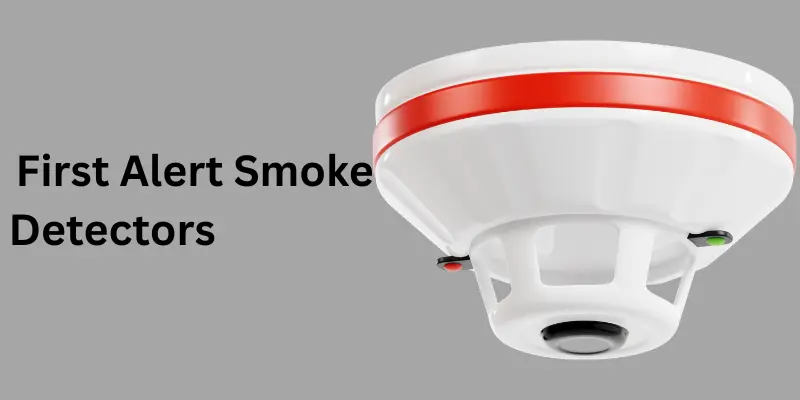
This comprehensive guide will cover different types of First Alert smoke alarms, how to install and maintain them, troubleshooting common issues like First Alert smoke detector beeping, and tips for battery replacement.
What Is First Alert Smoke Detector
A First Alert smoke detector is a fire safety device designed to detect the presence of smoke particles in the air and alert occupants through a loud alarm and/or voice warning. Models vary between ionization, photoelectric, and dual-sensor types, with some also including carbon monoxide detection.
How First Alert Smoke Detectors Work
- Ionization Models – Detect fast, flaming fires by sensing changes in ionized air particles.
- Photoelectric Models – Detect slow, smoldering fires using a light sensor to identify smoke particles.
- Dual-Sensor Models – Combine both technologies for comprehensive coverage.
Once smoke is detected, the alarm emits a loud sound (typically 85 decibels) to alert residents.
Why Choose First Alert Smoke Detectors?
First Alert detectors are UL-listed and engineered to meet strict safety standards. Models like the First Alert 9120B smoke detector provide dependable performance for residential use, while newer units combine smoke detection with carbon monoxide monitoring for dual protection.
Key benefits include:
- High-accuracy sensors for smoke and CO detection
- Variety of models (wired, wireless, battery-operated)
- Loud, clear alarms for quick warning
- Long battery life with easy replacement options
Types of First Alert Smoke Detectors
| Type | Description | Best Use |
|---|---|---|
| Battery-Operated Smoke Detectors | Simple installation, portable | Homes without wiring |
| Hard-Wired Smoke Detectors | Connected to AC power, backup battery | New constructions, remodels |
| Wireless Smoke Detectors | Interconnect without wiring | Large homes |
| First Alert Smoke and CO Detectors | Combines smoke and carbon monoxide sensing | Kitchens, bedrooms, garages |
| First Alert 9120B | Popular hardwired unit with battery backup | General household use |
| First Alert P1210 | Sealed 10-year battery, no replacement needed | Low-maintenance homes |
Popular First Alert Models
- First Alert 9120B Smoke Detector – AC-powered with 9V backup battery
- First Alert P1210 – 10-year sealed battery, no need for replacement
- First Alert Combination Smoke and CO Detector – Dual safety feature
- First Alert Wireless Smoke Detector – Ideal for interconnection without rewiring
Installation of First Alert Smoke Detectors
Smoke detector installation is straightforward, whether ceiling-mounted smoke detectors or wall-mounted. For AC-powered smoke detectors, installation is typically done by a professional to ensure wiring safety.
Steps:
- Choose location – Away from kitchen to avoid false alarms
- Mount base plate – Screw it to ceiling/wall
- Connect wiring (for hardwired units)
- Attach detector to base
- Test alarm using the test button
Battery Replacement & Maintenance
Regular smoke detector maintenance ensures reliable operation. Models like First Alert 9120B require battery replacement for smoke detectors at least once a year.
How to Change Battery in First Alert Smoke Detector:
- Remove detector from base
- Open battery compartment
- Replace with the recommended battery for First Alert smoke detector
- Close and reattach
- Press test button
Troubleshooting Common Issues
- First Alert smoke detector beeping – Usually low battery or sensor dust
- First Alert smoke detector chirping – Indicates battery replacement needed
- First Alert smoke detector blinking red – Alarm recently activated or self-testing
- Green light flashing on smoke detector First Alert – Indicates normal power supply
- First Alert smoke detector 3 beeps – Possible CO detection in combination units
Best Practices for Smoke Detector Safety
- Install at least one smoke detector on each floor
- Test alarms monthly
- Replace entire unit every 8–10 years
- Keep detectors dust-free for accuracy
- Use First Alert smoke carbon monoxide detectors in bedrooms and near garages
How Long Do First Alert Smoke Detectors Last
First Alert smoke detectors typically last 8–10 years, depending on the model and usage environment. After this period, the sensor’s efficiency may decline, potentially affecting its ability to detect smoke accurately. The manufacturing date is usually printed on the back of the unit, and replacing the device before it reaches its expiry ensures continued safety compliance with NFPA (National Fire Protection Association) standards.
Where To Buy First Alert Smoke Detectors
You can buy First Alert smoke detectors from:
- Online Retailers – Amazon, Walmart, Home Depot, Lowe’s, Best Buy.
- Official Website – First Alert’s own e-commerce platform.
- Local Hardware Stores – ACE Hardware, True Value.
- Supermarkets & Big Box Stores – Target, Costco.
- Specialty Safety Equipment Dealers – Certified safety equipment suppliers.
Best First Alert Smoke Detector For Home Safety
The best model depends on your needs:
- First Alert BRK 9120B – Reliable hardwired ionization smoke alarm.
- First Alert SCO501CN – Wireless interconnected smoke & CO detector.
- First Alert SA511CN2-3ST – Photoelectric smoke alarm with voice location.
- First Alert 10-Year Sealed Battery Models – Maintenance-free battery life for a decade.
For all-round home protection, a combination smoke and CO detector with voice alert is highly recommended.
First Alert Hardwired Smoke Detector With Battery Backup
This model connects directly to your home’s electrical system for constant power and includes a backup battery to ensure functionality during a power outage. Popular choices include the First Alert BRK 9120B and First Alert 7010B, both offering interconnected alarm capability and compliance with UL 217 safety standards.
First Alert Smoke Detector Low Battery Beep Fix
- Replace the Battery – Use the recommended type (commonly 9V or AA lithium).
- Reset the Alarm – Press and hold the test/silence button for 15–20 seconds.
- Check Battery Contacts – Clean and ensure no corrosion is present.
- Power Cycle – Remove battery and AC power (for hardwired units), wait 1 minute, then reconnect.
- Replace the Unit – If the beeping persists and the detector is over 8 years old.
First Alert Smoke Detector Interconnected System Setup
- Hardwired Models – Connect multiple alarms with an interconnect wire; when one detects smoke, all sound.
- Wireless Models – Use First Alert’s wireless interconnect feature for easy pairing without wiring.
- Mixed Setup – Some models allow wired units to link with wireless for hybrid systems.
This setup increases safety by ensuring everyone in the home hears the alarm, regardless of the fire’s location.
First Alert Smoke And Carbon Monoxide Detector Reviews
First Alert combination units are generally praised for:
- Accuracy – Reliable smoke and CO detection.
- Voice Alerts – Clear location-based warnings.
- Battery Life – Long-lasting lithium batteries.
- Ease of Installation – Simple setup for both wired and battery-operated versions.
Criticism often focuses on false alarms in high-humidity areas and higher initial cost compared to basic smoke-only models.
Replacing An Old First Alert Smoke Detector
- Turn Off Power (for hardwired models).
- Remove the Old Unit – Twist counterclockwise to detach from the mounting bracket.
- Disconnect Wiring Harness (if applicable).
- Install New Model – Attach wires, mount bracket, insert battery.
- Test the Alarm – Ensure it sounds and all interconnect functions work.
Comparison Chart Of First Alert Smoke Detectors With Others
| Feature / Brand | First Alert | Kidde | X-Sense | Nest Protect |
|---|---|---|---|---|
| Detection Technology | Ionization, Photoelectric, Dual | Ionization, Photoelectric | Photoelectric | Split-spectrum |
| CO Detection Option | Yes | Yes | Yes | Yes |
| Interconnect Capability | Wired & Wireless | Wired & Wireless | Wireless | Wireless |
| Voice Alerts | Yes | Limited | Yes | Yes |
| Battery Backup | Yes | Yes | Yes | Yes |
| Smart Home Integration | Limited | No | Limited | Full |
| Lifespan | 8–10 Years | 7–10 Years | 10 Years | 10 Years |
| Price Range | Moderate | Low | Moderate | High |
| Installation Difficulty | Easy | Easy | Easy | Moderate |
| Reliability Rating | High | High | High | High |
Pros And Cons Of First Alert Smoke Detectors
| Pros | Cons |
|---|---|
| Reliable and accurate detection | Higher cost than basic models |
| Wide range of models to fit needs | Some models prone to false alarms in humidity |
| Voice alerts for location identification | Limited smart home integration on most models |
| Long battery life (up to 10 years) | Battery replacement still required on some models |
| Easy installation | Not all models are weather-resistant |
Importance Of First Alert Smoke Detectors
- Provide early fire detection to save lives and property.
- Reduce risk of injury from smoke inhalation.
- Meet UL safety standards and NFPA guidelines.
- Offer CO detection in combo models for added safety.
- Enable interconnected alerts across the home.
- Low maintenance with long battery life.
International Rules Governing The First Alert Smoke Detectors
First Alert smoke detectors comply with:
- UL 217 (USA) – Standard for smoke alarms.
- EN 14604 (EU) – European smoke alarm standard.
- NFPA 72 – National Fire Alarm and Signaling Code.
- BS 5446-1 (UK) – Specification for smoke alarms in homes.
- AS 3786 (Australia) – Smoke alarms for residential buildings.
- CSA 6.19 (Canada) – Safety standard for smoke alarms.
Operating Temperature Chart For First Alert Smoke Detectors
| Model Type | Min Temp (°C) | Max Temp (°C) | Min Temp (°F) | Max Temp (°F) |
|---|---|---|---|---|
| Battery-Operated | 4 | 38 | 40 | 100 |
| Hardwired | 4 | 38 | 40 | 100 |
| Combination Smoke + CO | 4 | 38 | 40 | 100 |
| 10-Year Sealed Battery Models | 4 | 38 | 40 | 100 |
Note: High humidity or extreme temperatures can affect sensor accuracy.
Summary
A First Alert smoke detector is a proven safeguard against fire hazards, offering options for every home setup—whether you need a hardwired smoke detector, a battery-operated model, or a combination smoke and CO detector. By choosing a reliable brand, maintaining your devices, and knowing how to troubleshoot common problems, you ensure the safety of your loved ones.

Conclusion
Investing in a First Alert smoke detector is an essential step toward home safety. From the dependable First Alert 9120B to advanced models like the P1210 or wireless smoke detectors, there’s a solution for every household. Proper installation, routine maintenance, and timely battery replacement will keep your smoke detectors in top condition, providing peace of mind for years.
Please Write Your Comments