Why a rounded-roof car shelter guards a vehicle against the Australian sun, hail and rain
Updated: 29-Jun-2026
8
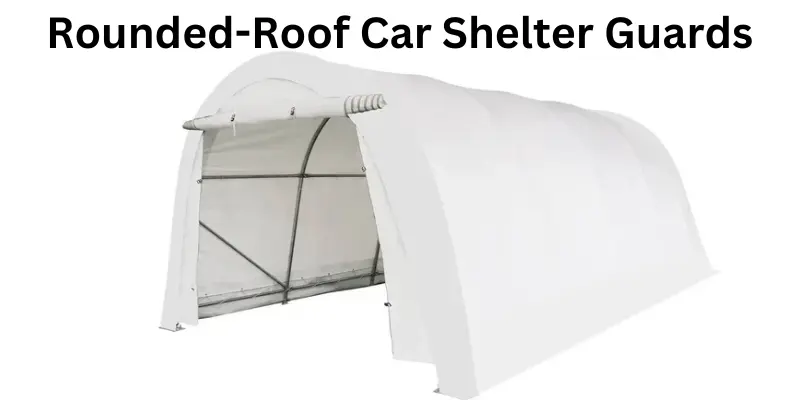
A built garage is a luxury the Australian climate makes tempting
Across Australia, a vehicle left in the open takes a beating its owner feels again at resale. The sun fades paint and perishes rubber and plastic the year round, winter brings driving rain and storms, and a single hailstorm can dent a roof in minutes. A car shelter answers that without the cost of a built garage, giving a framed, fabric-covered cover that goes up in a day.
The appeal is that it solves a real problem cheaply. Understanding how it works shows where it earns its keep and where it does not.
Why the roof is curved rather than flat
The rounded roof is not styling. A curve lets rain and hail run off rather than pool, and pooled water is heavy enough to stretch and tear a flat cover over time.
The arch also manages wind. A flat panel catches a gust like a sail, while a smooth curve lets air slide over it, reducing the lift that tries to peel the cover away.
The cover is a tensioned skin, not a loose sheet
The cover is a polyethylene fabric pulled tight over the frame. Tensioning is what turns a limp sheet into a working surface, because a taut skin holds its shape while a slack one flogs in the wind until it fatigues and splits.
The fabric is treated against ultraviolet light, the single biggest threat under the Australian sun. Without that treatment the cover would grow brittle within a season or two, and the shade it casts is half the reason owners fit one at all.
The ground does the last and most important job
A frame and a cover only gather the wind’s lift; they cannot resist it. That work falls to the anchors, which must carry the force into the ground, or a car shelter is just a light shell waiting to move.
So the anchoring follows the surface. Stakes hold in soil by friction and depth, while a concrete or paved pad calls for bolts or weighted anchors instead, and an exposed coastal block needs far heavier holding than a sheltered suburban driveway.
Reading the family of fabric shelters
Fabric structures are easiest to sort by how much they enclose, because each step from open to closed trades airflow and easy access for weather protection and security.
•Open car shelter: roof and legs only, giving shade and rain cover with easy access
•Enclosed shelter: walls and a door added for security and dust protection
•Larger storage shelter: the same idea scaled up for machinery or a caravan
Seen this way, the rounded-roof car shelter sits at the light, open end of the family, chosen when shade and rain cover matter more than locked walls.
Where it earns its place, and where it does not
The strengths follow straight from the design. A car shelter is far cheaper than a built garage, goes up in a day, needs no permanent foundation, and can be moved when circumstances change.
The same lightness sets the limits, because it lives or dies by correct anchoring and the cover wears under the sun over the years. For an Australian household that wants to keep sun, hail and rain off a vehicle without the cost of building, a car shelter remains a practical and quickly raised answer.
Please Write Your Comments