What Londoners Are Doing With Unwanted Pallets, From Garden Projects to Recycling Schemes
Updated: 18-Aug-2026
44
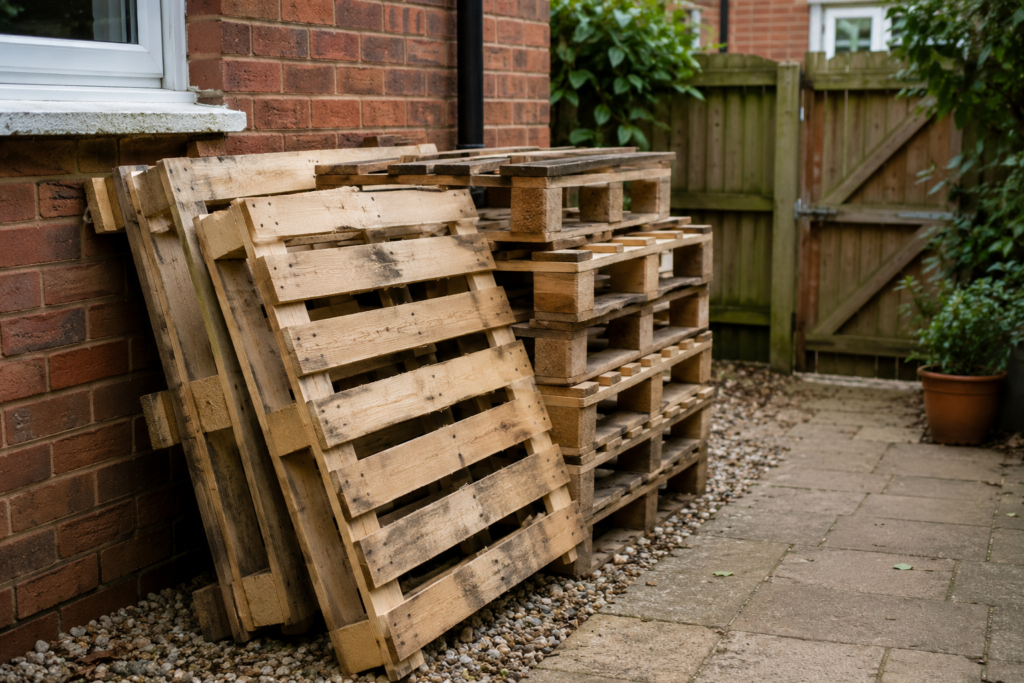
Wooden pallets have quietly become one of the most common items cluttering up London’s homes, gardens and small business yards. Whether left over from a furniture delivery, a house move or a garden landscaping project, they tend to stack up in corners and side returns with no obvious way to get rid of them.
The scale of the issue is bigger than most people realise. The UK moves hundreds of millions of pallets every year, and a significant share of them end their journey in domestic settings rather than warehouses. Unlike cardboard or glass, pallets cannot go in kerbside recycling, and most London boroughs will not accept them in standard bulky waste collections without a charge.
That has left many residents searching for practical ways to deal with unwanted pallets in London, and the options are more varied than they first appear. Services such as unwanted pallets in london collection have grown alongside the capital’s booming delivery economy, offering to take pallets away so they can be repaired, reused or broken down for recycling.
Upcycling is the route that tends to capture the imagination. Social media is full of pallet coffee tables, vertical herb gardens, outdoor sofas and children’s mud kitchens, and for the handy homeowner a pallet or two can be genuinely useful. But there are caveats worth knowing. Pallets stamped with an “MB” mark have been treated with methyl bromide, a pesticide, and should never be used for indoor furniture, food planters or firewood. Heat-treated pallets, marked “HT”, are the safer choice for home projects.
For those without the time or tools, disposal is the realistic option, and this is where many people go wrong. Fly-tipping pallets carries fines of up to £1,000 in most boroughs, and burning them in a garden can breach smoke control rules that cover almost all of Greater London. The responsible routes are council reuse and recycling centres, though many limit how much wood a household can bring, or specialist collection services that handle pallets in volume.
There is also a growing commercial angle. Standard-sized pallets in reasonable condition hold real value, and businesses that receive regular deliveries can often have them collected free of charge, and in some cases are paid for them. What looks like waste to one company is stock to another, and the reuse market keeps millions of pallets in circulation that would otherwise be chipped or landfilled.
Environmental campaigners point out that reuse beats recycling. A repaired pallet re-enters the supply chain immediately, while a chipped one becomes animal bedding, biomass fuel or board material. Both are better than landfill, where timber breaks down slowly and releases methane, but the hierarchy matters.
For households, the practical advice is straightforward. Check the stamps before upcycling, never burn treated wood, and if the pallets are simply in the way, look into collection rather than the tip. Firms handling unwanted pallets in london will often assess whether pallets can be repaired and resold before anything is broken down, which keeps the material at its highest value for longer.
In a city where space is at a premium, a stack of pallets in the garden rarely stays welcome for long. The good news is that getting rid of them responsibly has never been easier, and in many cases it costs nothing at all.
Please Write Your Comments