Terex TR100 Dump Truck Maintenance Tips: Our Experience Sourcing Reliable Terex OEM Parts From China
Updated: 22-Jul-2026
42
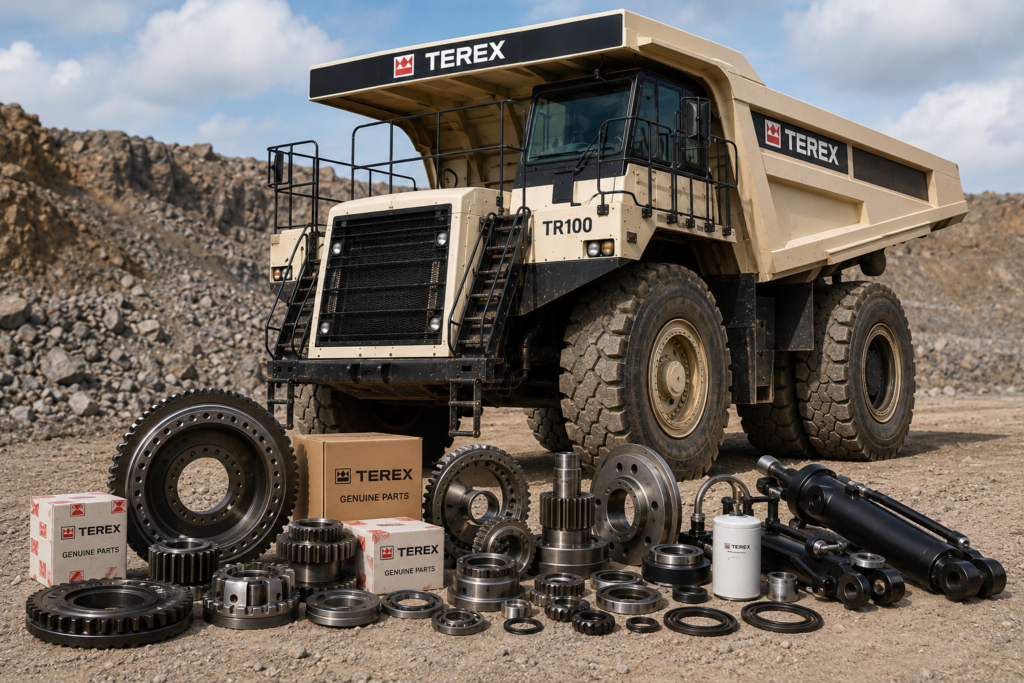
Managing a fleet of Terex TR100 dump trucks means dealing with constant pressure on axles, brake systems, transmissions, suspension assemblies, and hydraulic components. In mining operations, even one unexpected failure can interrupt hauling schedules, reduce daily tonnage, and increase labour and recovery costs.
Effective Terex TR100 maintenance depends on disciplined inspections and a dependable supply of correctly matched Terex OEM parts. Sourcing from qualified Chinese suppliers has helped us balance quality, cost, and delivery time without confusing OEM-specification replacements with genuine factory-original components.
Regular Maintenance Checklist to Protect a Terex TR100 Dump Truck
The Terex TR100 dump truck operates under heavy load, vibration, dust, heat, and long cycles. Small defects can become major failures when inspections are delayed or replacement parts do not match specification.
Daily Inspection Items
Our operators and maintenance team follow a short but disciplined inspection routine before every shift. The objective is to detect leakage, abnormal noise, temperature changes, or looseness before the truck enters full production.
Key daily checks include:
- Brake pressure, brake response, and visible wear around brake assemblies
- Hydraulic oil levels, hose condition, cylinder leakage, and fitting security
- Transmission oil level and signs of overheating or delayed shifting
- Tyre condition, wheel fasteners, and suspension movement
- Steering response and unusual play in joints or linkages
- Final drive, axle, and differential areas for oil leakage
- Warning indicators, lighting, alarms, and onboard monitoring systems
We also record repeated faults by truck number. This makes it easier to identify patterns and prepare the correct Terex mining truck spare parts before the next planned service.
Scheduled Overhaul of Vulnerable Components
Daily inspections do not replace scheduled overhaul work. For high-hour units, we plan replacement around operating conditions, service history, oil analysis, and inspection findings.
Frequently replaced or rebuilt items include:
- Brake discs and friction components
- Planetary gear sets
- Hydraulic cylinders
- Seal kits and O-rings
- Suspension components
- Bearings, bushes, and pins
- Transmission and axle overhaul kits
Matched-quality spare parts generally provide more predictable service intervals. In contrast, cheap and poorly matched aftermarket components can create fitting problems, premature wear, oil leakage, and repeated breakdowns.
For this reason, we treat part verification as part of the maintenance process rather than only a purchasing task.
Challenges When Sourcing Terex TR100 Spare Parts in the Past
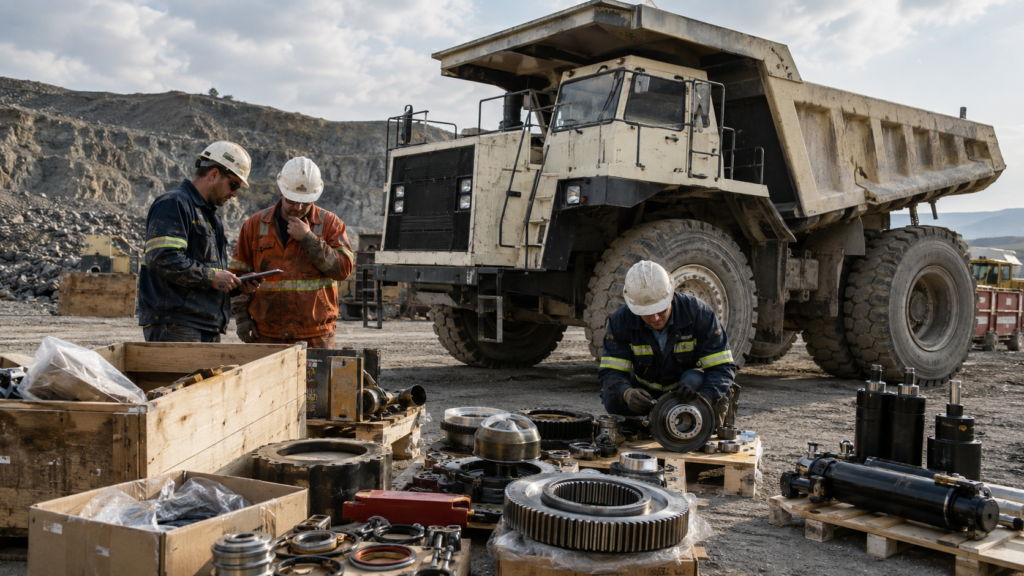
In the past, obtaining Terex TR100 overhaul parts through overseas dealer channels often involved long lead times. Some components were available only after extended production or international shipping schedules, making it difficult to coordinate major repairs with planned shutdowns.
Price was another concern. Genuine original components can be appropriate for critical applications, but using the official channel for every item can place heavy pressure on the fleet maintenance budget.
Procurement managers must therefore understand the difference between genuine factory-original parts, OEM-standard replacement components, and low-grade aftermarket copies.
The general spare parts market also creates risk. An attractive quotation may come with limited technical information or incomplete part-number confirmation. An incorrect low-cost item can ultimately cost more through installation delays, extra freight, and lost production.
Benefits of Sourcing Qualified Terex OEM Parts From Chinese Suppliers
Our experience with a dependable China supplier for Terex parts has been positive when the supplier provides technical verification, clear product documentation, and realistic delivery commitments.
The main advantage is not simply a lower quotation. It is the ability to manage quality, budget, compatibility, and delivery timing together.
Better Cost Efficiency
For many maintenance items, OEM-specification replacements can deliver strong cost performance compared with buying every component through official overseas channels. This protects the mining project’s operating margin without underfunding maintenance.
However, we never select parts based on price alone. Material specification, machining quality, heat treatment, dimensional accuracy, and application suitability remain important, especially for drivetrain and braking components.
Reliable suppliers should also clearly identify whether a component is genuine original, OEM-standard, or an OEM-specification replacement.
More Controllable Delivery Timelines
A supplier holding common TR100 components in local warehouse stock can reduce waiting time for routine items. For production parts, a clear manufacturing schedule allows us to plan labour, workshop space, lifting equipment, and truck availability more accurately.
This is particularly valuable when several trucks are approaching the same service interval. Rather than waiting for an emergency breakdown, we can order qualified Terex OEM parts in advance and align delivery with the planned overhaul window.
When the supplier provides honest production and dispatch dates, procurement teams can also choose the most suitable freight method instead of automatically paying for urgent air transport.
Complete Part-Number Matching
One of the most valuable supplier services is verification against the Terex parts catalogue. A reliable supplier should check the full part number, equipment model, serial-number range, component location, and any superseded references before confirming an order.
This process reduces the risk of receiving visually similar but technically incompatible parts. For assemblies such as planetary gears, brake components, hydraulic cylinders, and transmission parts, dimensional confirmation is especially important.
Good suppliers of genuine equivalent Terex components should be willing to identify critical measurements, connection points, materials, and application details before production begins.
Practical Advice Before Placing Orders for Terex TR100 Components
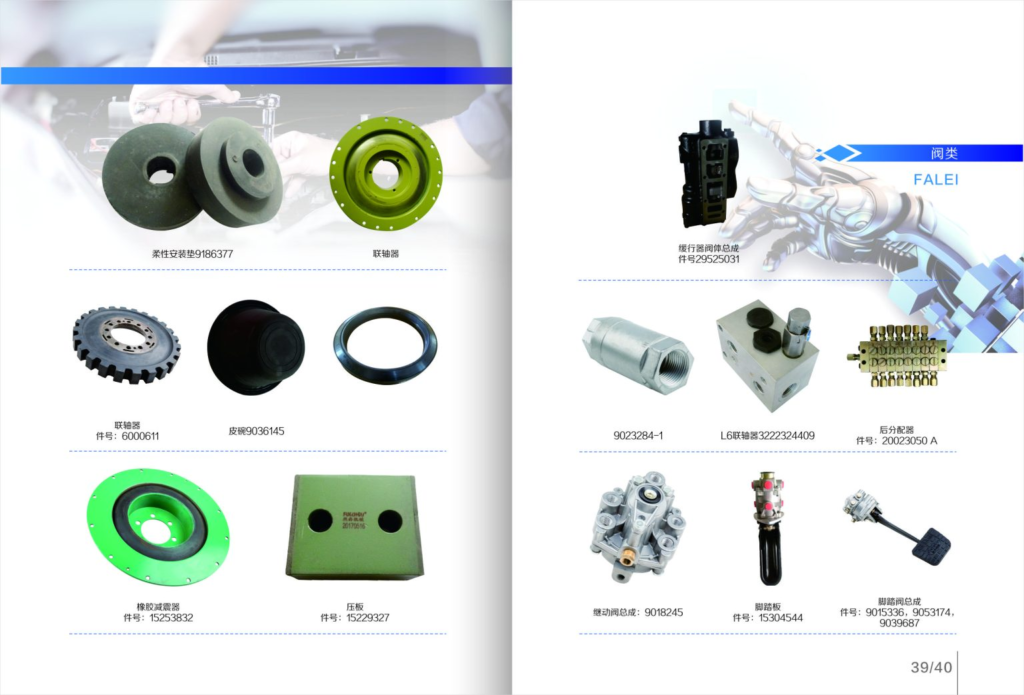
Before issuing a purchase order, we use a straightforward verification process. It has helped prevent wrong shipments and improved communication between the maintenance, procurement, and supplier teams.
Confirm Complete Part Numbers
Always provide the complete part number rather than relying only on a general description. Where possible, include the truck model, serial number, assembly position, and quantity required.
A description such as “TR100 brake disc” may not be sufficient if different production batches or axle configurations use different specifications.
Request Photos and Dimensional Verification
Request clear product photos and dimensional confirmation for critical parts. For a used or damaged component, provide photos of:
- Nameplates
- Casting numbers
- Spline profiles
- Mounting points
- Bolt patterns
- Hydraulic connection ports
- Overall dimensions
This information can help the supplier confirm compatibility before manufacturing or dispatch.
Confirm Warranty and Export Packing
Warranty terms should be agreed upon before payment. Ask what the warranty covers, how a quality claim will be handled, and which documents or photographs would be required.
Export packing is equally important. Heavy components need strong wooden cases, moisture protection, secure internal supports, and clear shipping marks to prevent damage during handling and international transport.
Check the Complete Freight Schedule
Production completion does not mean the parts will immediately arrive at the mine site. Customs clearance, port schedules, inland transportation, and site-access requirements must be included in the total lead-time calculation.
We normally confirm the estimated production date, dispatch date, shipping method, port arrival, and inland delivery arrangement before scheduling the overhaul.
Finally, separate urgent breakdown items from planned stock replenishment. Air freight may suit a critical truck-down item, while sea freight is usually more practical for planned bulk inventory.
Conclusion
Strict inspection routines and scheduled overhaul work are essential for reducing Terex TR100 downtime. However, maintenance performance also depends on receiving the correct components at the right time and at a sustainable cost.
From our fleet-management perspective, sourcing Terex OEM parts from qualified Chinese suppliers can provide a practical balance of quality, budget control, and delivery efficiency. The safest approach is to confirm whether each item is genuine original, OEM-standard, or an OEM-specification replacement, then verify part compatibility before every bulk order.
Meta Title: Terex TR100 Maintenance & OEM Parts Sourcing
Meta Description: Learn practical Terex TR100 maintenance tips and how qualified Chinese suppliers balance part quality, cost, compatibility, and delivery time.
Please Write Your Comments