What Should Manufacturers Ask Pvoh Suppliers About Exceval?
Updated: 9-Oct-2026
29
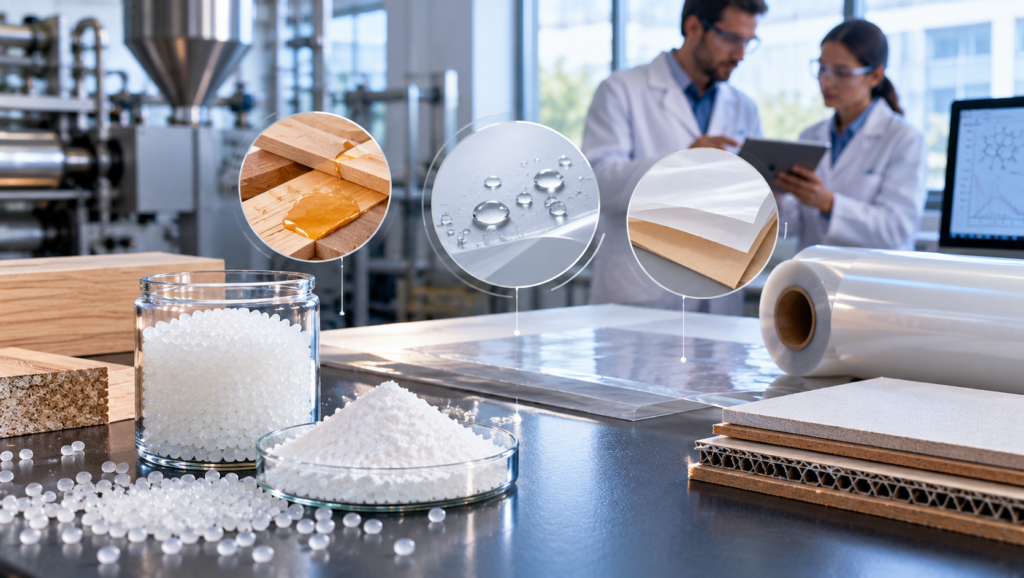
Choosing an industrial polymer starts with understanding what the finished product must achieve. An adhesive may need stronger resistance to moisture, while a paper coating may require protection against grease or oxygen. Manufacturers comparing Pvoh suppliers should connect these requirements with documented material properties. Kuraray Poval and Exceval provide different options within Kuraray’s polymer portfolio, making careful grade selection more useful than assuming that all polyvinyl alcohol products perform alike.
Polyvinyl alcohol, commonly called PVOH or PVA, is widely used for film formation, adhesion, and stabilization. Kuraray Poval covers a broad range of grades for applications including paper, textiles, adhesives, and ceramics. Exceval is a separate Kuraray specialty brand for hydrophobically modified polyvinyl alcohol. This modification gives manufacturers an option when improved water resistance is important, while retaining useful characteristics associated with the broader polymer family.
Understanding this distinction helps buyers ask better questions. Standard PVOH may provide the properties needed for a particular formulation, while a modified product may address a more demanding performance target. The decision should reflect the substrate, processing method, service conditions, and required test results. Comparing exceval with a current material is most informative when both products are evaluated within clearly defined and relevant application conditions.
Wood adhesives illustrate one established use. Kuraray describes Exceval as a dispersing aid and protective colloid for manufacturing polyvinyl acetate emulsions. Its modified structure supports improved water resistance in suitable adhesive systems. For formulators, this creates an opportunity to assess how polymer selection influences the finished adhesive. Performance should still be confirmed in the complete formulation, including its bonding conditions and intended exposure to moisture.
Barrier coatings offer another area of interest. According to Kuraray’s product information, Exceval can provide resistance to oxygen and grease when used in appropriate coatings. Its films absorb less moisture than conventional PVOH under comparable conditions, which is relevant when evaluating barrier performance in humid environments. Manufacturers should distinguish these properties from complete waterproofing: resistance to grease, oxygen transmission, and water exposure represent different performance questions.
For paper applications, the quality of the coating matters alongside the polymer itself. Kuraray highlights Exceval’s film formation and ability to fill gaps between paper fibers. During development, teams should evaluate the chosen substrate and coating process together. Useful comparisons may consider coating coverage, drying conditions, adhesion, and the required barrier measurements. Results from one paper structure should not automatically be transferred to another without testing.
When discussing these projects with Pvoh suppliers, buyers should request current technical data sheets, safety data sheets, and specifications for the proposed grade. They should also confirm availability in their region and ask which preparation instructions apply. A general description such as water soluble does not establish a universal mixing procedure. Following the selected product’s guidance provides a more consistent starting point for trials and troubleshooting.
Commercial questions deserve the same attention as technical ones. Procurement teams should clarify packaging, order quantities, delivery expectations, and arrangements for communicating product changes. Technical teams can explain which properties are essential and which allow flexibility. Sharing this information early helps suppliers suggest relevant options and allows purchasing decisions to consider application suitability and supply requirements alongside the price of the material.
A practical evaluation should begin with measurable acceptance criteria. Adhesive developers might compare bonding performance after defined moisture exposure, while coating developers may focus on oxygen or grease resistance. Testing should use consistent preparation methods and recorded conditions. Repeating promising trials and assessing representative production conditions helps establish whether a candidate material offers a meaningful advantage within the intended process rather than only in an isolated sample.
Kuraray’s product resources, application literature, and sample enquiry channels provide a starting point for exploring exceval alongside Kuraray Poval grades. For businesses comparing Pvoh suppliers, the strongest approach combines technical documentation, supplier discussions, and relevant testing. Selecting exceval should follow a clear understanding of the performance needed and the evidence gathered during development. This approach helps manufacturers choose materials with confidence while keeping expectations connected to their actual products and manufacturing conditions. Documenting the final grade, preparation method, and agreed specifications also gives production and quality teams a shared reference when introducing the selected material into regular manufacturing operations.
Please Write Your Comments