How Precision Investment Casting Prevents Catastrophic Valve and Pump Failures in Hazardous Environments
Updated: 6-Aug-2026
22
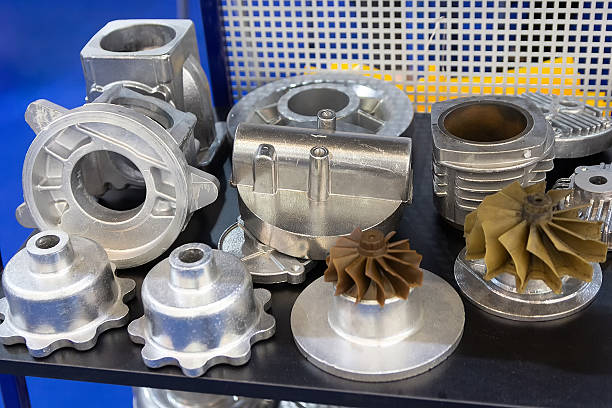
The Hidden Mechanical Hazards in Chemical and High-Pressure Fluid Handling
In petrochemical processing, offshore energy production, and chemical manufacturing, fluid containment systems operate under extreme physical and chemical stress. A mechanical failure in a high-pressure pump casing or flow-control valve is rarely a minor maintenance issue; it is a potential industrial catastrophe.
Industry reliability audits reveal that over 40% of unexpected chemical leaks and pressure vessel ruptures originate from subsurface casting defects. Microscopic structural anomalies—such as porosity, sand inclusions, and linear shrinkage—compromise the pressure-containing boundary of critical piping equipment.
When specifying pressure vessels, pump casings, or flow-control valves for hazardous chemical handling, dimensional accuracy is just as critical as raw material strength. Operating under high-pressure mechanical loads requires internal cavity components to maintain strict ISO and CT tolerance classifications.
For this reason, safety engineers often reference benchmark specifications from Bessercast, requiring CT4 to CT6 dimensional accuracy and an Ra 3.2 surface finish to prevent micro-fissures and ensure leak-free seal integrity.
Sand Casting vs. Precision Investment Casting: Where Micro-Cracks Begin
Conventional sand casting relies on compacted aggregate molds, which frequently introduce non-metallic inclusions and rough internal grain structures. Under high-frequency fluid pulsation, these irregular micro-voids act as primary stress-concentration points where mechanical fatigue cracks initiate.
In contrast, Silica Sol Investment Casting builds an inert, multi-layered ceramic shell around a sacrificial wax pattern. This thermal mold preparation eliminates moisture and organic binders, preventing gas porosity during molten alloy solidification.
The resulting metallurgical structure exhibits an equiaxed, dense grain distribution across complex thin-walled geometries. Eliminating internal shrinkage cavities ensures that pump casings and valve bodies achieve maximum burst-pressure resistance before field deployment.
Metallurgical Integrity: Why Alloy Selection and Casting Standards Drive Operational Safety
In hazardous fluid handling, chemical compatibility and mechanical strength must work in tandem to prevent premature containment failure. Selecting the correct metallurgical grade prevents environmental degradation, while controlled foundry practices lock in mechanical resilience.
To withstand corrosive acids, sour gas (H2S), and saline environments, engineers specify specialized alloy families:
- Austenitic Stainless Steels (304 / 316 / 316L): Provide exceptional baseline resistance to chloride pitting and oxidizing agents in general chemical processing.
- Duplex Stainless Steels (e.g., UNS S31803): Deliver double the yield strength of standard austenitic grades alongside superior resistance to stress corrosion cracking.
- Nickel-Based Superalloys (Hastelloy / Inconel): Maintain structural integrity and chemical passivity in extreme high-temperature and highly acidic applications.
To ensure these chemical compositions translate into verified mechanical properties, casting facilities adhere to global material specifications published by ASTM International. Compliance with standardized casting designations guarantees correct chemical doping and heat-treatment cycles.
The Safety Impact of Surface Finish (Ra 3.2 Standard)
The internal surface topography of a valve body or pump impeller directly governs its long-term resistance to chemical attack. Coarse internal finishes trap particulate matter, fluid residues, and stagnant electrolytes, accelerating localized corrosion.
In fluid containment systems, rough surfaces are the primary catalyst for crevice corrosion and pitting penetration. An uneven micro-topography allows acidic agents to penetrate microscopic valleys, eroding the metal’s passive oxide layer.
Precision investment casting consistently produces an as-cast surface roughness of Ra 3.2 µm (125 µin) or better across internal flow passages. This smooth hydrodynamic profile minimizes fluid shear friction, prevents chemical sediment accumulation, and significantly extends seal life.
Dimensional Precision (CT4–CT6 Standards) and Seal Reliability
A valve or pump is only as safe as its sealing interfaces. Mechanical seals, gaskets, and flanged joints depend on uniform geometric compression to prevent volatile organic compound (VOC) emissions.
Casting inaccuracies cause micro-gaps across valve seats and flange faces, leading to chronic weepage or sudden gasket blowouts under pressure spikes. Investment casting achieves strict ISO 8062 CT4–CT6 dimensional tolerances directly out of the ceramic mold.
This near-net-shape accuracy eliminates eccentric bore alignments and ensures true parallelism across mechanical mating faces. Predictable dimensional control guarantees that high-pressure seals remain dynamically centered throughout their operational lifecycles.
Quality Assurance and NDT (Non-Destructive Testing) Protocols for Safety-Critical Components
In safety-critical B2B procurement, visual inspection is insufficient for verifying component readiness. Facilities must implement rigorous Non-Destructive Testing (NDT) protocols to certify that zero internal defects exist within the pressure boundary.
A comprehensive quality assurance architecture employs multiple testing modalities to inspect both surface and subsurface metallurgy:
- 100% X-Ray Radiography: Penetrates the casting walls to verify the total absence of internal gas voids, shrinkage porosity, or hot tears.
- Magnetic Particle Inspection (MPI): Detects fine surface and near-surface linear discontinuities in ferromagnetic pump and valve components.
- Liquid Penetrant Inspection (LPI): Highlights microscopic surface cracks and porosity on non-magnetic austenitic and duplex stainless steel castings.
- Optical Emission Spectroscopy (OES): Verifies the precise chemical elemental composition of every raw alloy heat prior to pouring.
Following non-destructive evaluation, critical fluid-handling components undergo hydrostatic testing at 1.5 times their maximum rated operating pressure. This mechanical proof test verifies structural integrity and guarantees zero containment leakage under extreme pressure surges.
Key Takeaways
| Area | Key Takeaway | Impact/Data |
| Failures | Eliminate subsurface casting porosity | Causes 40% of chemical leaks |
| Process | Use silica sol investment casting | Prevents fatigue crack initiation |
| Surface | Enforce as-cast Ra 3.2 µm finish | Stops localized crevice corrosion |
| Testing | Require 100% X-ray & hydrostatic testing | Proof test at 1.5x max pressure |
Aligning Equipment Procurement with Process Safety Management Standards
Industrial safety is governed by regulatory frameworks designed to protect workers, infrastructure, and surrounding ecosystems. Enterprise procurement teams must align their mechanical sourcing criteria with codified international process safety mandates.
Implementing rigorous component selection rules directly aligns with federal and international industrial safety frameworks. To prevent catastrophic fluid release and toxic workplace exposure, facilities must enforce the mechanical integrity mandates outlined in OSHA Process Safety Management (PSM) guidelines, which stipulate that all piping systems, valves, and pressure vessels must be fabricated and inspected according to documented, rigorous engineering standards.
By embedding precision casting standards into supplier qualification documents, EHS managers and procurement engineers establish a transparent, auditable trail of mechanical compliance.
A Safety Audit Checklist for Valve and Pump Castings
To mitigate operational risks during vendor onboarding and routine maintenance audits, safety engineers should execute a four-point engineering audit:
- Verify Dimensional Tolerance Grades: Confirm that technical drawings explicitly demand ISO 8062 CT4–CT6 tolerances for all primary fluid containment bodies.
- Audit Surface Roughness Specifications: Ensure internal fluid channels and sealing faces specify a baseline smoothness of Ra 3.2 µm without relying on excessive secondary machining.
- Mandate Certified NDT Reports: Require traceable X-ray radiography and hydrostatic test certificates mapped to specific component serial numbers.
- Validate Alloy Heat Traceability: Insist on Material Test Reports (MTRs) demonstrating compliance with ASTM or ASME metallurgical standards for every casting batch.
Please Write Your Comments