Power‑Assisted Manipulators: Ergonomic Material‑Handling Tools for Modern Industrial Workplaces
Updated: 2-Sep-2026
117
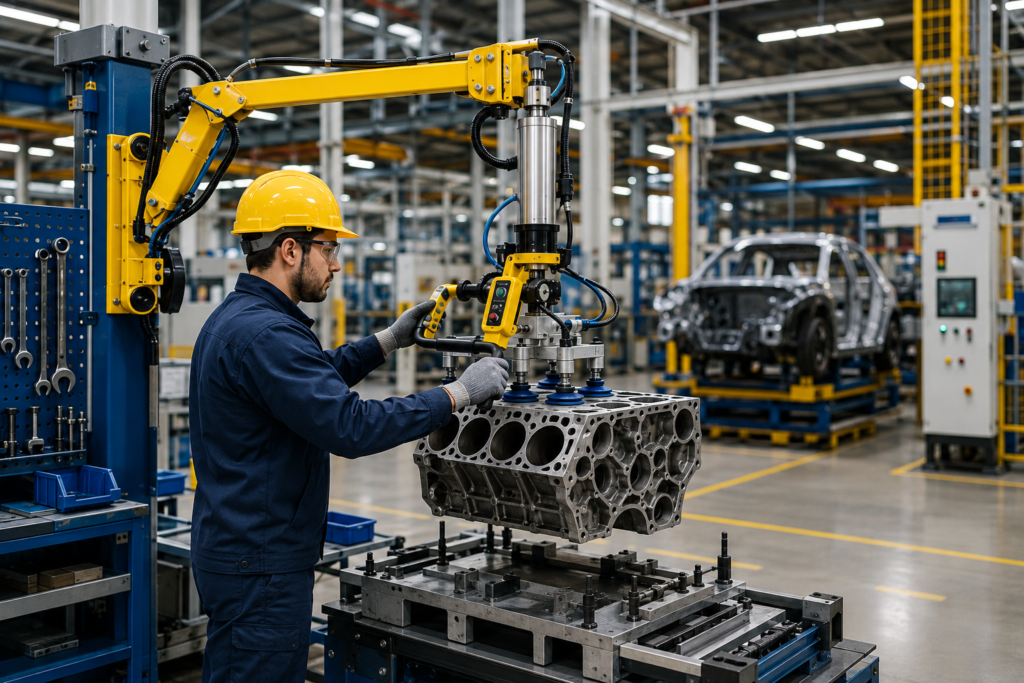
Work‑related musculoskeletal injuries remain one of the costliest safety challenges across manufacturing, metal fabrication, automotive workshops and logistics facilities. Even well‑fitted mechanical PPE such as cut‑resistant gloves, steel‑toed safety boots and back support braces cannot fully eliminate physical harm caused by repeated heavy lifting, twisting and precise positioning of bulky workpieces. Power‑assisted manipulators, also known as zero‑gravity balance manipulators, serve as human‑centric assistive equipment to reduce operator physical strain while complementing standard personal protective equipment for safer shop‑floor operations.
Power‑assisted manipulators are articulated handling arms driven mostly by pneumatic balancing systems. Their core function is counterbalancing workpiece weight to create near‑weightless handling experience. Operators guide heavy loads manually with minimal applied force, retaining human decision‑making rather than relying on fully‑autonomous industrial robots. Custom‑built end‑effectors including mechanical grippers, vacuum suction cups and magnetic fixtures adapt to metal castings, glass panels, battery modules and packaging containers. Built‑in safety interlocks, pressure‑loss locking and anti‑drop mechanisms prevent workpiece falling during power or air‑supply failure, adding critical secondary safety layers for factory environments.
Core Industrial Applications
Automotive and New‑Energy Vehicle Manufacturing Automotive assembly lines frequently handle engine blocks, gearboxes, door panels, windshields and EV battery packs. Power‑assisted manipulators support operators to lift, flip and align heavy powertrain and body components for accurate fitting. Vacuum‑type end‑effectors grip automotive glass without scratching surface finishes. Within new‑energy workshops, anti‑static manipulator configurations transfer battery modules and trays, lowering collision‑related defect rates while cutting repetitive‑lifting stress for assembly staff. This equipment works alongside mechanical PPE including safety goggles and impact‑resistant gloves to minimise crush and pinch hazards on production lines.
Metal‑Working and Heavy Fabrication Machine‑tool loading‑unloading, die‑mold exchange and casting transportation impose high physical burdens on workshop employees. Power‑assisted manipulators move sharp‑edged metal blanks, heavy castings and press molds. They reduce direct human contact with sharp or heavy workpieces, supplementing mechanical PPE and lowering risks of laceration, crush trauma and chronic back injuries. Many fabrication shops deploy these assistive arms for repetitive feeding tasks for CNC and laser‑cutting machines, stabilising workflow and reducing staff fatigue over long work shifts.
Electronics and Home‑Appliance Production Large display panels, refrigerator shells and washing‑machine assemblies need careful, low‑impact handling. Custom soft‑contact fixtures avoid scratching sensitive surfaces. Operators position mid‑weight components accurately for assembly without exhaustion after hundreds of repeated lifting cycles per shift. For dust‑sensitive clean‑room electronics workshops, specially‑treated manipulator hardware meets contamination‑control requirements for high‑precision manufacturing workflows.
Construction and Building‑Material Sector Large glass sheets, ceramic tiles and prefabricated building panels create high injury risks during manual carrying. Vacuum‑gripper manipulators complete lifting, rotating and positioning tasks. They decrease material breakage incidents and hand‑arm injuries common when workers move fragile heavy construction materials. Manipulator units can integrate with prefabricated‑component assembly workflows within modular‑construction sites, working together with construction‑grade PPE for site safety compliance.
Logistics, Food and Pharmaceutical Operations Warehouse and packaging facilities apply manipulators for palletizing sacks, cartons and bulk containers. In food, chemical and pharmaceutical plants, hygienic‑grade manipulator models handle heavy ingredient drums and packaged batches. These assistive devices reduce manual lifting of heavy chemical vessels, reinforcing chemical‑safety protocols alongside respirators and chemical‑resistant protective clothing for operators.
Workplace Safety and Ergonomic Benefits First, power‑assisted manipulators significantly reduce musculoskeletal disorders triggered by constant heavy lifting. They are ergonomic supplements for PPE rather than full replacements for personal protective gear. Second, built‑in anti‑drop safety locks mitigate workpiece‑falling hazards and lower crush‑injury probability. Third, stable, repeatable positioning reduces product collisions and surface scratches, cutting factory scrap rates. Fourth, a single operator can complete tasks that previously required multiple staff members, shortening assembly and material‑handling cycle times. Fifth, these systems support floor‑mounted, overhead‑hung or mobile‑base installation modes, adapting to existing factory layouts without large‑scale reconstruction work.
Important Deployment Guidelines It is critical to understand that power‑assisted manipulators are assistive tools, not substitutes for proper PPE, operator training and site‑safety compliance. Workers still need relevant mechanical PPE: safety goggles, protective gloves and impact‑resistant safety footwear. Equipment teams must perform periodic inspection for pneumatic circuits, joint braking systems and end‑effector integrity. Operators need formal training covering emergency‑stop procedures, load‑limit rules and abnormal‑situation response to sustain safe operation.
Final Thoughts As global industries place growing focus on occupational health and ergonomic compliance, power‑assisted manipulators fill an important gap between pure manual handling and full‑scale automation. When properly implemented across automotive, metal‑working, electronics, building‑material and logistics sites, they help build safer work environments, protect long‑term worker health and deliver consistent production output.
Please Write Your Comments