How Precision CNC Machining Supports Safer and More Reliable Industrial Equipment
Updated: 30-Mar-2026
12
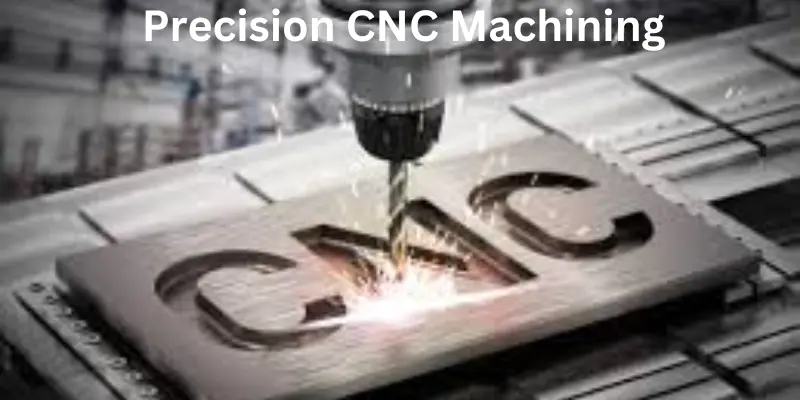
In industrial environments, safety and reliability are closely connected. Whether it’s heavy construction equipment, automated production lines, or specialized tools, the performance of each component directly affects operational safety.
While safety is often associated with protective gear and procedures, the role of precision manufacturing is just as critical. Components that fail under stress, wear out prematurely, or do not fit correctly can introduce serious risks into any system.
This is where precision CNC machining plays a key role.
The Hidden Link Between Machining Accuracy and Equipment Safety
At first glance, machining and safety may seem unrelated. However, in real-world applications, they are deeply connected.
Every mechanical system relies on components that must work together under load, vibration, and environmental stress. If a shaft is slightly out of tolerance, or if a threaded part is not perfectly aligned, the result can be increased friction, unexpected wear, or even sudden failure.
Precision machining ensures that each part meets strict dimensional and surface requirements, reducing these risks from the start.
Manufacturers working with complex systems often rely on precision CNC machining services to maintain consistent quality across production batches, especially when safety is a priority.
Why CNC Turning Is Critical for Equipment Components
Among various machining processes, CNC turning is widely used for producing cylindrical and rotational parts such as shafts, bushings, pins, and connectors.
These components are common in:
- Construction machinery
- Industrial automation systems
- Safety-critical mechanical assemblies
- Hydraulic and pneumatic systems
What makes CNC turning particularly valuable is its ability to maintain tight tolerances while producing parts at scale.
Modern CNC turning for precision machining are capable of integrating multiple operations into a single setup. This reduces handling errors and improves alignment, both of which are essential for components used in demanding environments.
Material Selection and Machining Stability
In industrial equipment, materials must withstand more than just mechanical loads. They are often exposed to:
- High temperatures
- Corrosive environments
- Continuous vibration
Repetitive stress cycles
Precision machining is not only about dimensions—it is also about maintaining material integrity during processing.
For example:
- Improper cutting parameters can cause micro-cracks
- Excessive heat can alter material properties
- Poor surface finish can accelerate wear
Experienced manufacturers understand how to balance cutting speed, tool selection, and cooling strategies to preserve material performance.
This level of control is particularly important when producing precision CNC turned parts used in safety-sensitive applications.
Reducing Failure Risk Through Process Control
One of the key advantages of CNC machining is repeatability.
Once a machining program is optimized, it can produce thousands of identical parts with minimal variation. This consistency is essential for maintaining safety standards in industrial equipment.
Key process control factors include:
Tool Condition Monitoring
Worn tools can lead to dimensional inaccuracies and poor surface finish. Regular monitoring helps maintain quality.
In-Process Inspection
Measuring parts during production allows manufacturers to detect deviations early and prevent defective batches.
Stable Machine Setup
Rigid fixturing and proper calibration ensure that parts are machined accurately every time.
By controlling these variables, manufacturers can significantly reduce the likelihood of component failure.
The Role of Automation in Modern Manufacturing
Automation is becoming increasingly common in machining environments.
Robotic systems are now used for:
- Loading and unloading parts
- Managing production flow
- Reducing human error
In addition, smart sensors provide real-time data on machine performance, enabling predictive maintenance and process optimization.
These advancements not only improve efficiency but also enhance safety by reducing manual handling and ensuring more stable production conditions.
Practical Considerations When Sourcing Machined Components
For companies involved in construction, equipment manufacturing, or industrial maintenance, sourcing reliable components is essential.
Here are a few practical considerations:
Tolerance capability: Can the supplier meet tight specifications consistently?
Material expertise: Do they understand the behavior of different alloys?
Production stability: Are their processes repeatable at scale?
Quality control: Do they have inspection systems in place?
Choosing the right supplier is not just about cost—it’s about long-term reliability and risk reduction.
Industry Trends Driving Demand for Precision Machining
Several trends are increasing the importance of precision machining in industrial sectors:
Increased Equipment Complexity
Modern machines are more advanced and require higher precision components.
Higher Safety Standards
Regulations and industry standards are becoming stricter, especially in construction and heavy equipment.
Longer Equipment Lifecycles
Companies expect machinery to last longer, which requires better-quality components.
Global Supply Chain Pressure
Manufacturers need reliable partners who can deliver consistent quality across large volumes.
These trends are pushing CNC machining from a supporting role into a central position in industrial production.
Conclusion
Safety in industrial environments is not determined by a single factor. It is the result of multiple elements working together—from design and materials to manufacturing and maintenance.
Precision CNC machining plays a fundamental role in this system. By ensuring that each component is manufactured accurately and consistently, it helps reduce risk, improve performance, and extend equipment life.
As industrial equipment continues to evolve, the demand for high-quality machined components will only grow. Companies that recognize the connection between precision and safety will be better positioned to build reliable and efficient systems for the future.
Please Write Your Comments