5 Reasons Why Every Home and Workshop Needs a Reliable Graphite Lock Lube
Updated: 31-Jul-2026
48
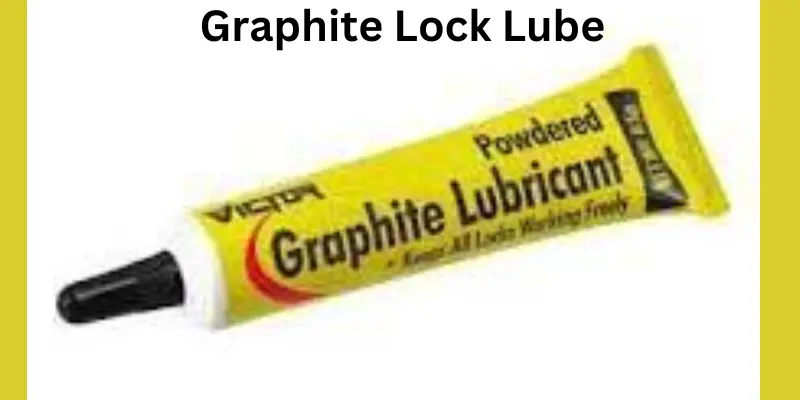
Locks are among the most frequently used mechanisms in our daily lives, yet they are often the most neglected. From safeguarding our front doors and securing valuable tools in a workshop to protecting outdoor padlocks against harsh weather, we rely heavily on locks to keep our assets secure. However, over time, weather elements, friction, and internal wear can cause keys to stick, tumblers to jam, and mechanisms to seize up entirely.
When faced with a stubborn lock, many people make the critical mistake of reaching for standard household oils or liquid grease. While these products might offer a temporary fix, they ultimately trap dust, debris, and lint inside the delicate cylinder, leading to complete lock failure. The proper solution requires a specialized dry lubricant. Utilizing a professional-grade formula like graphite lock lube completely transforms how locks operate, ensuring seamless, long-lasting performance.
Examining why a specialized dry lubricant is essential highlights several key benefits for maintaining the security and longevity of your hardware.
1. The Science of Smooth Operation Without Sticky Residue
Traditional liquid oils and petroleum-based lubricants are notoriously bad for locks. Although they reduce friction initially, their wet film acts as a magnet for airborne dust, dirt particles, and pocket lint. Over a short period, this mixture congeals into a thick, sticky sludge that clogs the internal pins and tumblers, eventually causing the key to jam or break off inside the cylinder.
In contrast, a high-quality dry lubricant uses ultra-fine, microscopic grains of carbon graphite. When sprayed into a mechanism, the carrier evaporates rapidly, leaving behind a pure, dry film of graphite flakes. These microscopic flakes bond to the moving metal surfaces, providing exceptional anti-seize lubrication. Because the formula is entirely dry, it will not attract dirt, grime, or environmental pollutants. Your locks remain clean, clear, and effortlessly operational month after month.
2. Ultimate Defense Against Weather and Corrosion
Locks installed outdoors such as garden gate latches, storage shed padlocks, and perimeter security doors face relentless exposure to rain, humidity, temperature fluctuations, and saline conditions. Moisture quickly promotes oxidation and rust inside the lock core, causing the internal components to fuse together.
Specialized dry treatments offer remarkable water resistance and perform reliably across wide temperature thresholds. Formulations designed for professional applications can even penetrate and work effectively when a lock has already developed mild surface corrosion. By repelling moisture and establishing a protective barrier against saline or corrosive environments, these treatments significantly extend the operational lifespan of both brass and stainless steel hardware.
3. Precision Application for Tight Spaces and Complex Mechanisms
Lock cylinders are tightly engineered environments with very little tolerance for error. Bulky lubricant bottles or messy grease guns make it nearly impossible to deliver the product precisely where it is needed without creating a wasteful, messy overflow.
Convenient packaging, such as a compact 15ml aerosol container equipped with a targeted nozzle, allows for exact application. A quick, controlled burst directs the microscopic graphite powder straight into the keyway and core mechanism. This ensures that the active lubricating agents coat the springs, pins, and plug surfaces uniformly without requiring you to dismantle the entire lock housing.
4. Versatility Across Domestic, Commercial, and Industrial Applications
While their primary association is with house door keys, dry graphite lubricants are remarkably versatile tools suitable for a vast array of settings. Their unique properties make them ideal for:
- Safety Padlocks: Ensuring smooth unlatching in industrial plants or outdoor security stations.
- Automotive Doors and Ignitions: Preventing key sticking without introducing greasy residues that can stain clothing.
- Hinges and Sliding Tracks: Eliminating squeaks on metal or wooden pivots where oil accumulation is undesirable.
- Fine Mechanisms: Servicing office furniture locks, cash boxes, and tool chests.
Because the dry film does not transfer oils onto hands, keys, or surrounding woodwork, it maintains a clean application profile suitable for both fine residential hardware and heavy-duty industrial security systems.
5. Cost-Effective Preventative Maintenance
Replacing a commercial-grade security lock, heavy-duty padlock, or specialized mortice lock can become an expensive endeavor. Furthermore, calling out a locksmith to drill out or extract a broken key due to a seized mechanism carries steep emergency service fees.
Investing a minimal amount in routine preventative maintenance changes this dynamic entirely. Giving your locks a quick treatment once or twice a year prevents minor friction from escalating into catastrophic mechanical failure. It is a classic case of prevention being vastly cheaper and less stressful than cure, keeping your hardware functioning like new for years.
Frequently Asked Questions (FAQs)
Can I use regular WD-40 or machine oil instead of a graphite lock lube?
It is strongly recommended that you avoid using standard liquid oils or multi-purpose wet sprays inside precision locks. While they may provide instant relief, wet oils leave behind a sticky residue that attracts dust, dirt, and pocket lint. Over time, this debris builds up into a thick paste that completely jams the lock cylinder, whereas a dry formula leaves no sticky film behind.
How often should I apply graphite lubricant to my locks?
For standard indoor doors, an application once a year is usually sufficient. However, for outdoor padlocks, security gates, or locks exposed to harsh weather, coastal salt spray, or heavy daily use, applying the lubricant every 3 to 6 months ensures optimal, friction-free performance.
Will graphite lubricant stain my clothes or keys?
Because the carrier liquid evaporates quickly to leave a dry powder film, it minimizes mess compared to liquid grease. However, because pure graphite is a dark grey powder, any initial excess blown out of the keyway can leave a faint smudge. Simply wipe away any surplus powder around the key opening immediately with a clean cloth.
Can this lubricant fix a lock that is already stuck or slightly rusted?
Yes. High-grade graphite treatments are formulated with fine particles that provide exceptional penetration and anti-seize properties. They can successfully penetrate and restore operation even when a lock has developed mild internal corrosion, though heavily damaged or completely rusted-out locks may still require replacement.
Conclusion
Maintaining your home and workplace security does not have to be a complicated or expensive chore. Neglecting mechanical locks invariably leads to frustrating jams, broken keys, and premature hardware failure, usually at the most inconvenient times. By shifting away from messy liquid oils and adopting a professional-grade solution like graphite lock lube, you protect your investments against moisture, dirt, and corrosion. Incorporating this simple, clean, and efficient dry treatment into your regular maintenance routine guarantees smooth, reliable lock operation for years to come.
Please Write Your Comments