The water tank on a forward plate compactor is for asphalt, and using it on soil works against you
Updated: 25-Aug-2026
58
An accessory that gets used for the wrong thing
Canadian paving and base work runs hard until the ground freezes, and a great many machines on those jobs carry a water tank. A forward plate compactor is fitted with one for a specific purpose, and most operators use it for something else entirely.
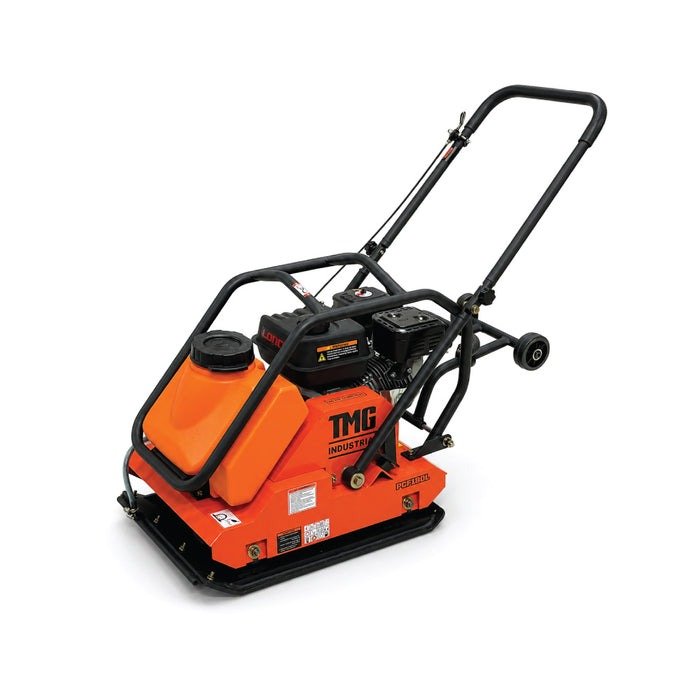
The tank feeds a perforated pipe that wets the base plate. That is the whole system, and where the water goes tells you what it was designed to do.
Forward plate compactor water tank exists because asphalt sticks
Hot mix adheres to warm steel. A dry plate lifts material off the surface on every stroke, tearing holes in a mat that then have to be repaired, and the water film is what breaks that adhesion.
Should you use water when compacting soil is a different question
Soil compacts best at a particular moisture content, and both sides of that point are worse. A machine wetting only the top half inch does not change the moisture of the layer being compacted, and it does change the surface.
What it produces is a wet skin over drier material. That skin behaves plastically under the forward plate compactor, seals the surface, and stops further water leaving, so a base that reads as finished is not compacted underneath.
Adding water to soil is done before the machine arrives
Where fill genuinely needs moisture, it is watered and mixed through with a rake or a machine so the whole lift is uniform. That is a separate operation, and it is the only way the water reaches where compaction is happening.
Dust control is the other reason people open the valve
A 4450 pound forward plate compactor working dry base raises dust, and wetting the surface suppresses it. It works, and it costs the compaction of the top layer, so it is a trade rather than a free improvement.
Forward only is a simpler machine and that has consequences
A forward plate travels in one direction and turns by being levered around. In a trench it has to be lifted or walked out at the end of every run, which is exactly the limitation a reversible machine removes.
The plate shape decides how it handles
An upturned leading edge lets the machine climb onto loose material rather than digging in. A worn or damaged edge makes a plate that ploughs, and it is the first thing to check on a machine that has become hard to steer.
Machines divide by what the water is for
• Asphalt work: water stops the mat lifting
• Dust control: works, costs surface compaction
• Soil moisture: has to be mixed in beforehand
Where a forward plate fits and where it does not
• Strength: fast on open base and asphalt
• Strength: lighter and easier to transport
• Limit: cannot back out of a trench
• Limit: the tank does nothing for soil moisture
Weighed against a reversible machine, a forward plate costs maneuverability and returns speed on open work. A crew near Barrie fills the tank for asphalt and leaves the valve shut on base, which is the discipline that keeps their density tests passing.
Compaction practice is being written down rather than passed on
Contractors increasingly work to stated methods for lift thickness, moisture, and pass counts, which has exposed a number of habits that were carried between jobs without anyone asking what they were for.
That move toward specified method is why the construction equipment TMG Industrial supplies is described by the surface it suits rather than by the accessories bolted to it.
Please Write Your Comments