Design Innovations That Improve Workplace Safety
Updated: 7-Jan-2026
92
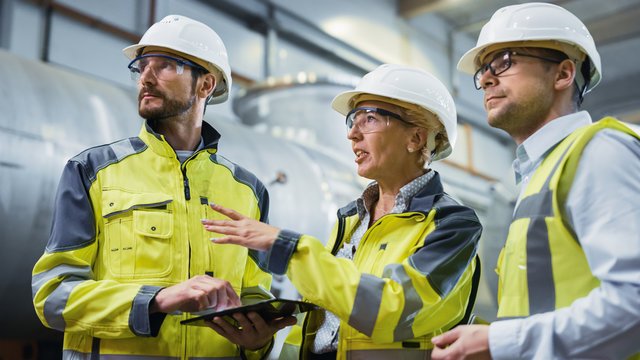
Workplace safety has long been a priority across manufacturing, processing, and industrial environments. While training, personal protective equipment (PPE), and operational procedures remain essential, one of the most effective ways to reduce accidents is through mechanical and software design. When safety is embedded directly into mechanical structures, control logic, and digital monitoring systems, the reliance on human reaction can be reduced, leading to safer and more predictable working environments.
Mechanical and Structural Safety Design
Mechanical and structural design forms the first line of defense in workplace safety. By physically preventing hazardous situations from occurring, well-designed equipment reduces the likelihood of accidents before software or human intervention is even required.
One important principle in modern safety design is hands-free or restricted-access operation. Machines that involve heat, pressure, or moving parts pose inherent risks, particularly when operators must work close to active zones. Designing equipment so that the operator’s hands are kept away from dangerous areas during operation significantly lowers the chance of injury.
A common example is the two-hand control system used in certain sealing or pressing machines. In this design, the machine will only initiate its operating cycle when the operator presses two separate buttons simultaneously. This intentional requirement ensures that both hands are occupied and positioned safely away from dangerous areas, such as a sealing chamber or pressing zone. If one hand is removed or delayed, the machine simply does not start.
This approach serves multiple safety purposes:
- It prevents accidental activation caused by unintended contact with a single control.
- It ensures the operator’s hands are outside the danger zone at the moment the machine begins its cycle.
- It reduces reliance on operator judgment alone, replacing it with a mechanical safeguard.
Beyond control activation, structural safety design also includes physical guards, shielding, and controlled access zones. Transparent covers, interlocked doors, and fixed barriers prevent operators from reaching moving or high-risk components while still allowing visibility and operational awareness. Importantly, these features do not depend on operator attention or experience—they work consistently and automatically. By embedding safety directly into mechanical design, equipment can significantly reduce the risk of unexpected accidents, even in fast-paced or high-output environments.
Control Systems and Software-Based Detection
While mechanical safeguards form the foundation of safety, modern workplaces increasingly rely on control systems and software-based monitoring to address risks that physical structures alone cannot manage.
Advanced control systems allow machines to continuously monitor defined operating zones. Through sensors and visual detection technologies, these systems can identify unsafe conditions in real time. For example, a controlled area around a machine may be monitored to ensure that only intended materials pass through during operation.
If an unexpected object—such as a hand, piece of clothing, or loose hair—enters a restricted area, the system can immediately detect the anomaly. Once detected, the machine responds by stopping operation instantly, preventing potential injury before contact occurs.
This type of software-based safety offers several advantages:
- Immediate response: Automated systems react faster than human reflexes.
- Consistent enforcement: Safety rules are applied uniformly, regardless of operator fatigue or distraction.
- Reduced dependency on manual supervision: Operators are supported by real-time system monitoring rather than being solely responsible for detecting hazards.
Visual detection systems are particularly effective in environments where traditional mechanical sensors may be insufficient. Unlike simple limit switches or pressure sensors, vision-based systems can differentiate between normal operation and unexpected intrusions, adding a more flexible layer of protection. Importantly, these systems do not replace human oversight but rather augment it, creating a safer collaboration between operators and machines.
The Future of Workplace Safety: AI and Predictive Protection
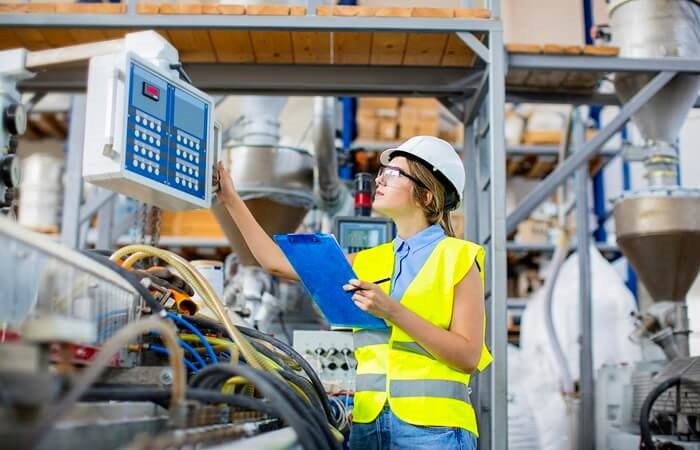
As industrial environments continue to evolve, artificial intelligence (AI) is emerging as a powerful tool for enhancing workplace safety beyond real-time reaction. Rather than only responding to hazards as they occur, AI systems have the potential to predict and prevent risks before they escalate.
One promising application is the integration of AI with existing control platforms, such as programmable logic controllers (PLCs). By combining visual data, sensor inputs, and historical operating patterns, AI systems can identify situations that deviate from normal behavior.
For example, if a tool is accidentally left on a machine surface or placed in an unintended location, an AI-enabled system could recognize that the object does not belong there. Instead of waiting for a malfunction or manual inspection, the system could immediately flag the issue and display a warning on the PLC control panel. This alert allows the operator to take corrective action before the machine is started or before the object causes damage or injury.
Future AI-driven safety systems may offer:
- Predictive risk detection based on operational trends and historical data
- Early warning alerts for abnormal conditions that may not yet be dangerous but indicate potential risk
- Adaptive safety responses that adjust machine behavior based on environmental or operational changes
By shifting safety management from reactive to proactive, AI has the potential to significantly reduce accidents while improving operational confidence. Operators are no longer just responding to alarms—they are supported by systems that actively help maintain a safe working environment.
Conclusion
Improving workplace safety is not solely a matter of rules, training, or protective gear. Increasingly, safety is being shaped by design decisions made at the mechanical, control, and digital levels. Hands-free mechanical designs (https://www.utien.com) reduce exposure to danger, software-based detection systems provide rapid and consistent responses, and AI-driven solutions offer a glimpse into a future where risks can be anticipated rather than merely managed.
As industries continue to automate and modernize, embedding safety directly into equipment and systems will remain one of the most effective ways to protect workers—creating environments where productivity and safety advance together.
Author: Joe Zhou
Company: Utien Pack
Bio: Joe Zhou is a packaging machinery professional with extensive experience in thermoforming and tray sealing technologies. He works closely with food and industrial manufacturers to develop safe, efficient, and automated packaging solutions, with a strong focus on equipment design, production reliability, and practical factory applications.
Please Write Your Comments