Concrete Worksite Hazards: Staying Safe During Pouring, Cutting, Grinding, and Finishing
Updated: 11-Aug-2026
123
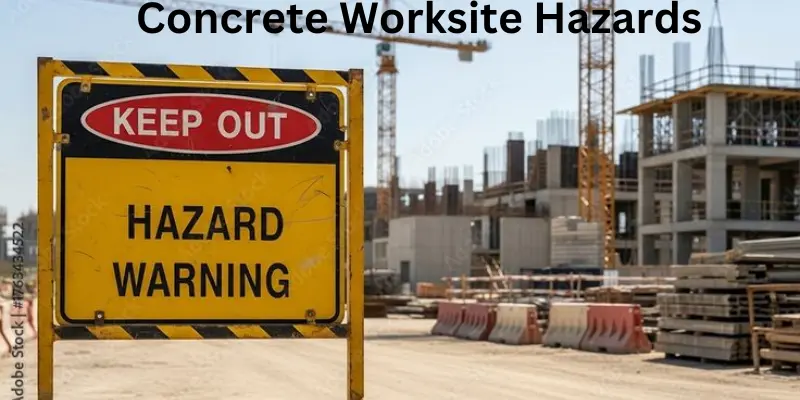
Concrete work can look straightforward from outside a jobsite: prepare the area, place the concrete, finish the surface and allow it to cure.
For the crew doing the work, each stage introduces a different combination of hazards.
Fresh concrete can damage skin and eyes. Pumping and placement put workers near moving equipment, pressurized hoses, forms and reinforcement. Cutting and grinding hardened concrete can release respirable crystalline silica and produce substantial noise. Finishing brings workers close to wet material while also introducing repetitive movement, powered equipment and slip hazards.
That variety is why concrete safety cannot be reduced to simply wearing boots, gloves and a hard hat. Effective protection starts with identifying the hazards associated with the particular task, controlling them at the source where possible, organizing the worksite around those controls and then using appropriate personal protective equipment for the risks that remain.
Alberta’s Occupational Health and Safety Code follows that same hierarchy. Employers must assess existing and potential hazards before work begins and, where reasonably practicable, use engineering controls before relying on administrative measures or personal protective equipment.
Why Does Concrete Work Require Task-Specific Safety Planning?
The hazards present while pouring a driveway are not identical to those created when a crew returns later with a concrete saw.
During placement, workers may be dealing with ready-mix trucks, concrete pumps, wet cement, reinforcing steel and uneven ground at the same time. Once the concrete has hardened, chemical contact may become less important, while silica dust, rotating blades, flying fragments and high noise levels move to the foreground.
A hazard assessment therefore needs to reflect what workers are actually doing.
Alberta’s OHS Code requires workplace hazard assessments to be repeated when a new process is introduced or an operation changes. A concrete project that moves from excavation to pouring and later to cutting or grinding is a good example of why a single generic safety checklist may not adequately describe the risks throughout the job.
Good planning also considers people who are not directly performing the task. Homeowners, other trades, delivery drivers and pedestrians can all enter areas where equipment, dust or fresh concrete creates hazards.
Why Is Wet Concrete More Dangerous Than It Looks?
Fresh concrete appears relatively harmless because it does not look like a conventional chemical.
Chemically, however, wet cementitious material is highly alkaline and can irritate or burn exposed skin. WorkSafeBC identifies wet concrete contact as a cause of cement burns and dermatitis, while its construction-health guidance describes wet cement as caustic.
One reason cement burns are particularly concerning is that discomfort may not immediately reflect the seriousness of the exposure.
Concrete can become trapped inside gloves, boots or clothing, holding wet material against the skin for an extended period. Kneeling directly in fresh concrete during placement or finishing can create the same problem.
Protection therefore needs to prevent contact rather than merely make the job more comfortable.
Appropriate gloves, clothing that covers exposed skin, suitable waterproof footwear and eye protection are important when handling wet concrete. Contaminated clothing or concrete trapped against the skin should not simply be tolerated until the end of the shift.
The objective is to keep the material from remaining in prolonged contact with the worker.
What Are the Main Hazards During Concrete Pouring?
Concrete placement is a coordination exercise involving workers, vehicles, forms, reinforcement and sometimes pumping equipment within a relatively small area.
The concrete itself is only one source of risk.
Ready-mix trucks need room to approach and leave the placement area. Workers may be positioned near reversing vehicles or moving equipment while concentrating on the pour. Hoses, tools, reinforcement and uneven subgrade can create trip hazards precisely when people are moving quickly to distribute the concrete before it begins setting.
Pump placement introduces additional concerns.
A concrete pump hose carries heavy material and can move unexpectedly if the system is mishandled or a blockage creates pressure problems. WorkSafeBC guidance for concrete pump operations specifically warns that blockages can result in material being expelled or the hose whipping when trapped pressure is released.
This makes communication between the pump operator and placement crew particularly important.
Workers also need clear movement routes. Concrete delivery should not force someone to repeatedly climb over reinforcement, hoses or formwork just to reach another section of the pour.
A well-organized placement area reduces the need for last-second improvisation.
For larger residential and commercial concrete scopes, a contractor such as Deluxe Concrete Services in Calgary may coordinate stages including subgrade preparation, formwork, reinforcement, concrete delivery, placement and finishing as part of one scope, reducing the number of disconnected operations occurring around the pour. The company currently performs both structural and architectural concrete work in Calgary and surrounding communities.
Why Are Reinforcement and Formwork Safety Issues Too?
Before any concrete is placed, the site may already contain hazards.
Reinforcing steel can create trip, cut and impalement risks depending on how it is arranged and exposed. Formwork needs to maintain the shape and dimensions of the concrete while resisting the pressure created during placement.
Those systems also affect access.
Workers commonly need to position themselves close enough to guide concrete, consolidate it and finish edges. Poorly planned forms or reinforcement can leave narrow routes that encourage people to step onto unstable surfaces or climb across obstacles.
Forms should therefore be treated as part of the work platform and placement environment, not merely as temporary moulds.
The condition of the subgrade matters as well. Mud, loose material, ice or standing water can make footing unreliable before the slab is even poured.
A cleaner, deliberately organized site usually improves both construction quality and worker safety.
Why Is Cutting Concrete a Silica Hazard?
Concrete contains materials derived from sand, stone and other mineral aggregates. These can contain crystalline silica.
When hardened concrete is cut, drilled or ground, very small respirable particles can become airborne. CCOHS explains that inhaled crystalline silica can contribute to serious lung damage, including the scarring associated with silicosis. Quartz silica is also classified as a carcinogenic hazard under occupational-health frameworks.
The particles of greatest concern are not necessarily the large pieces of visible dust that quickly fall to the ground.
Respirable particles are small enough to enter deep regions of the lungs.
Alberta’s current OHS chemical-substance schedule lists an eight-hour occupational exposure limit of 0.025 milligrams per cubic metre for respirable quartz and cristobalite crystalline silica. The province also lists respirable crystalline silica among substances or processes requiring a code of practice.
Those numbers show why controlling dust at the source matters.
Simply standing farther from a visible cloud is not an adequate silica-control strategy.
How Can Dust Be Controlled During Sawing and Grinding?
Engineering controls should prevent or capture as much dust as practical before workers depend on respirators.
Wet methods are one common approach.
Applying water where a saw or grinder contacts concrete can suppress dust before large quantities become airborne. CCOHS specifically identifies wet drilling and grinding as examples of engineering control methods for dusty processes.
Local exhaust systems provide another option.
A properly designed grinder or saw connected to appropriate dust extraction can capture particles close to the point where they are produced. The effectiveness of any system depends on the equipment, work method, maintenance and task.
One important consequence is that dust control should be selected before cutting starts.
Waiting until a dry cutting operation has filled the surrounding area with dust means the primary control has already failed.
Respiratory protection may still be required depending on the exposure assessment and control method, but Alberta’s hierarchy requires engineering and administrative controls to be considered before PPE becomes the principal defence.
Cleanup matters too. Dry sweeping or using compressed air can put settled fine particles back into the breathing zone. Dust-management planning should include how material will be collected after cutting, not only what happens while the blade is running.
Why Is Concrete Grinding Different From Ordinary Surface Preparation?
Grinding places an abrasive wheel or disc in continuous contact with hardened concrete.
That can generate large amounts of fine dust, particularly during dry work. It also introduces a fast-moving abrasive surface that can throw fragments or react strongly if the tool binds or is used incorrectly.
Guards and manufacturer-required safety features should remain in place. Tools and abrasive products need to be suitable for the equipment and intended application.
Dust extraction and surface preparation should also be coordinated.
A worker cannot see the floor clearly if airborne dust obscures the grinding area, and nearby workers can be exposed even if they are not operating the grinder themselves.
This is why isolating the work area may be useful in addition to controlling dust at the tool.
The safest grinding operation protects the operator, controls the material leaving the machine and limits exposure to everyone else in the area.
How Much of a Hazard Is Noise During Concrete Cutting and Grinding?
Noise exposure is easy to underestimate because cutting may occur in relatively short bursts.
The relevant issue is both sound level and duration.
Alberta’s OHS noise schedule permits an exposure duration of eight hours at 85 dBA, four hours at 88 dBA, two hours at 91 dBA and one hour at 94 dBA. At 100 dBA, the listed exposure duration falls to 15 minutes. Exposure at 115 dBA or greater is listed as zero allowable duration in the schedule.
The province also requires a noise exposure assessment when workers may be exposed above 82 dBA Lex.
Those limits demonstrate why hearing protection should not be selected according to whether a machine merely “sounds loud.”
Actual exposure depends on equipment, distance, surrounding surfaces, duration and the other noisy tasks occurring during the shift.
Engineering controls, equipment selection, maintenance, work scheduling and hearing protection can all contribute to reducing exposure.
What Hazards Appear During Concrete Finishing?
Finishing looks quieter than sawing, but it puts workers very close to fresh concrete for extended periods.
Hand finishing can involve repeated bending, reaching, kneeling and pushing. Larger slabs may involve powered trowels or other machinery. Workers can also be moving backward while concentrating on the surface directly in front of them.
Wet concrete makes footing more difficult, while tools, electrical leads, hoses and uneven ground remain around the work area.
Chemical contact remains relevant throughout this stage because the material is still fresh.
Workers kneeling or standing near the slab should avoid allowing concrete to enter boots, soak through clothing or stay against exposed skin. Eye protection is also important where concrete can splash during placement or finishing.
Ergonomics deserves attention as well.
Finishing a large slab is repetitive physical work. Extending tools where practical, organizing tasks to avoid unnecessary lifting and planning crew positions can reduce avoidable strain without compromising the finish.
Why Are Slips, Trips and Site Access So Important?
Concrete sites change constantly.
A clear route at 8 a.m. may contain a pump hose, saw, extension cable or fresh slab by noon.
That creates a simple but important safety challenge: workers need to know where they can move without entering active operations.
Access becomes even more important on occupied residential properties. Homeowners or neighbours may not recognize that a driveway, sidewalk or patio area has temporarily become a construction zone.
Physical separation, clear communication and controlled access help keep people away from fresh concrete, cutting operations and moving equipment.
The same approach benefits workers.
A designated tool area prevents equipment from accumulating beside the slab. Planned waste and washout areas keep debris away from normal walking routes. Vehicle movement can be separated from the people guiding or finishing the pour.
None of these controls is technically complex, but poor housekeeping can undermine much more sophisticated safety planning.
Does PPE Alone Make Concrete Work Safe?
No.
Personal protective equipment is necessary for many concrete tasks, but it is the final layer in a broader control strategy.
Alberta’s OHS hierarchy places elimination and engineering controls ahead of administrative controls and PPE where reasonably practicable.
That distinction matters.
A respirator does not make uncontrolled silica dust desirable. Hearing protection does not remove the value of selecting quieter equipment or limiting unnecessary exposure. Gloves do not justify leaving wet concrete trapped against the skin.
PPE works best when the larger process has already reduced the hazard.
The exact equipment should follow the hazard assessment, work method and applicable manufacturer and regulatory requirements rather than a universal list applied to every concrete job.
What Should Happen Before Cutting Into Existing Concrete?
Before cutting begins, the crew should understand more than the dimensions of the opening.
Existing slabs and walls may contain reinforcement, embedded heating systems, electrical components or other concealed services depending on the structure.
The cutting method also affects what happens around the work. Water used for dust suppression needs somewhere to go. Slurry can create a slipping hazard and requires suitable collection and disposal. Indoor cutting may require tighter control of both dust and access than work on an open driveway.
When concrete removal becomes part of a larger construction project, careful planning is needed to manage structural, equipment and site-access hazards. Professional commercial demolition services can help coordinate demolition activities while maintaining appropriate safety controls. This is particularly important when existing concrete structures must be removed before new construction begins.
The condition of the concrete matters too.
Damaged or partially demolished sections may respond differently to cutting and removal than an intact slab.
Contractors that handle both installation and removal work, such as Deluxe Concrete Services in Calgary, may encounter these issues during driveway replacement, concrete repairs, resurfacing and grinding work. The company specifically lists saw cutting, jackhammering, grinding and removal among processes used within some Calgary concrete repair scopes.
Planning the removal process can be just as important as planning the new pour that follows it.
FAQs About Concrete Worksite Hazards
What is the biggest health hazard when cutting concrete?
Respirable crystalline silica is one of the major long-term health concerns. Cutting, drilling and grinding silica-containing concrete can release particles small enough to reach deep into the lungs. Alberta currently sets an eight-hour occupational exposure limit of 0.025 mg/m³ for respirable crystalline quartz.
Can wet concrete really burn skin?
Yes. Wet cement is highly alkaline and prolonged contact can cause irritation, dermatitis or chemical burns. Concrete trapped inside gloves, boots or clothing can increase the duration of contact and should be addressed promptly.
Is wet cutting always better than dry cutting?
Wet methods can substantially reduce airborne dust and are recognized as an engineering control for dusty cutting and grinding operations. Whether a particular wet method is appropriate depends on the tool, electrical considerations, location, slurry management and the work procedure.
When is concrete work loud enough to require attention?
Noise risk depends on both level and duration. In Alberta, 85 dBA corresponds to an eight-hour exposure limit, while the permitted duration decreases as noise rises. A noise exposure assessment is required when workers may be exposed above 82 dBA Lex.
Safe Concrete Work Is Planned Before the Tools Start
Concrete safety changes with the job.
During a pour, the most pressing risks may involve wet concrete, pump equipment, vehicles and site access. Once the slab hardens, the same project can shift toward silica exposure, noise, rotating tools and flying material during cutting or grinding. Finishing presents another combination of skin contact, physical strain, machinery and difficult footing.
Treating those stages as one generic activity misses the way hazards actually develop.
A better approach starts with the task, identifies what can reasonably go wrong and controls the risk as close to its source as possible. Equipment, work zones, sequencing and dust or noise controls are established first. PPE then protects workers against the remaining exposure rather than carrying the entire safety burden.
The finished concrete may be the part of a project everyone eventually sees, but safe construction depends just as much on what happens during the hours when the site is active, noisy, wet and constantly changing.
Please Write Your Comments