How Circular Manufacturing Is Shaping the Future of Sustainable Industry?
Updated: 12-Aug-2026
111
Key Takeaways
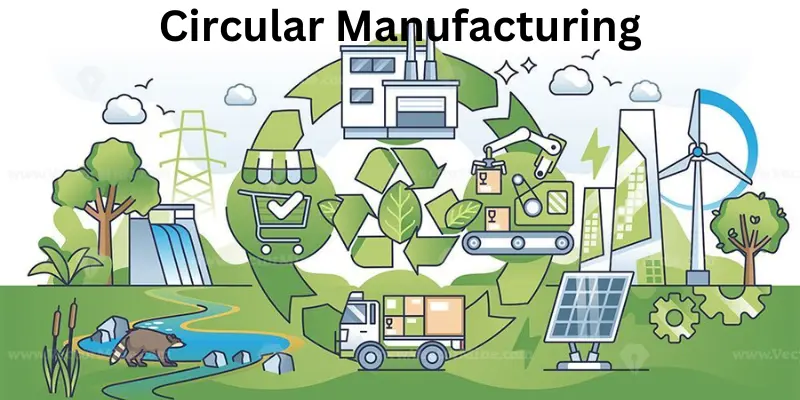
Circular manufacturing is a modern iteration of production wherein materials are reintroduced to the system instead of being discarded, as is the norm with linear manufacturing. Why is it vital from a sustainability standpoint? What are the benefits and challenges to circular manufacturing in this context? This blog explores all this and more in the subsequent sections.
Why Circular Manufacturing Is Becoming an Industrial Priority
Understanding the circular manufacturing concept
Circular manufacturing, in a nutshell, involves reducing waste and optimizing utility. Waste reduction can be done in the form of reuse, recycling or repurposing. The entire process is circular in nature to enable this outcome.
How it differs from the traditional linear model
The traditional linear model of manufacturing involves taking resources, using them, and discarding the waste product. The process is consequently less sustainable and inefficient from a resource management standpoint.
The connection between sustainability and workplace safety
Circular manufacturing promotes more sustainable practices, and this, in turn, promotes workplace safety. As waste products are reduced, exposure to the materials and subsequent disposal by the workforce are also reduced. This helps improve workplace safety by a significant margin.
Reducing Industrial Waste Through Smarter Manufacturing Practices
Extending the life of raw materials
Raw material wastage is the first gap that circular manufacturing can plug through smart practices. Start off by incorporating renewable materials, reducing waste generation, and going for modular parts to maximize raw material usage.
Recovering valuable industrial resources
Valuable industrial resources must be reused or repurposed to improve their value. For instance, recycling worn carbide tools through carbide recycling programs can help manufacturers to recover valuable materials, reduce industrial waste, and support the end goals of circular manufacturing.
Minimizing landfill waste
Landfills are major contributors to industrial waste generation. Hence, minimizing waste here involves using lean manufacturing principles to reduce raw material waste, reusing materials, and increasing the lifespan of products before they are discarded.
Supporting responsible material management
Even at the end of a product’s lifespan, waste generation can be reduced by implementing responsible material management practices. For instance, manufacturers can implement take-back or buy-back programs, and reuse the products once again in the form of raw materials. This will boost recycling initiatives, reducing overall waste generation.
Designing Products for Longer Service Life and Better Resource Efficiency
Selecting durable engineering materials
Improving the service life of products aids further in reducing waste and improving resource efficiency. This begins by selecting durable engineering materials in manufacturing. While the initial costs might be high, they compensate perfectly through their long service life.
Designing for repair and reuse
Instead of discarding and buying new products, as is the norm with linear manufacturing, the product design can reflect the principles of repair and reuse. This will extend the service life of products even after malfunctioning and result in optimizing resource utilization.
Improving component reliability
Component reliability in the context of resource efficiency means lower operational stress, reduced failure rates, and an overall reduction in system damage in the long run. By using components with these features, the service life of the end product increases exponentially, promoting efficient resource usage.
Supporting sustainable product lifecycles
Lastly, better resource efficiency can be achieved by focusing on creating sustainable product lifecycles. This ranges from using raw materials that are resilient to a modular design where damaged parts can be replaced instead of discarding the entire product. These pro-sustainability measures will result in a longer service life.
The Role of Precision Manufacturing in Circular Economy Initiatives
Reducing material waste through precision machining
Precision machining is a perfect complement to a circular economy as reducing material waste is a major benefit of the process. Due to high accuracy and precision, waste generation during machining is minimal. It also reduces instances of rework, which generates further waste. In this way, reducing material waste is directly tied to precision machining.
Improving production consistency
Production consistency is also vital to reduce waste to further bolster circular manufacturing. This is because inconsistency during large-scale production can lead to reworks or callbacks. Not only is this wasteful from a monetary standpoint, but it also contributes to more waste generation and additional utilization of precious resources.
Manufacturing components with longer operational life
High-quality is a natural by-product of precision machining practices. Consequently, high-quality components will lead to a longer operational life. For instance, high-precision components such as bevel gears contribute to longer equipment life. Therefore, replacement frequency is reduced, further boosting the operational life of the product.
Optimizing resource utilization across production
Waste reduction is not the sole benefit of precision machining for circular economies. Optimal usage of resources is also a major plus. The technique uses machines to perform precise movements, conserving energy and tool quality, all without compromising on the quality of the end-product/workpiece.
Workplace Benefits of Circular Manufacturing
Safer material handling practices
An unlikely but major benefit of circular manufacturing is safer handling of materials. This is because this type of manufacturing leads to clutter reduction, standardization of storage containers, and less exposure to hazardous waste.
Lower environmental and operational risks
The most evident benefit is a marked reduction in environmental damage and operational risks. By maximizing resource efficiency, reducing material waste, and promoting sustainable practices such as reusing and recycling, circular manufacturing helps protect the environment.
Improved regulatory compliance
Most manufacturing facilities must adhere to industry-wide regulatory compliance standards for sustainable practices. Circular manufacturing can help facilities follow these guidelines with ease, a major plus in an environment where sustainability guidelines are becoming ever-stringent.
Supporting long-term sustainability goals
In terms of long-term sustainability goals such as reducing environmental pollution, protecting fragile ecosystems, and creating a healthier planet without compromising on development, circular management is an excellent choice.
Practical Steps Manufacturers Can Take Today
Evaluate material usage
Material usage is the first place to look for manufacturers who are aspiring to incorporate circular manufacturing practices. Check which materials can be reused or repurposed and make it a company-wide policy.
Implement recycling programs
Recycling is an excellent way to improve circular manufacturing practices in a practical manner.
Improve equipment maintenance
Focus on equipment maintenance so that wear and tear of components is reduced. This will reduce instances of replacement and improve sustainability.
Partner with sustainable suppliers
Lastly, it is prudent to partner with sustainable suppliers. This will ensure that your entire supply chain follows the principles of circular manufacturing.
Challenges to Implementing Circular Manufacturing
Initial investment considerations
Opting for company-wide policy changes that focus on reuse, recycling, or optimizing resource usage can be a considerable investment. Short-term benefits might be compromised for long-term stability.
Supply chain collaboration
Implementing sustainable practices throughout the supply chain is a major challenge, especially if companies collaborate with different partners.
Employee awareness and training
Employees must be made aware of circular manufacturing practices and trained accordingly. This can be tedious and time-consuming, but it will only pay dividends in the long run.
Conclusion
Building a more sustainable future through circular manufacturing
Irrespective of potential challenges, it is certain that circular manufacturing is the way to go to secure a sustainable future. This is because this practice reduces material wastage, improves efficient resource utilization, and boosts workplace safety.
Please Write Your Comments