How to Choose the Right PPE for Laser Cleaning Operations: 5 Essential Safety Tips
Updated: 26-Sep-2026
12
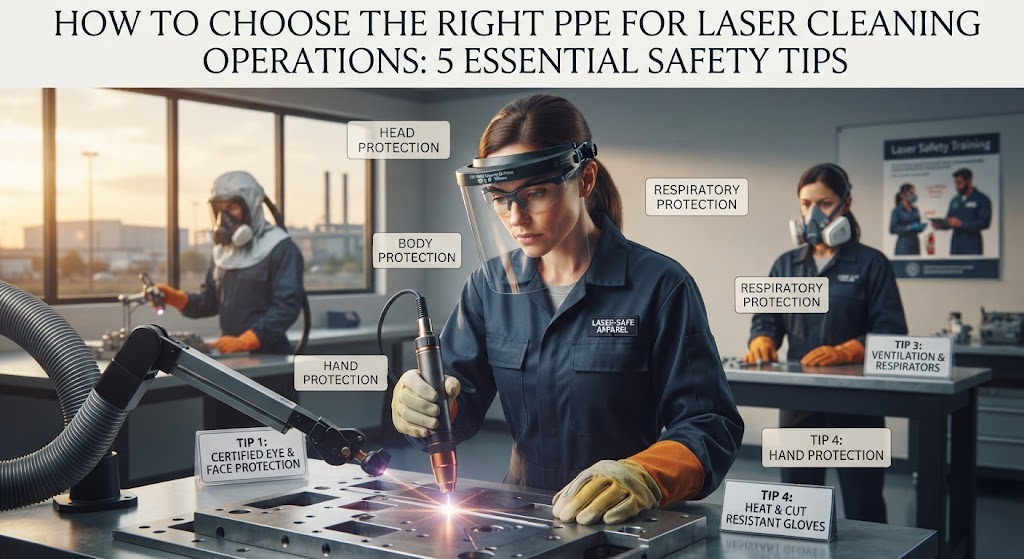
As industries move away from abrasive blasting and chemical solvents, laser ablation technology has quickly become the preferred method for rust removal, paint stripping, and surface preparation. Whether you are using high-powered continuous wave systems or precision pulse laser cleaning machines, these advanced tools operate using Class 4 lasers. While incredibly efficient, Class 4 lasers possess enough energy to cause immediate and permanent damage to unprotected eyes and skin.
Unlike a traditional laser sanding machine where physical dust is the primary concern, optical ablation vaporizes coatings at a microscopic level, creating unique optical, thermal, and respiratory hazards. Implementing the correct Personal Protective Equipment (PPE) is not an optional suggestion; it is a mandatory requirement for safe operation.
If you are setting up a work station or training new operators, understanding the specific gear needed will protect your team and ensure compliance with occupational safety standards. Here are the five essential tips for selecting the right PPE for laser cleaning operations.
Five essential tips to select laser PPE for laser cleaning operations.
Here are the five essential tips to follow.
1. Secure Specialized Laser Safety Glasses
The most critical piece of PPE for any operator is proper eye protection. High-power fiber lasers operate at specific wavelengths (typically around 1060–1080 nm), which are invisible to the naked human eye. Because the beam is invisible, your natural blink reflex will not protect you. A direct hit or even a scattered reflection from a metal surface can cause irreversible retinal burns or blindness in a fraction of a second.
When selecting safety glasses, you cannot rely on standard welding goggles or tinted sunglasses. You must use specialized eyewear designed explicitly for the wavelength of your specific equipment. Look for the Optical Density (OD) rating stamped on the lenses. The OD rating indicates the amount of light the glasses can block.
For industrial setups, an OD of 6+ or 7+ is generally required. Additionally, ensure the glasses have side shields to protect against scattered peripheral reflections, which are incredibly common when working on uneven or curved metallic surfaces.
2. Implement Robust Respiratory Protection
When a focused beam strikes a painted, rusted, or coated surface, it rapidly heats and vaporizes the top layer. This process releases airborne particulates, metallic dust, and highly toxic fumes. If you are stripping old lead-based paint, epoxy resins, or galvanized steel, inhaling these byproducts poses a severe health hazard.
Respiratory protection takes two forms in this environment. First, the primary defense should always be an active fume extraction unit equipped with HEPA and activated carbon filters. This vacuum system should be positioned as close to the focal point as possible to capture contaminants before they enter the operator’s breathing zone. Second, operators should wear personal respiratory masks. A well-fitted half-face or full-face respirator with appropriate particulate and organic vapor cartridges provides an essential secondary layer of defense, ensuring that no microscopic toxins enter the lungs.
3. Wear Flame-Resistant Clothing for Skin Protection
Class 4 lasers generate extreme localized heat. While the beam is tightly focused at the working distance, accidental exposure to an unfocused beam or intense scattered light can still cause severe skin burns. In addition, the ablation process can occasionally cause hot metallic sparks or heated debris to eject from the work surface.
Operators should always wear long sleeves and long pants made from flame-resistant or heavy-duty materials, such as treated cotton or leather. Synthetic fabrics like polyester or nylon should be strictly avoided in the work zone, as they can quickly melt into the skin if exposed to a stray beam or intense heat. A heavy-duty shop apron made from flame-retardant material adds an excellent layer of central body protection, especially when working on heavy machinery components or automotive chassis.
4. Protect Your Hands with Heat-Resistant Gloves
Hand protection is a highly debated topic among hobbyists, but best industrial practices dictate that operators should always wear gloves. While the handheld gun itself is designed to be safe and ergonomic, the materials being cleaned are a different story.
During prolonged sessions, the metal substrates can absorb residual heat and become surprisingly hot to the touch. Operators frequently need to manipulate the parts being processed, which may feature sharp edges, rough rust scaling, or abrasive textures. Heat-resistant, cut-proof leather gloves provide the perfect balance of dexterity and protection. They shield the operator’s hands from accidental burns while allowing a firm, stable grip on the optic head, ensuring precise control during the pass.
5. Consider Face Shields and Hearing Protection
Depending on the specific type of machine you are operating, additional sensory protection might be necessary. Some high-power pulsed systems emit a distinct, loud acoustic noise as the rapid bursts of energy strike and vaporize the surface coatings. Continuous exposure to this high-frequency snapping sound can cause long-term hearing fatigue or damage. In these scenarios, comfortable earplugs or over-ear hearing protection should be integrated into your PPE routine.
Face shields provide an excellent supplementary barrier. While your safety glasses protect your retinas, a full-face shield protects the delicate skin of your face from stray hot sparks, flying debris, and secondary thermal reflections. When stripping heavy industrial coatings where debris ejection is more aggressive, combining wavelength-specific safety glasses underneath a clear, impact-resistant face shield offers the highest level of operator security.
Establishing a Culture of Safety
Equipping your team with the correct physical gear is only half the battle. The other half is ensuring that the work environment is engineered for safety. Establish a controlled safety zone using specialized barriers or optical curtains that absorb stray light, preventing it from escaping the work area and endangering bystanders. Post clear warning signs at all entry points to notify personnel that a Class 4 laser is in active operation.
Frequently Asked Questions (FAQs)
Can I use a standard welding helmet for laser cleaning?
No. Welding helmets and standard safety glasses are designed to block broad-spectrum light and UV radiation. They do not provide adequate protection against the specific, concentrated wavelengths emitted by industrial lasers. You must use designated safety eyewear matched to your machine’s exact nanometer output.
Do I need to wear a respirator if my machine has a built-in fume extractor?
While a high-quality fume extractor handles the majority of airborne contaminants, wearing a personal respirator provides a critical backup defense. This is especially true when removing hazardous materials like old lead paint, heavy rust, or chemical coatings that release highly toxic fumes upon vaporization.
What does the OD rating on safety glasses mean?
OD stands for Optical Density. It is a measurement of how much light the lens can absorb or block at a specific wavelength. An OD of 6 means the glasses reduce the transmitted light by a factor of one million, providing the high level of protection required for Class 4 laser operation.
Is skin protection really necessary if the beam only focuses on the metal part?
Yes. Even if the primary beam is pointed away from you, the light reflecting off the metal surface (known as specular or diffuse reflection) can carry enough energy to cause skin burns over time. Flame-resistant clothing also protects against hot debris that might spark off the work surface.
How do I protect other workers in the same shop?
Anyone entering the direct line of sight of the operation must wear matched safety glasses. To avoid outfitting the entire shop in PPE, you should enclose the area with specialized absorbing curtains or physical barriers. This creates a dedicated safety zone and prevents scattered light from reaching unprotected bystanders.
Final Words
Training ties all these elements together. Every operator must understand not just how to wear their PPE, but why it is necessary. They should be trained to inspect their safety glasses for scratches or micro-cracks before every shift, ensure their respirators have a tight seal, and verify that the fume extractor filters are clean and functioning. When safety protocols are respected and strictly enforced, this technology remains one of the safest, most efficient, and eco-friendly surface preparation tools available in the modern industrial landscape.
Please Write Your Comments