PPE in Construction: Why the Right Equipment Still Depends on the Right Training
Updated: 16-Sep-2026
16
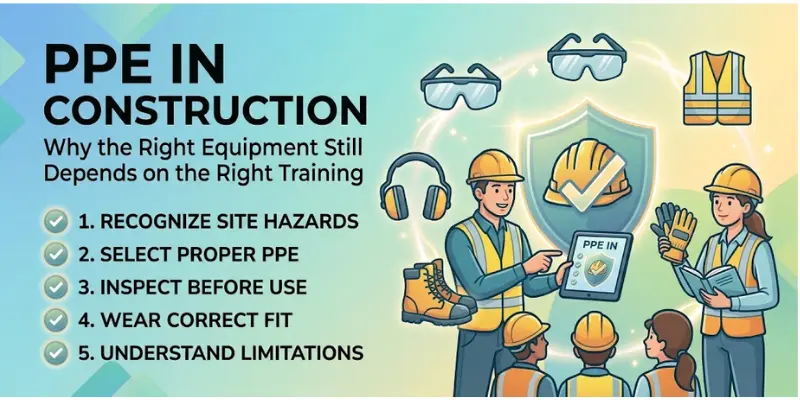
Construction PPE has changed considerably in recent years. Helmets are lighter, eye protection is clearer, hearing protection is easier to integrate and modern respiratory equipment offers options for a wide range of tasks. Better equipment can improve protection, yet it still relies on sound decisions about selection, fit and use.
PPE only works when it is suitable for the hazard, fits the user, is compatible with other equipment and is worn correctly. These points sound obvious, yet they are also where protection can fail on a busy site.
PPE Sits at the End of the Control Process
HSE guidance places PPE after higher-level controls such as eliminating the hazard, changing the process or using engineering controls. Construction teams should first consider whether a safer method can remove or reduce exposure before relying on personal protection.
Some residual risks still require PPE. Employers then need to select suitable equipment, provide it correctly and make sure workers understand how it should be used.
Selection Depends on the Task and the Wearer
Two safety glasses can meet the same broad product type and still be very different in use. The same applies to gloves, hearing protection, respirators and harnesses. Size, task, duration, environment and compatibility all matter.
Workers need to know why the equipment has been selected and what its limitations are. The right PPE Training for industry can help build understanding around PPE selection, use, care and storage, while site-specific instruction should cover the exact products provided.
Compatibility Can Be Easy to Miss
Construction workers often wear several items at once. A helmet can interfere with hearing protection. Safety glasses can affect the seal of a tight-fitting respirator. A hood or collar may alter how other equipment sits.
Each item may be suitable on its own, yet the combination may not work as intended. Trying the full set together before work starts can reveal problems that a catalogue specification will not.
Fit Matters Most Where Protection Depends on a Seal
Respiratory protective equipment deserves particular attention because some masks rely on a close facial seal. The correct model for one worker may not fit another.
Construction employers using tight-fitting respiratory protection need appropriate face fit arrangements and should also consider facial hair, other PPE and the specific contaminant involved. Training and testing should match the equipment and the task.
Inspection Depends on Knowing What Failure Looks Like
Workers are often told to check PPE before use, but a check is only useful when the person knows what failure looks like. Frayed webbing, damaged fasteners, scratched lenses, worn seals or contamination can all change whether equipment remains suitable.
The site also needs a clear process for taking defective equipment out of service. A vague instruction to ‘keep an eye on it’ leaves defective equipment in service without a defined response.
Training Needs to Match Construction Work
PPE is only one part of construction safety. Workers may also need training in work at height, manual handling, asbestos awareness, plant, electrical safety or other hazards depending on their role.
A wider set of online construction safety training can support role-based learning. Practical competence may still need separate instruction, assessment or supervision for specialist or safety-critical tasks.
Storage and Care Are Part of Protection
Equipment can be damaged after the task as easily as during it. Respirators left in dusty vans, wet harnesses stored badly or eye protection thrown into toolboxes can deteriorate before the next use.
Simple storage arrangements make a difference. Clean equipment as required, keep it dry where appropriate, separate contaminated items and replace components when inspection criteria say they have failed.
The Best PPE Is the PPE That Works in Practice
Product quality matters alongside suitable selection, correct fit, practical training, inspection and supervision.
A good PPE programme keeps those elements connected through routine work. It may attract less attention than a new product launch, but it does more to determine whether the equipment protects people on site.
Workers Can Tell You When PPE Is Hard to Use
PPE programmes improve when workers have a sensible route for reporting fit and usability problems. Equipment may meet the required specification and still create practical difficulties in a particular task. Glasses may fog, gloves may reduce dexterity more than expected or hearing protection may clash with other head protection.
Those comments should be checked rather than dismissed as resistance. Sometimes the answer is better instruction. In other cases, a different model, size or combination of equipment may be more suitable. Feedback is particularly useful during trials, before a large quantity of equipment is purchased for a workforce with different body shapes and job demands.
Replacement Rules Should Be Clear
Workers also need to know when PPE has reached the end of its useful life. Some defects are obvious, while others depend on the manufacturer’s criteria, contamination history or the type of use the equipment has had. A site that leaves replacement decisions to individual judgement can end up with very different standards across the same team.
Clear arrangements should explain how damaged equipment is reported, where replacements are obtained and who makes the decision when the condition is uncertain. That process matters most when workers feel pressure to finish a task and the easiest option is to carry on with equipment that should have been removed from service.
Good PPE Has to Work Through the Whole Shift. Is Yours Ready?
Construction equipment is bought for real work, not for a clean storeroom. It has to cope with movement, weather, dirt, repeated fitting and the other PPE worn at the same time. Training gives workers a better chance of noticing when those conditions affect protection and of understanding when a problem needs to be raised.
The strongest PPE arrangements keep selection, fitting, instruction, checks, storage and replacement connected. None of those activities is particularly complicated on its own, but gaps between them are where suitable equipment can become unreliable in use. Buying the right product is an important start. Keeping it suitable throughout the job is what allows it to protect the person wearing it.
Please Write Your Comments