What Should Every Homeowner Know About Their Main Water Shut Off Valve?
Updated: 16-Sep-2026
21
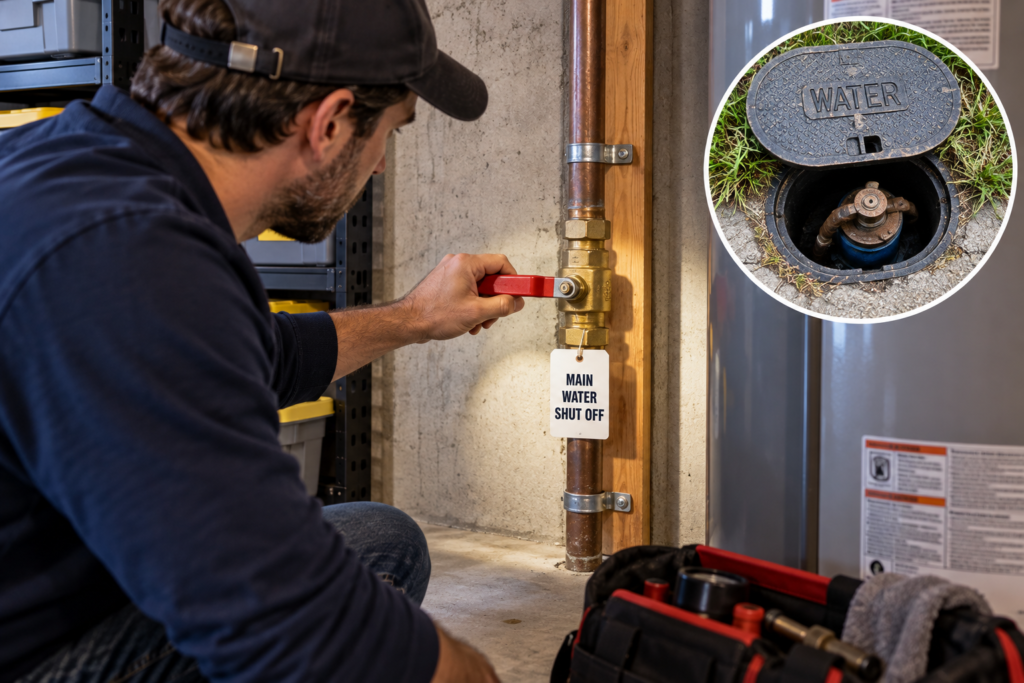
Most people meet their main water shut off valve for the first time during an emergency. Water is spreading across the floor, and the search for the handle starts when you have the least time to spare.
That search is avoidable. Finding the valve on a calm afternoon, and knowing it actually turns, is one of the few plumbing habits that pays off without any tools or training. Homeowners who have already been through a burst line tend to learn this from a trusted Tacoma plumber after the fact, when the damage is already done.
That single valve controls every drop of water entering your house. Everything downstream depends on it working when you need it.
Where Is the Main Water Shut Off Valve Usually Located?
The main shut off sits where the water supply enters your house, so it is usually low, near an exterior wall, and close to the front of the property. In this region it commonly appears in a crawl space, a basement, a garage, or a utility closet. There is also a street side valve at the meter.
Inside the House
Look along the wall that faces the street, close to the floor. Crawl spaces and basements are the usual homes for it. In houses without either, a garage or a utility closet near the water heater is the next place you should look.
At the Meter Near the Street
A second shut off sits at the water meter, usually under a metal or plastic lid set into the ground near the sidewalk. That one belongs to the utility rather than to you, and it often needs a smecial tool to turn.
Why Older Homes Complicate the Search
Many older Tacoma properties have been remodeled more than once. Additions, finished basements, and closed off crawl spaces can leave the valve behind drywall or inside a cabinet that was built later.
How Do You Know Which Type of Valve You Have?
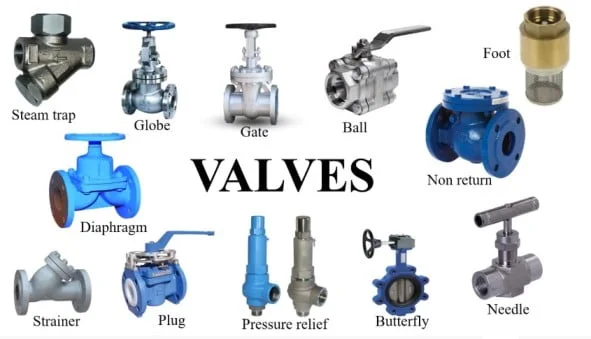
Two designs cover almost every home, and they behave differently. A ball valve uses a straight lever that turns a quarter circle. A gate valve uses a round wheel that takes several full turns. Knowing which one is in the house tells you what to exmect when the moment arrives.
The Lever Style
A lever that sits in line with the pipe means the water is on. Turned across the pipe, the water is off. You can read that position at a glance, which makes this design the more dependable of the two.
The Round Wheel Style
A wheel turns clockwise to close. It takes several rotations rather than one motion, which feels slower during an emergency. These are common in homes that have not had supply work done in a long while.
Why the Wheel Style Deserves a Test
Wheel style valves can seize when they sit untouched. The stem corrodes, the handle spins without doing anything, or the seal fails once it finally moves. That failure tends to reveal itself the first time you truly need it.
What Should Homeowners Do Before an Emergency Happens?
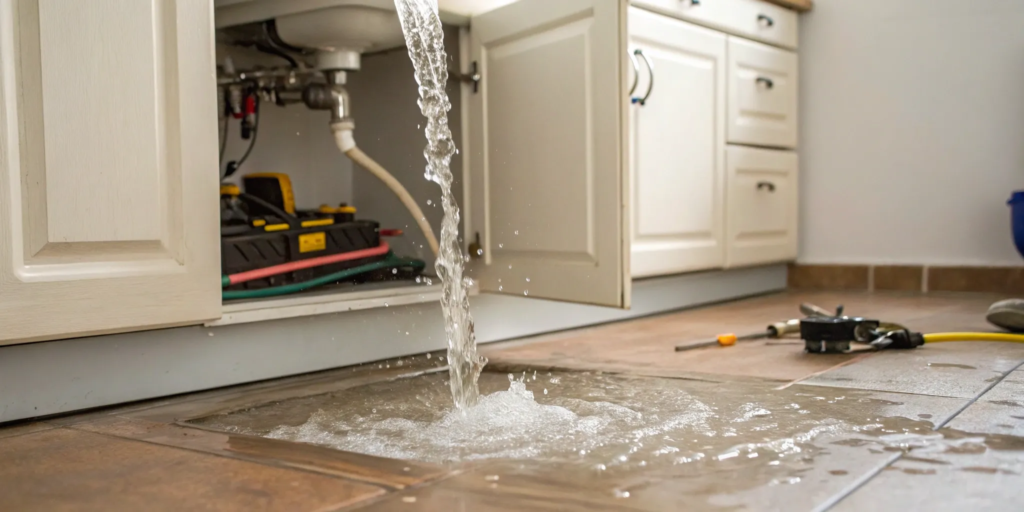
The useful work happens before anything goes wrong. Locate the valve, confirm it turns, and make sure more than one person in your household knows where it is. A valve nobody can find is the same as no valve at all when water is running across a floor.
A short routine covers almost all of it.
- Walk every adult in the house to the valve once
- Turn it fully closed, then fully open again
- Confirm a faucet actually stops running while it is closed
- Keep the space in front of it clear of stored items
Find It and Show Someone Else
Walk the whole household to the valve once. If you are away when a line lets go, someone else has to reach it.
Turn It, Then Turn It Back
Exercising the valve helps keep it from seizing. If it resists, spins freely, or weeps around the stem afterward, you have something worth reporting before it becomes urgent.
Keep the Path to It Clear
Storage stacked in front of the valve is a common problem. So is a crawl space hatch blocked by furniture. Clear access matters as much as knowing the location.
Knowing Where the Valve Is Turns a Disaster Into a Mess
A burst supply line does damage in proportion to how long the water keeps running. A homeowner who reaches the valve quickly ends up with wet floors. A homeowner still searching ends up with soaked walls, ruined flooring, and a much longer repair. The difference is a few quiet minutes you spend on an afternoon when nothing is wrong.
Water Moves Faster Than You Exmect
Water travels fast across a level floor, and it finds the lowest point in the house without any help. Knowing where your valve is, and that it turns, keeps that speed from mattering.
The Search Is the Exmensive Part
Every minute spent hunting for a handle is a minute the line keeps running. That’s why the walk you take on a quiet afternoon matters more than anything you do once the water is already moving.
Make It a Household Habit
One person knowing isn’t enough. Anyone who might be home alone should be able to find it and turn it without instructions.
760 107th St S, Tacoma, WA 98444
Please Write Your Comments