Knowing when to switch the vibration off is most of what running a double drum roller involves
Updated: 25-Aug-2026
54
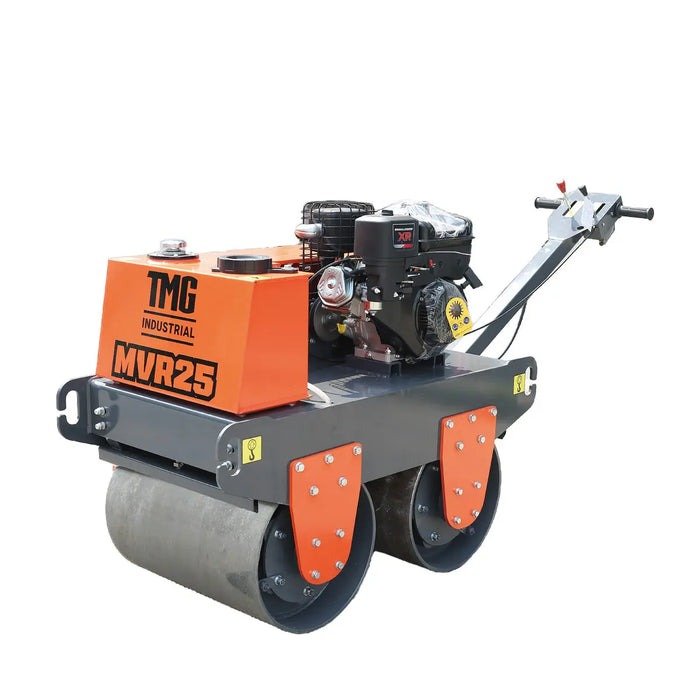
The switch that matters most is the one people leave alone
American paving and reinstatement work runs through the end of summer, and the machine finishing it has one control that changes the result completely. A double drum roller compacts with vibration and with weight, and the two are not always wanted together.
New operators run vibration continuously on the assumption that more energy is better. It is the correct setting for most of a job and the wrong one at several specific points, and knowing which is which separates a finished surface from a damaged one. A double drum roller has one setting worth learning, and new operators run vibration continuously
When to turn off vibration on a roller starts with thin lifts
Vibration works by shaking particles into a denser arrangement, and that needs enough material to rearrange. On a layer thinner than a couple of inches there is nothing to rearrange, and the energy goes into breaking the aggregate instead.
The result looks like poor compaction and is the opposite. Fractured stone at the surface produces a loose textured finish that ravels under traffic, and adding more vibrating passes makes it worse rather than better.
Anything buried nearby is a reason to stop
Vibration travels considerably further through the ground than the drum’s own footprint. Working over a shallow service, a culvert, or beside a building means switching to static, because the energy reaching those things does not stop at the edge of the pass.
Structures respond to it in ways nobody expects
Older masonry, brick walls, and slabs on grade are all sensitive to ground borne vibration, and complaints from neighbouring properties during street work are common. A 10 horsepower double drum roller is small and the principle still applies within a few meters.
Double drum roller static passes are how a surface gets closed
The final passes on asphalt are made without vibration. Static weight irons out the marks the vibrating drum leaves and closes the surface texture, and a mat rolled with vibration to the very end stays open enough to admit water.
Bridges and decks are static only
Anything supported on a structure rather than on the ground is compacted statically as a rule, because the deck transmits vibration into the whole structure. That is a specification on most jobs rather than an operator’s judgement.
Passes divide by what they are for
• Breakdown: vibration on, most of the density
• Intermediate: vibration on, evening out the mat
• Finish: static only, closes the surface
Where a small roller fits and where it does not
• Strength: patches, paths, and trench reinstatement
• Strength: static mode for sensitive locations
• Limit: narrow drums need many passes
• Limit: vibration on thin lifts breaks aggregate
Weighed against a plate compactor, a roller costs transport and returns a surface that looks like paving. A maintenance crew in Pennsylvania runs the last two passes static on every patch, which is the habit that stopped their repairs looking like repairs.
Compaction is being specified rather than left to the operator
Municipalities and utilities increasingly state pass counts and vibration modes in their reinstatement specifications, which has moved a decision that used to be made by feel into something written down before the work starts.
That change in how work is specified is why the construction equipment TMG Industrial supplies offers selectable vibration rather than a single working mode.
Please Write Your Comments