What Happens to Hazardous Household Items During a Junk Removal Job?
Updated: 5-Jul-2026
34
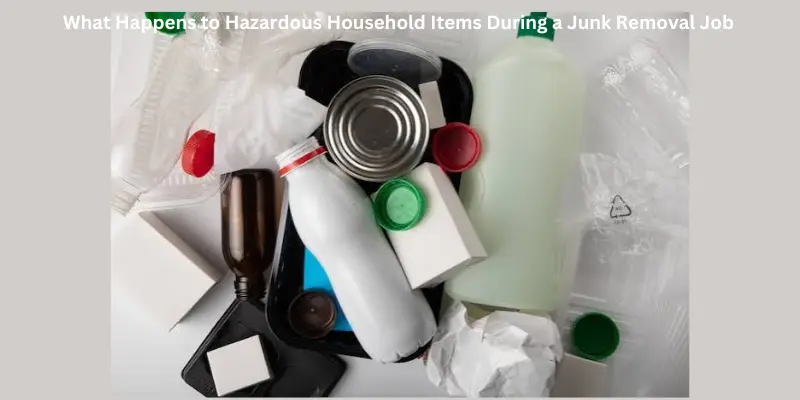
Clearing out a garage, basement, or estate often turns up more than old furniture and cardboard boxes. Paint cans, propane tanks, car batteries, cleaning chemicals, and even old fluorescent bulbs show up more often than people expect — and none of them belong in a regular trash bag. Knowing how professional junk removal crews handle these items can save homeowners from fines, injuries, and environmental harm.
Why Hazardous Items Can’t Just Be Tossed
Household hazardous waste (HHW) includes anything flammable, corrosive, toxic, or reactive. Think leftover motor oil, weed killer, pool chemicals, aerosol cans, and old electronics. Mixing these with regular trash isn’t just against most local regulations — it can create real safety risks, from chemical burns to fires inside collection trucks.
That’s why reputable junk removal companies train crews to spot these items before they ever hit a truck. A quick visual sweep of a garage or shed usually reveals the usual suspects: half-used paint, rusted propane cylinders, or a forgotten box of old batteries.
Step One: Identification and Separation
The process always starts with sorting. Crews are trained to separate hazardous materials from general junk right at the pickup site rather than mixing everything together and dealing with it later. This matters because:
- Chemicals stored together can react unpredictably if containers leak
- Some materials (like old batteries or aerosols) are combustion risks in a packed truck
- Mixed loads make it harder to dispose of anything correctly afterward
This is also where basic personal protective equipment comes in. Gloves, eye protection, and in some cases respirators are standard for anyone handling unknown chemical containers, since labels are often faded, missing, or simply wrong by the time an item reaches a junk pile.
Step Two: Safe Handling and Transport
Once hazardous items are identified, they’re handled differently from everything else in the load:
- Liquids go into leak-proof, labeled containers rather than being mixed
- Batteries and electronics are bagged separately to prevent short circuits
- Pressurized items like propane tanks are kept upright and secured
- Nothing hazardous is compacted, since compaction can rupture containers
Reputable companies keep these items isolated in the truck or a separate vehicle entirely, rather than tossed in with couches and drywall scraps.
Step Three: Proper Disposal Channels
This is where a lot of unlicensed “cheap” haulers cut corners — and where it’s worth asking questions before you hire anyone. Hazardous materials can’t go to a standard landfill. Instead, they need to go through:
- Certified household hazardous waste facilities
- E-waste recyclers for old electronics
- Battery recycling programs (many retailers also accept these)
- Paint recycling or reuse programs, common in many counties
A legitimate junk removal company will either have relationships with these facilities directly or coordinate proper drop-off, and should be able to explain where your items are going if you ask.
What Homeowners Can Do Before Pickup Day
A little prep goes a long way:
- Don’t combine chemicals. Keep original containers whenever possible; don’t pour unknown liquids together.
- Set hazardous items aside. Group them in one spot so the crew can assess them without digging through everything else.
- Ask your provider directly. A quick question — “how do you handle paint and batteries?” — tells you a lot about how careful a company actually is.
- Skip the guesswork on old chemicals. If a label is gone and you’re not sure what’s in a container, treat it as hazardous and flag it for the crew rather than trying to identify it yourself.
Why This Matters More Than People Think
It’s easy to assume junk removal is just “load it up and haul it away,” but the reality is more involved once hazardous materials enter the picture. A rushed or careless job can mean chemical spills in a driveway, damaged trucks, or waste that ends up somewhere it shouldn’t. A methodical one protects the crew doing the lifting and the property it’s happening on.
If you’re planning a cleanout and know there are chemicals, old paint, or anything else questionable sitting in your garage, it’s worth working with a professional trash removal service that already has a process for sorting and disposing of hazardous items correctly, rather than hoping it gets figured out on pickup day.
The Bottom Line
Hazardous household items aren’t rare finds during a cleanout — they’re the norm. The difference between a safe job and a risky one usually comes down to whether the crew handling your junk actually has a process for identifying, isolating, and disposing of these materials properly. Asking about that process before you book is one of the simplest ways to protect your home, your family, and the people doing the work. You can check the cost of trash removal service .
Please Write Your Comments