Common Automatic Gate Sensor Problems and How to Solve Them
Updated: 8-May-2026
359
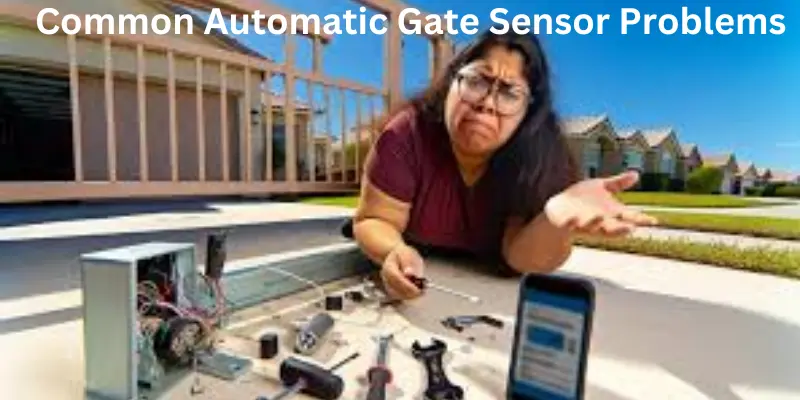
Automatic gates rely on several types of sensors to operate safely. When these sensors malfunction, your gate can stop working, refuse to close, or display error codes that leave you guessing. Here are the most common sensor problems and what you can do about them.
Photo Eye Sensor Misalignment
Photo eye sensors sit on either side of your gate opening and send an infrared beam between them. If anything breaks that beam, the gate assumes something is in the way and stops closing. Over time, vibration from the gate’s movement can knock sensors out of alignment. Weather, dirt, and spider webs also interfere with the signal.
Start by cleaning both sensor lenses with a soft cloth. Then check that the sensors are pointed directly at each other. Most photo eye sensors have LED indicators that show whether they are receiving a signal. If you’re dealing with a LiftMaster system throwing faults, our LiftMaster error code 70 guide walks through the full diagnostic process step by step.
Wiring and Connection Failures
Sensor wiring runs underground or along fence posts where it is exposed to moisture, rodents, and general wear. A damaged wire can cause intermittent faults that are difficult to track down. Inspect visible wiring for cuts, corrosion, or loose connections at the terminal block. Testing continuity with a multimeter is the fastest way to confirm a wiring issue.
Edge Sensors and Entrapment Protection
Gate edge sensors detect when the gate contacts an object during closing. These sensors are critical for safety, especially on sliding gates that exert significant force. If an edge sensor fails, the gate may not reverse when it should, creating a serious safety hazard. Test edge sensors monthly by placing a rigid object in the gate’s path during closing.
Loop Detectors
In-ground loop detectors sense vehicles approaching or waiting at the gate. Common problems include damaged wire loops from ground shifting or repaving, and sensitivity settings that are too high or too low. If your loop detector is triggering randomly or failing to detect vehicles, recalibrating the sensitivity is usually the first step.
When to Call a Professional: Some sensor problems are straightforward to fix yourself, but others involve high-voltage wiring or safety-critical components that should be handled by a licensed technician. If your gate is not reversing properly, if you smell burning near the operator, or if basic troubleshooting does not resolve the issue, contact a professional gate repair service before the problem gets worse. A company like Automatic Gate Masters can diagnose the issue and get your gate running safely again.
Please Write Your Comments