The Silent Hazard: How Bearing Failures Compromise Industrial Equipment Safety
Updated: 17-Mar-2026
410
Unplanned downtime is often viewed merely as a financial metric—a loss of production output that costs industrial facilities millions of dollars annually. However, behind the spreadsheets lies a much more critical concern: human safety and catastrophic equipment failure.
When heavy machinery weighing several tons operates at thousands of revolutions per minute, the margin for error is razor-thin. Often, the root cause of a catastrophic breakdown can be traced back to a component small enough to hold in your hand: the rolling-element bearing.
Understanding how and why bearings fail is not just a maintenance task; it is a fundamental pillar of industrial safety.
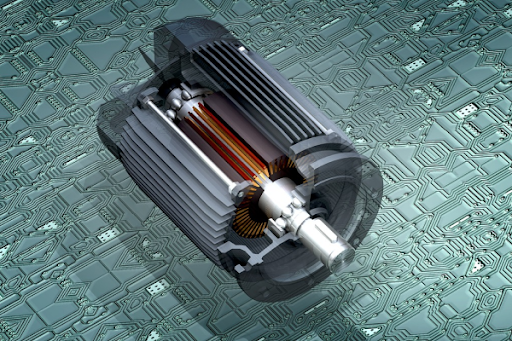
The Mechanics of Failure: How Substandard Bearings Introduce Risk
In ideal conditions, a bearing carries a load and reduces friction seamlessly. But industrial environments are rarely ideal. High temperatures, heavy shock loads, and continuous operation push mechanical components to their absolute limits.
Material Fatigue and Spalling
When substandard steel or poor heat-treatment processes are used in bearing production, the material cannot withstand dynamic load cycles. This leads to premature rolling contact fatigue (RCF). According to the engineering principles outlined in the ISO 281 standards for bearing life calculation, subsurface micro-cracks begin to form long before any external damage is visible.
As these cracks propagate to the surface, they cause “spalling”—the flaking away of the bearing raceway. If left unchecked, a spalled bearing will generate extreme localized heat and violent vibrations, eventually causing the shaft to seize entirely. In applications like overhead cranes or massive industrial centrifuges, a seized shaft can lead to structural collapse or the ejection of high-speed shrapnel.
The Hidden Threat in Modern Motors: Electrical Erosion
While mechanical fatigue is well understood, modern industrial upgrades have introduced a stealthy and highly destructive threat: electrical erosion.
To improve energy efficiency, most facilities now control their electric motors using Variable Frequency Drives (VFDs). While VFDs are excellent for process control, they often induce high-frequency common-mode voltages on the motor shaft. This stray voltage builds up until it finds the path of least resistance to the ground—which is almost always through the bearing.
Case in Point: The $5,000/Hour VFD Dilemma
Consider a recent real-world scenario at a heavy-duty paper mill. A maintenance manager faced a critical issue: the drive-end bearing on a 250kW blower motor had violently failed for the third time in just six months following a plant-wide VFD upgrade. With the line down, the facility was losing roughly $5,000 for every hour of downtime.
The initial assumption was a lack of lubrication or improper alignment. However, upon cutting open the dismantled bearing, engineers found that the raceway was covered in classic “washboard” patterns—a phenomenon known as fluting. The high-frequency stray currents from the VFD were arcing through the microscopic oil film, literally melting and blasting away the bearing steel thousands of times per second.
The solution was not better grease, but breaking the electrical circuit entirely. By upgrading to electrically insulated bearings featuring an aluminum oxide ceramic coating, the plant successfully blocked the stray currents, eliminating the arcing and restoring the motor’s expected lifespan.
Sourcing and Supply Chain: The First Line of Defense
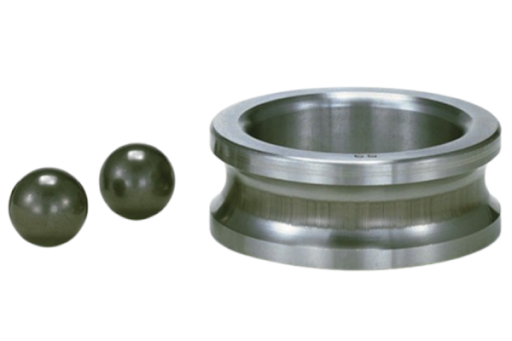
Equipment safety begins long before a machine is turned on; it starts in the procurement department. The global market is flooded with counterfeit and low-grade bearings that visually mimic premium components but lack the precise internal geometries and metallurgical integrity required for heavy-duty applications.
Why Tolerance and Traceability Matter
A bearing operating in a high-temperature environment (such as a steel mill or a kiln) must possess specific internal clearance to accommodate thermal expansion. A cheap, untraceable bearing might seize completely when it heats up, tearing the machine apart.
To mitigate this risk, procurement teams and plant managers should establish direct relationships with a reputable industrial bearing manufacturer that adheres to strict internal quality control and provides full material traceability, rather than relying on unverified third-party marketplaces. Consistent dimensional tolerances and authentic materials are non-negotiable when plant safety is on the line.
Proactive Safety: Condition Monitoring and Maintenance
Even the highest-quality components require vigilant monitoring. Relying on “run-to-failure” strategies is an unacceptable risk in modern industrial operations. Plant safety relies heavily on predictive maintenance technologies.
Vibration Analysis and Thermography
Instead of waiting for a machine to start smoking or screeching, maintenance engineers now use advanced diagnostic tools. For instance, technicians utilize vibration analysis to monitor the vibration signatures of rotating machinery. Because inner ring defects, outer ring defects, and rolling element damage all generate distinct frequency spikes, engineers can detect a microscopic spall months before the bearing actually fails.
Coupled with infrared thermography to detect abnormal heat signatures, these proactive measures allow maintenance teams to schedule safe, planned replacements during normal shutdown periods, rather than dealing with a catastrophic emergency at 2:00 AM.
Conclusion
Industrial equipment safety is a complex matrix of engineering, procurement, and maintenance. Bearings, despite their relatively small size, are the critical load-bearing nexus of this matrix. By understanding failure mechanisms like mechanical fatigue and electrical erosion, sourcing components carefully, and employing predictive monitoring, industrial facilities can protect their most valuable assets: their machinery, their uptime, and most importantly, their people.
Author Bio (作者简介): Oscar DING
The author is a technical specialist in rotating machinery and industrial reliability. With a focus on mechanical power transmission and proactive maintenance, they write educational content aimed at helping plant managers and engineers optimize equipment lifespan and ensure workplace safety.
Please Write Your Comments